Most homeowners choose an opener the way they choose a lot of household equipment: they read a box, compare a couple of numbers, and pick the one that seems strongest. That approach works often enough to be tempting, but it skips the part that actually determines whether the opener lasts. A garage door opener is not a generic motor bolted to a ceiling. It is matched to a specific door, in a specific garage, with a specific amount of room above the door and a specific tolerance for noise. Get the match right and the unit runs quietly for years. Get it wrong and you spend those years adjusting limits, replacing gears, and listening to the door complain. This article walks through the four things that actually decide the choice — door weight, headroom, drive type, and noise — and explains what a technician looks at before recommending anything. It does not quote prices, because this business has not published any, and it does not rank brands.
Start with the door, not the opener
The opener's only job is to raise and lower a door of a given weight, and the door sets the requirement. Two doors of the same width can differ substantially in what they weigh. A single-car door and a double-car door are obviously different, but so are two double-car doors — one steel with no windows, the other steel with a row of glass panels and heavier hardware. Insulated doors weigh more than uninsulated ones of the same size. A door that has been fitted with a thicker weather seal and added insulation carries a little more load than the same door did when it was new.
This matters because an opener sized for a lighter door will be working near its limit on a heavier one. The symptom is not usually a dramatic failure. It is a door that strains at the start of a cycle, an opener that runs hot, a motor that sounds labored on the way up, or a unit that trips its force setting and reverses partway. Those symptoms have more than one possible cause — a binding track or a worn roller can produce the same behavior — so the weight question is settled by measurement, not by guesswork. A technician weighs the door and checks its hardware before deciding what the opener needs to be rated for.
There is a second reason to start with the door. If the door is not balanced, no opener will make it behave. A door that feels heavy in normal use, or that drifts or slams rather than holding position, has a spring or balance problem, and the springs and cables are technician work. Replacing an opener on an unbalanced door simply moves the strain from the springs to the motor. The right order is to get the door moving correctly first, then size the opener to it.
Headroom decides which units are even possible
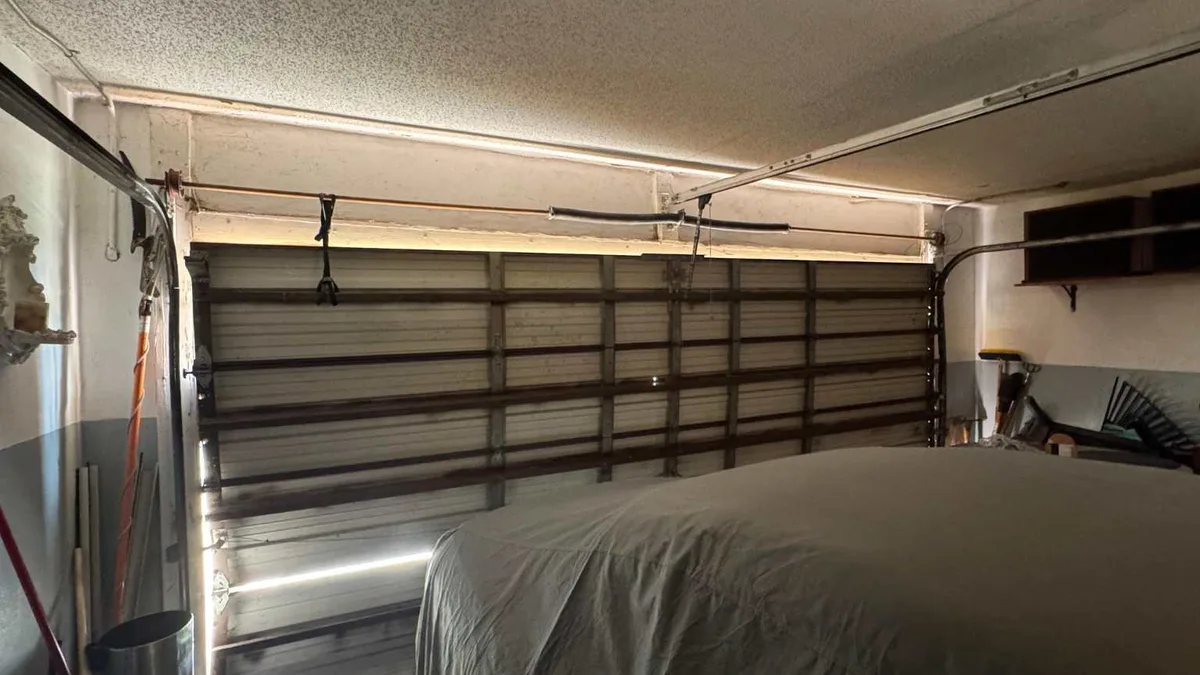
Before drive type or noise enters the conversation, the garage itself has a say. A standard sectional door needs a certain amount of clearance above the door in its open position, and the opener mounts in that space. Homes in Sunrise, Tamarac, Plantation and the rest of western Broward were built across several decades, and the garages reflect that: some have generous ceilings, some have low ones, and some have a structural beam, a storage rack, or ductwork running through the space where an opener would normally sit.
Headroom determines whether a standard rail-and-motor unit fits, whether a low-clearance arrangement is needed, and whether a jackshaft-style opener — one that mounts on the wall beside the torsion shaft rather than in the center of the ceiling — is the practical answer. Jackshaft units are often a good fit for garages with high ceilings or with the door's tracks running close to the ceiling, but they are not a universal substitute, and they depend on the door's spring setup.
This is the part of the decision that cannot be made from a product listing. A technician measures the actual clearance above the door, checks what else occupies that space, and confirms how the door's tracks are arranged. If you are replacing an existing opener, the old unit's position tells you something about what fit before, but it does not guarantee that a different type will fit the same way.
The drive types, and what each is good at
Openers are usually grouped by how they transmit force to the door. Each type has a character, and the character is what you are choosing between once weight and headroom are settled.
- Belt drive. A reinforced belt runs along the rail instead of a chain. Belt units are the quietest of the common types, which makes them a frequent choice where a bedroom sits above or beside the garage. They handle standard residential doors well and need little attention beyond occasional inspection.
- Chain drive. A metal chain runs the rail. Chain units are durable and widely used, and they are louder than belt units — a rhythmic mechanical sound rather than a smooth hum. In a detached or well-separated garage the difference may not matter; in a garage under a living space it usually does.
- Screw drive. A threaded steel rod turns to move the carriage. Screw drives sit between the other two on noise and need periodic lubrication of the screw to stay quiet. They are less common than belt or chain but perfectly serviceable where they fit.
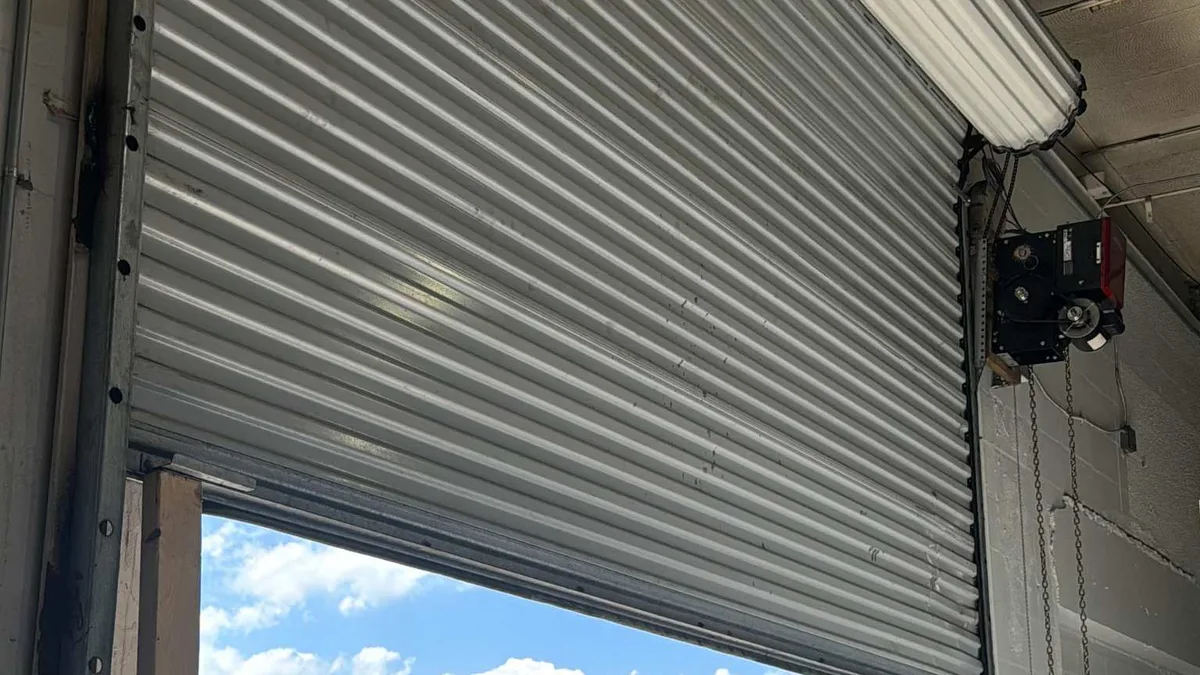
- Jackshaft (wall-mount). The motor mounts beside the door on the wall and turns the torsion shaft directly. There is no rail overhead, which frees ceiling space and suits garages with high ceilings or with the door tracks close to the ceiling. It depends on the door having a torsion spring setup, and it is not the right choice for every door.
None of these is inherently better than the others. The question is which one suits your door's weight, your garage's clearance, and how much noise reaches the rooms you sleep in. A belt drive on a door that is too heavy for it is a worse choice than a chain drive correctly sized, and a jackshaft unit in a garage without the right spring arrangement is not a choice at all.
Noise is a property of the whole assembly
Homeowners often ask for the quietest opener available, expecting the motor to be the source of the noise. Sometimes it is. Often it is not. A door that rattles, squeals, or thumps as it moves is telling you about its rollers, hinges, and track, and a quiet belt-drive opener will not silence any of that. If the goal is a quieter garage, the door's moving hardware and its adjustment matter as much as the drive type.
There is also the question of what the noise is and when it happens. A squeal at one point in the travel points toward a roller, a hinge, or a dry bearing — several possibilities, and a technician can separate them by watching and listening to the door in motion. A rhythmic knock that follows the chain is the drive itself. A thump at the start of a cycle can come from the opener's soft-start behavior, from loose hardware, or from the door's springs. Rather than guess, describe what you hear and when: at the start, at the top, on the way down, only in the morning. That description is genuinely useful to whoever inspects the door.
If quiet operation is the priority, the sequence is: bring the door's hardware into good order, then choose a drive type that suits the space. A belt drive is the usual recommendation where noise matters and the door is a standard residential size, but the door has to be right first.
Safety features and the questions to ask
Every opener installed today should include the safety reverse system — the photo-eye pair mounted at the bottom of the door's tracks. Its job is specific: if the beam is blocked or the eyes are misaligned while the door is closing, the door reverses. It is a safety device on the down travel. It has no role in a door that will not start, opens a little and reverses, or stops short on the way up; those are travel-limit or force-setting problems, and they are diagnosed differently. Understanding that distinction saves a lot of pointless fiddling with the eyes.
The other safety element is the force setting, which determines how hard the opener pushes before it gives up and reverses. It is set during installation to suit the door's weight, and it is not a knob to adjust casually — set too high it stops protecting, set too low the door reverses on its own. Force settings, travel limits, and anything involving the springs, cables, or the opener's drive train are technician work. A homeowner should never reach into those assemblies.
When you are ready to choose, the useful questions are concrete. What does my door weigh? How much clearance is above it, and what else is in that space? Is the door currently balanced, and does its hardware need attention before a new opener goes on? Which drive type suits the garage and the rooms above it? The answers come from an inspection, not from a specification sheet. The Broken Spring Garage Door Repair LLC handles opener installation and repair along with spring, panel, and weather seal work for homeowners across Sunrise, Fort Lauderdale, Tamarac, Plantation, Coral Springs and Weston, and the company is licensed and insured. If your door is noisy, straining, or not closing properly, the place to start is a look at the door itself — call 954-414-9504 or email info@thebrokenspring.com, and describe what the door is doing. That description is where a correct match begins.