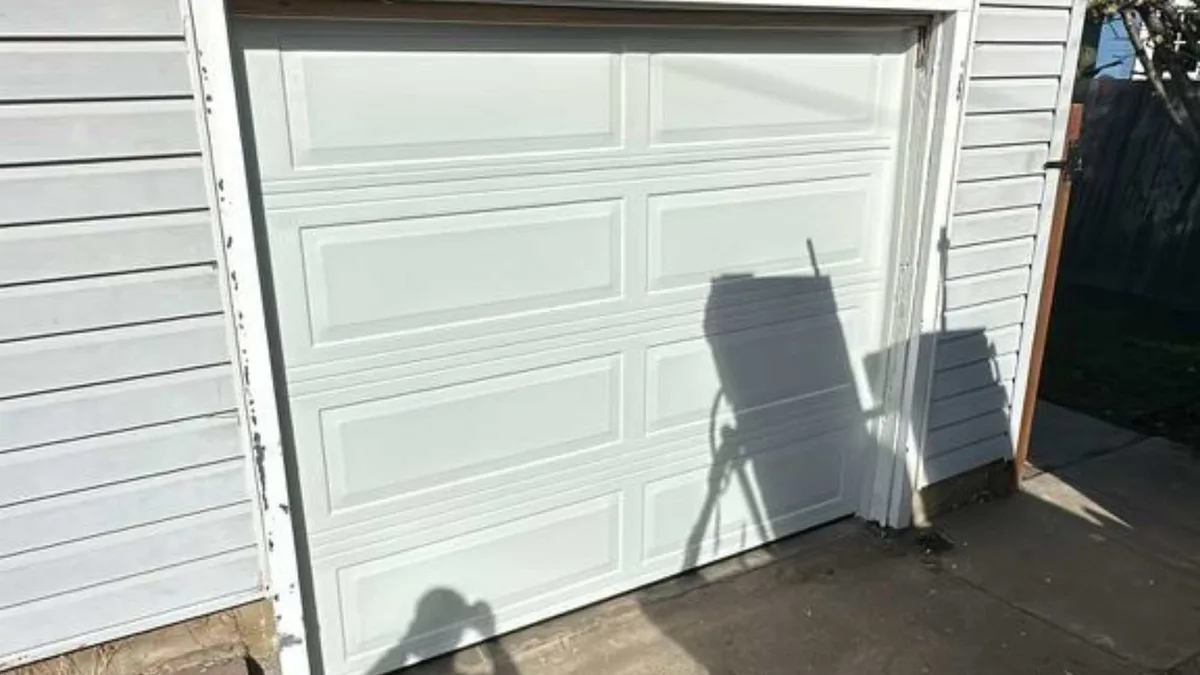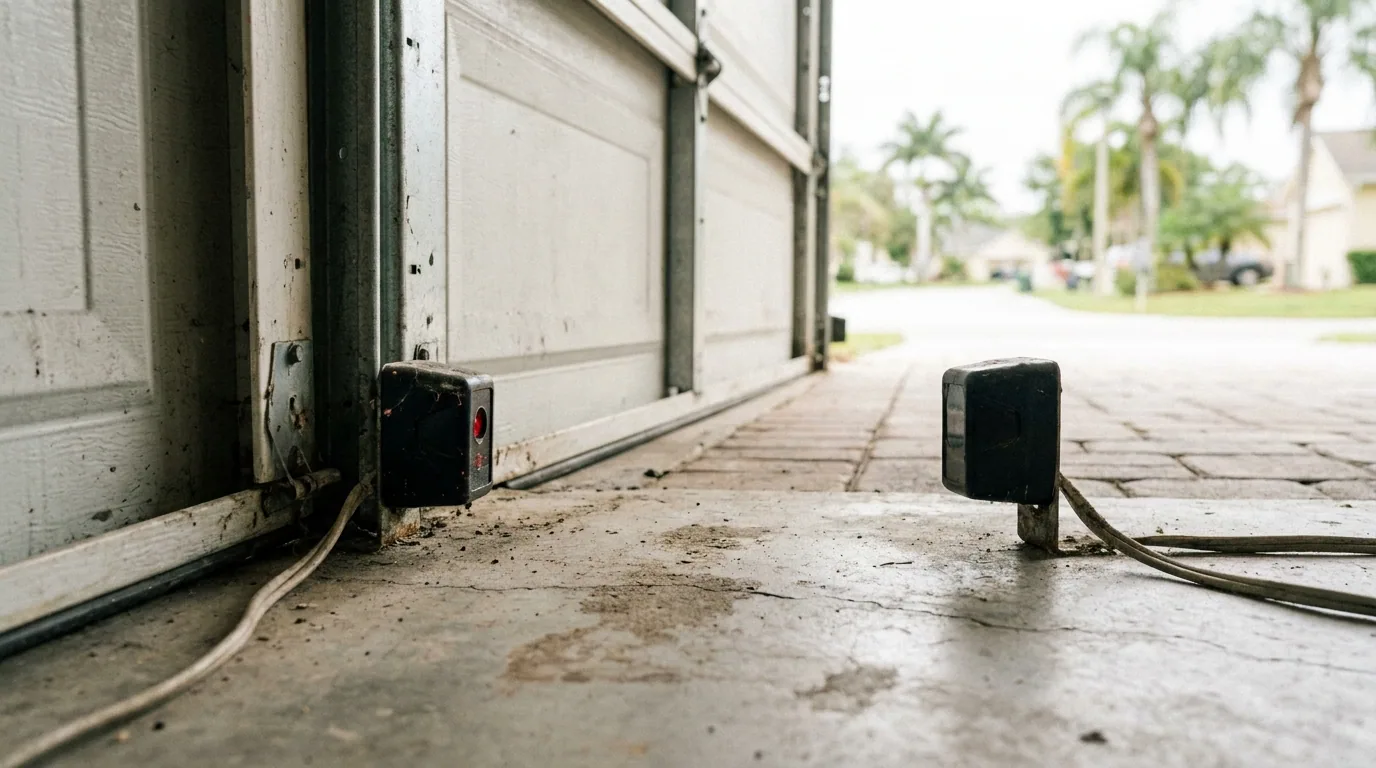
A garage door that opens from the remote but ignores the wall button is a strange kind of failure, because it means most of the system is healthy. The opener runs, the springs are holding the door's weight, the travel settings are where they should be, and the radio receiver is picking up the remote. What has gone quiet is the one input that uses a wire instead of a radio signal. That narrows the problem to a short list: the console itself, the low-voltage wire running from it to the opener, or a lock or vacation setting that has told the opener to disregard the wall control. This article walks through those in the order that separates them fastest, and it stays on the wall-control side of the opener. The springs, cables, and drive train are technician work and are not part of this diagnosis.
First, confirm exactly which control fails
Before changing anything, run the same test twice so you know what you are dealing with. With the garage empty and the door in view, press the wall button and hold it for a full second. Then press the remote and hold it the same way. If the remote produces a normal open and close and the wall button produces nothing at all — no motor sound, no light flicker, no click — you have a wall-control problem and the rest of this article applies. If the wall button makes the opener hum or click but the door does not move, stop here. That is a different fault and it belongs with a technician. If the wall button works sometimes and not others, note whether the failures cluster in the morning, after rain, or at a particular time of day. That pattern is useful information for whoever ends up tracing the wire.
The console itself, and the lock setting on the opener
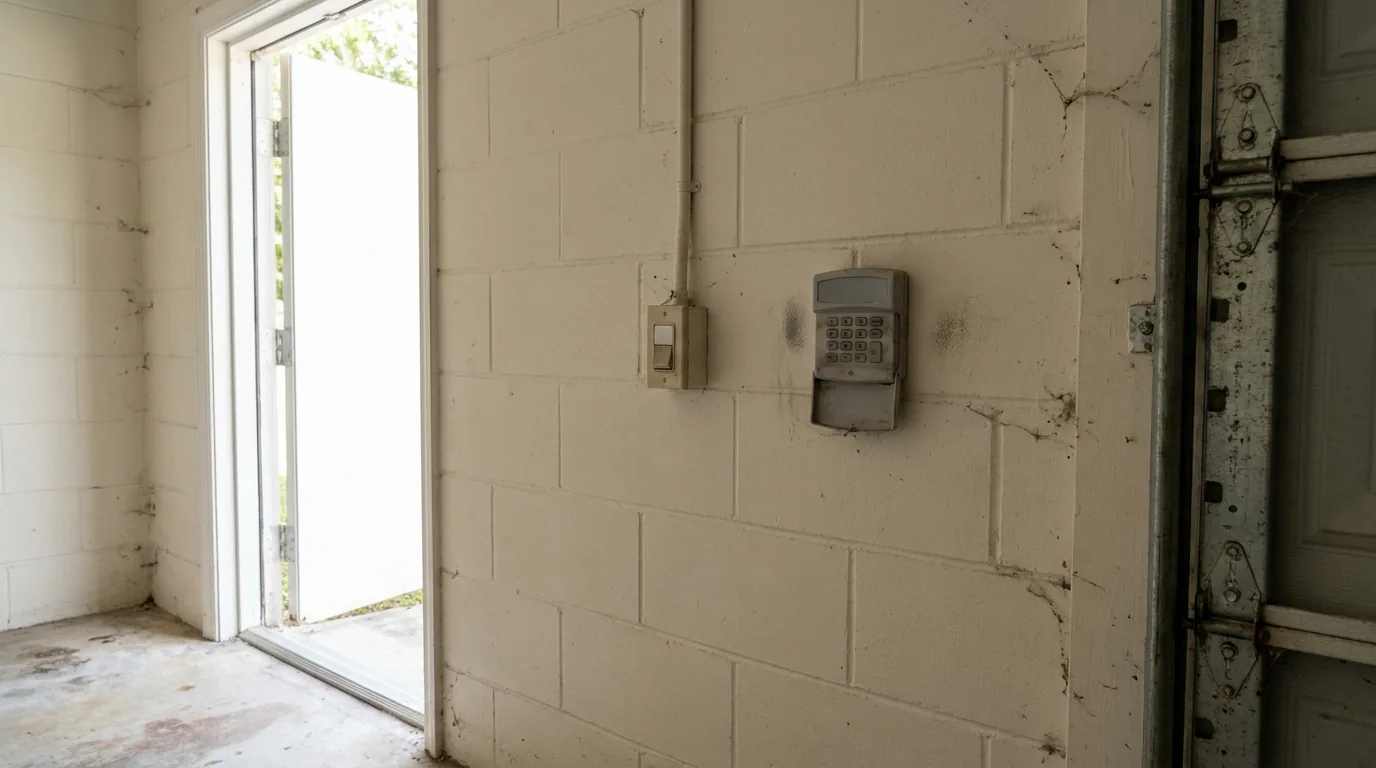
Wall consoles fail more often than people expect. The button is a mechanical switch that gets pressed several times a day for years, and the contacts inside wear or collect dust. Many consoles also carry a lock or vacation button, and when that mode is engaged the opener is designed to ignore the wall control while still answering remotes. That produces exactly the symptom you are describing, so check the console for a lock indicator and press it once to see whether the behavior changes.
Two other observations are worth making while you are at the wall. Does the console's light still come on when it should? Does the button feel loose or mushy compared with how it used to feel? Either one makes the console a reasonable suspect. A replacement console of the same model is a straightforward swap, and it is homeowner work as long as you are only unclipping the low-voltage wires at the back of the console. Do not open the opener's housing or reach into the unit itself.
What the wire can and cannot tell you
The wire from the wall button to the opener carries low voltage, and it is stapled along the wall, run through the ceiling, and sometimes pinched behind a shelf or a stored ladder. A staple driven too deep, a nick from a tool, or a connection that has worked loose at either end will interrupt the signal. You can note the visible parts of that run — a section that hangs loose, a spot where the wire is crushed against a stud, a place where it disappears behind drywall — but testing the wire and the terminals where it lands on the opener is technician work. With the power off, the terminals and the wire ends can be checked properly, and that check is quick for someone who does it regularly. If the wire disappears into a wall and you cannot see its full run, do not go hunting behind drywall. Describe the symptom when you call and the run can be tested the right way.
When the console and the wire both check out
If a known-good console on a short length of wire still does nothing, the problem has moved inside the opener's control board, and that is where homeowner work ends. The same is true if the wall button works but the opener behaves erratically — running a few inches and stopping, or refusing to close while the remotes still open it. Those patterns point at the logic board or the travel and force settings rather than the button, and they need to be read at the unit. Do not open the opener's housing to look for a burnt component. The capacitor and the drive train are in there, and the drive train in particular is not something to reach into.
One more thing worth separating out: a door that has started to feel heavier in normal use, or that sits crooked or leaves a gap along the top, is telling you something about the door rather than the button. A snapped cable will let a door hang at an angle, a broken torsion spring cannot hold the door's weight, and a bent track will drag one side. Those are the technician's to inspect, and they are worth mentioning on the call even when the wall button is the reason you picked up the phone.
What to have ready when you call
A technician can move through this diagnosis quickly when the call starts with the right details. Have the opener's model number from the label on the back or under the light cover, the age of the installation if you know it, and a clear description of which controls work and which do not. Note whether the wall button ever works, whether the lock indicator is lit, and whether the door itself has felt heavier or sounded different in normal use. Those details help separate a control fault from a door problem that happens to have surfaced at the same time.
The Broken Spring Garage Door Repair LLC serves Sunrise, Fort Lauderdale, Tamarac, Plantation, Coral Springs, and Weston, and can be reached at 954-414-9504 or info@thebrokenspring.com. The company is licensed and insured, and emergency service is available outside the regular hours of Mon–Fri 7:00 AM–7:00 PM and Sat–Sun 8:00 AM–6:00 PM.