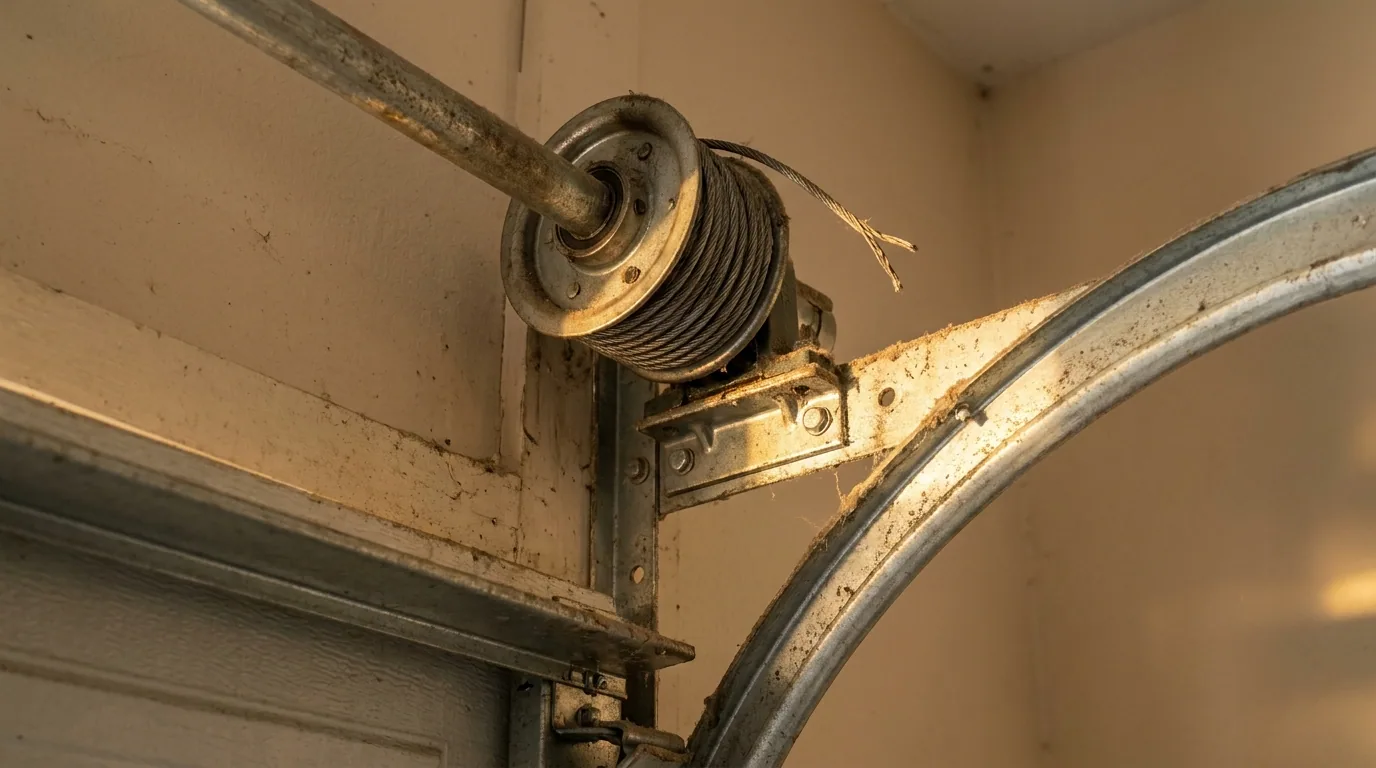
A worn roller is one of the quieter failures in a garage door system. It does not stop the door the way a broken spring does, and it does not announce itself with a bang. Instead the door gradually gets rougher — a shudder at the start of a cycle, a knock as a panel passes a certain height, a grinding sound that was not there last year. Rollers carry the full weight of the door along the track, and when their surface wears flat or chips, every pass over that spot sends a small jolt through the panels and hinges. Some of what follows you can safely observe from outside the door with the garage empty. The springs, cables, and the roller-and-hinge hardware itself are technician work, and this article keeps that line clear.
What a roller does, and why the surface matters
Each roller is a small wheel on a stem, mounted in a hinge or bracket at the edge of a panel, and it rides inside the track. A healthy roller has a round, smooth running surface, so it rolls through the curves and straight runs without resistance. As the surface wears, two things change. The wheel can develop a flat spot where it has been sitting or dragging, and the edge can chip or crack. A flat spot makes the roller bump each time it rotates past that point, which is why the noise often repeats at a regular rhythm as the door moves. A chip or crack can change how the roller sits in the track, and the door may bind or jump slightly at that panel.
Rollers are a wear item. They take load every time the door moves, and over enough cycles the material simply gives way. That is normal, and it is why a technician checks them as part of a routine service call.
What you can observe from outside the door
With the garage empty and the door fully closed, you can read a lot from the door itself without touching any hardware. Run the door from the wall button and watch and listen from a safe distance.
- A regular knock or thump that repeats as the door travels, rather than a single sound at one height.
- A shudder or jump at the start of a cycle, or a panel that seems to catch and then release.
- A grinding or scraping sound that has appeared gradually and is worse in one part of the travel.
- The door sitting slightly crooked when closed, or an uneven gap along one side.
- The door feeling heavier than it used to when you operate it normally from the button.
These are symptoms, not a diagnosis. A regular knock can come from a flat-spotted roller, a loose hinge, or a track that has shifted. A crooked door can mean a snapped cable, a broken spring, or a bent track. The point of observing is to describe the symptom accurately when you call, so the technician knows where to start.
Why the wear pattern matters
When a technician inspects the rollers, the pattern of wear is often more informative than the wear itself. A roller that is flat on one side only suggests it has been sitting in one position and dragging rather than rolling — which can point to a track alignment issue, a dry bearing, or a door that is not running smoothly. Rollers that are chipped or cracked around the edge can indicate the door has been binding against the track, putting side load on the wheel. Wear that is even across many rollers is usually simple age and cycle count. Wear concentrated on one or two rollers near a particular panel can point to a hinge or bracket problem at that panel. Sorting those apart is technician work, because it means handling the door's weight and the hardware that holds it.
What not to do
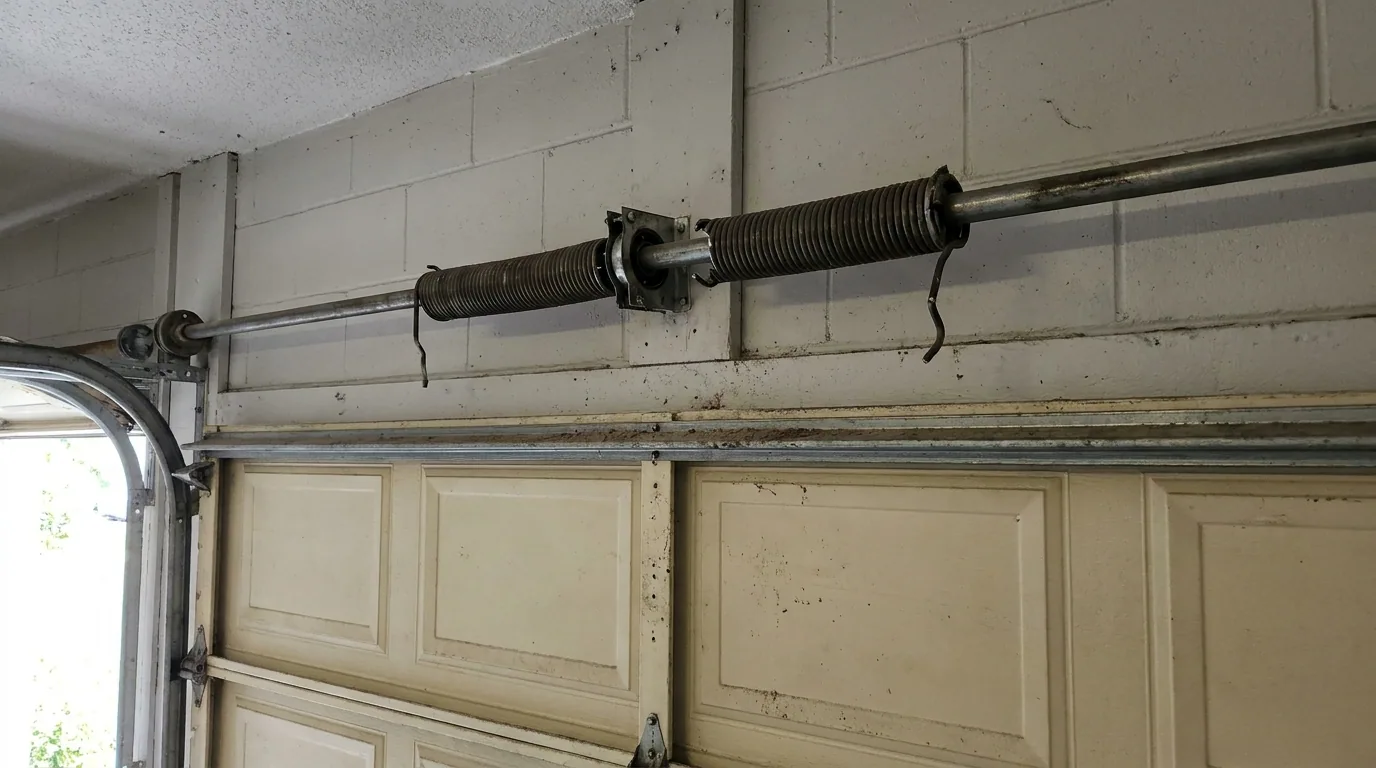
Rollers sit in the same assembly as the springs, cables, and hinges, and the door is under tension whenever it is not fully closed. Do not reach into the track, do not try to pry a roller out or push one back in, and do not pull the emergency release and move the door by hand to feel how it rolls. Do not lift the door to test its balance. Those steps put your hands and the door's weight in the same place at the same time, and they belong to a technician with the right tools and the door secured. If a roller looks chipped or the door is knocking, the safe move is to stop cycling the door and call for service.
When to call, and what to tell them
Call for service when the noise is new and repeating, when the door shudders or jumps, when it sits crooked, or when it feels heavier than usual in normal use. Tell the person on the phone what you observed: where in the travel the sound happens, whether it repeats, whether the door looks level when closed, and when you first noticed it. That description helps the technician bring the right parts and narrow the work quickly.
The Broken Spring Garage Door Repair LLC serves Sunrise, Fort Lauderdale, Tamarac, Plantation, Coral Springs, and Weston from 4850 Northwest 103rd Avenue, Sunrise, FL 33351. The company is licensed and insured. Weekday hours are 7:00 AM to 7:00 PM, weekend hours are 8:00 AM to 6:00 PM, and emergency service is available. Reach the office at 954-414-9504 or info@thebrokenspring.com to describe what the door is doing and arrange a visit.