A garage door that has taken a bump — from a car bumper, a lawnmower deck, a bicycle handlebar, or a ladder leaning where it should not — usually announces itself in one of a few ways. The door may sit crooked when closed, scrape or pop at some point in its travel, or feel heavier than usual when you run it from the wall button. The track is the guide that keeps the panels moving in line, and a bend or a push out of position can make the door bind against it. Some of what follows is safe for a homeowner to observe and describe. The rest involves the door's weight, the springs, the cables, and the hardware that holds the track in place, and that is technician work. This article separates the two so you know what you are looking at before you call.
Start with what you can see from outside the door
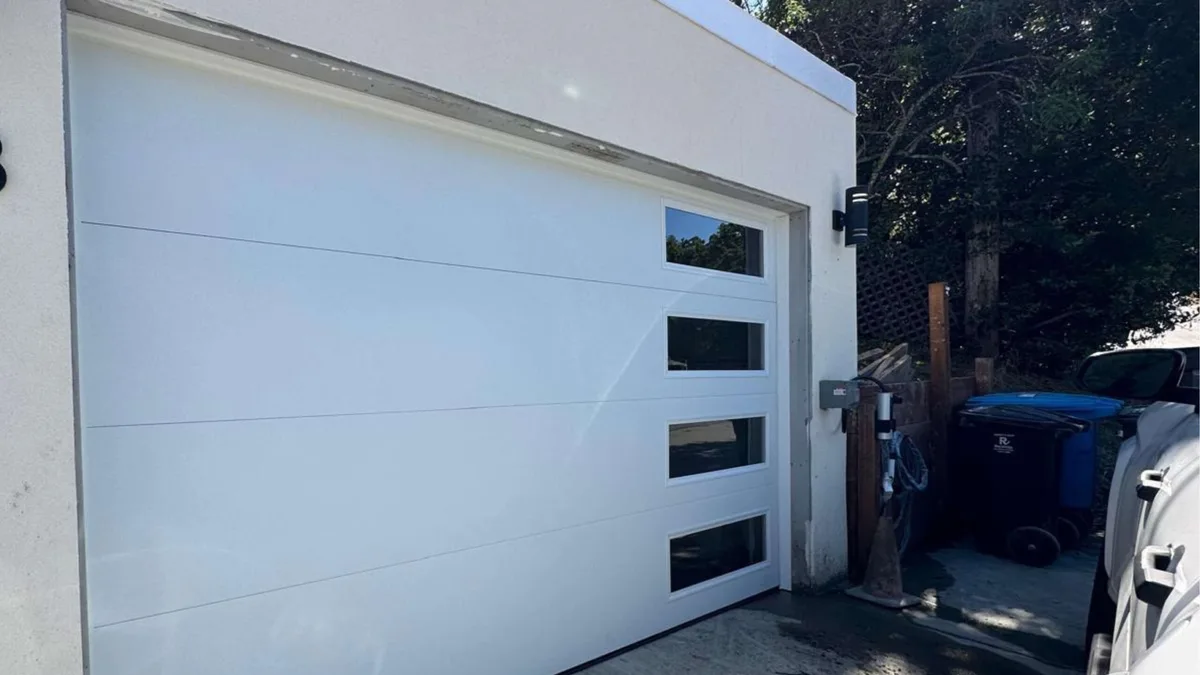
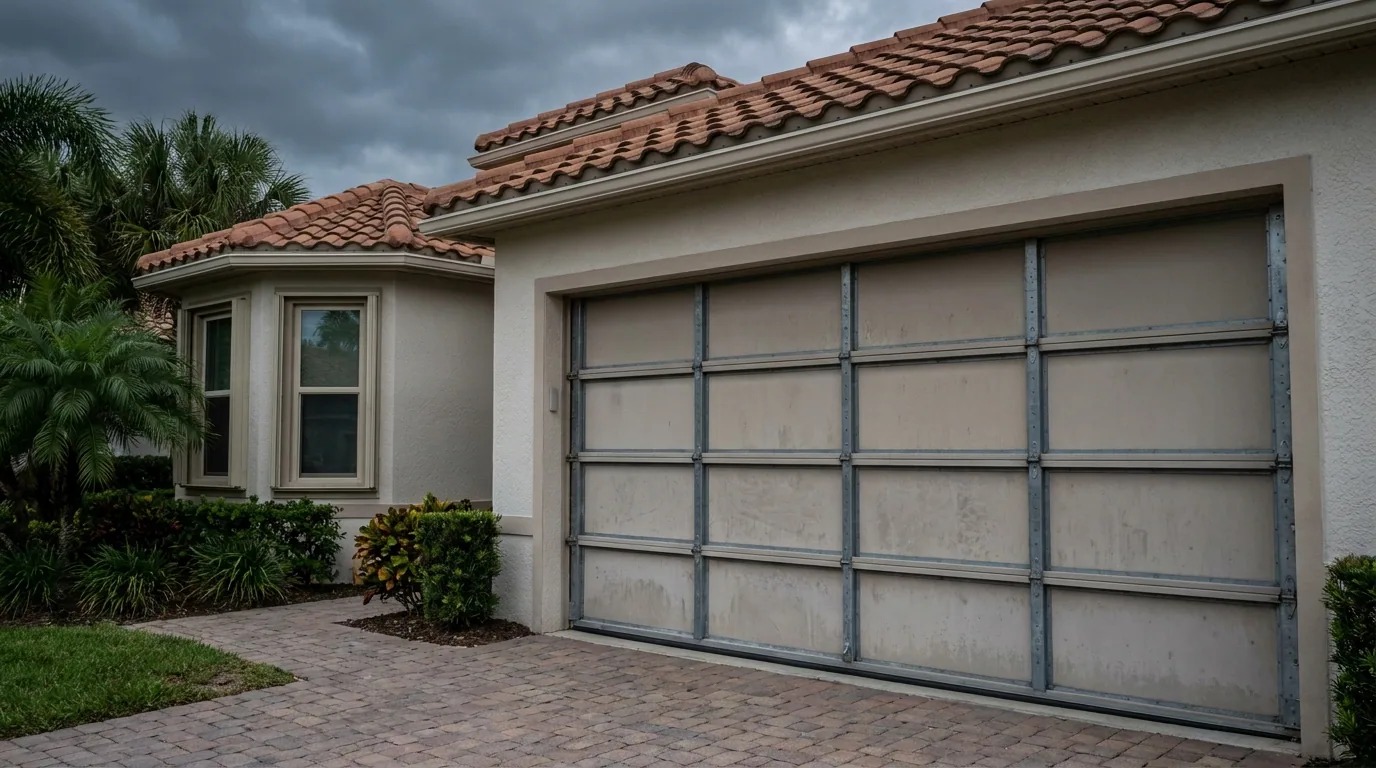
With the garage empty and the door fully closed, walk around the outside of the door and look at its lines. You are not inspecting the track or the hardware — you are reading the door itself, which is the part you already know by sight. A door that sits crooked in the opening, with one side visibly higher than the other, is out of alignment somewhere. So is a door with an uneven gap along the top or a noticeable gap down one side. A single panel that is dented or pushed in near the edge is another sign worth noting.
Pay attention to when the crookedness appeared. If the door sat square before the bump and does not now, the bump is the likely trigger, and the question becomes what moved. Write down what you see: which side is low, whether the gap is at the top or the side, and whether the door looks the same after a full cycle as it did before. That description saves a technician time and helps you get an accurate answer on the phone.
Listen and watch during one cycle
Run the door through a single complete open and close cycle from the wall button, and stay clear of the moving door while it travels. Listen for a new scraping, grinding, or popping sound that was not there before the bump. Watch the door's movement: does it hesitate, shudder, or slow at one particular point in the travel? A door that runs smoothly but sits crooked when closed points toward an alignment problem. A door that binds or scrapes partway through the cycle points toward something catching as the panels pass a certain point.
You may also notice that the door feels heavier than usual in normal use — not because you lifted it, but because of how it moves when you press the button. That can happen when the door is dragging against something instead of running free. Do not try to lift the door by hand to test its weight, and do not pull the emergency release to move it manually. The door's weight is held by the springs, and testing balance by hand is a technician's job.
What a homeowner should not attempt here
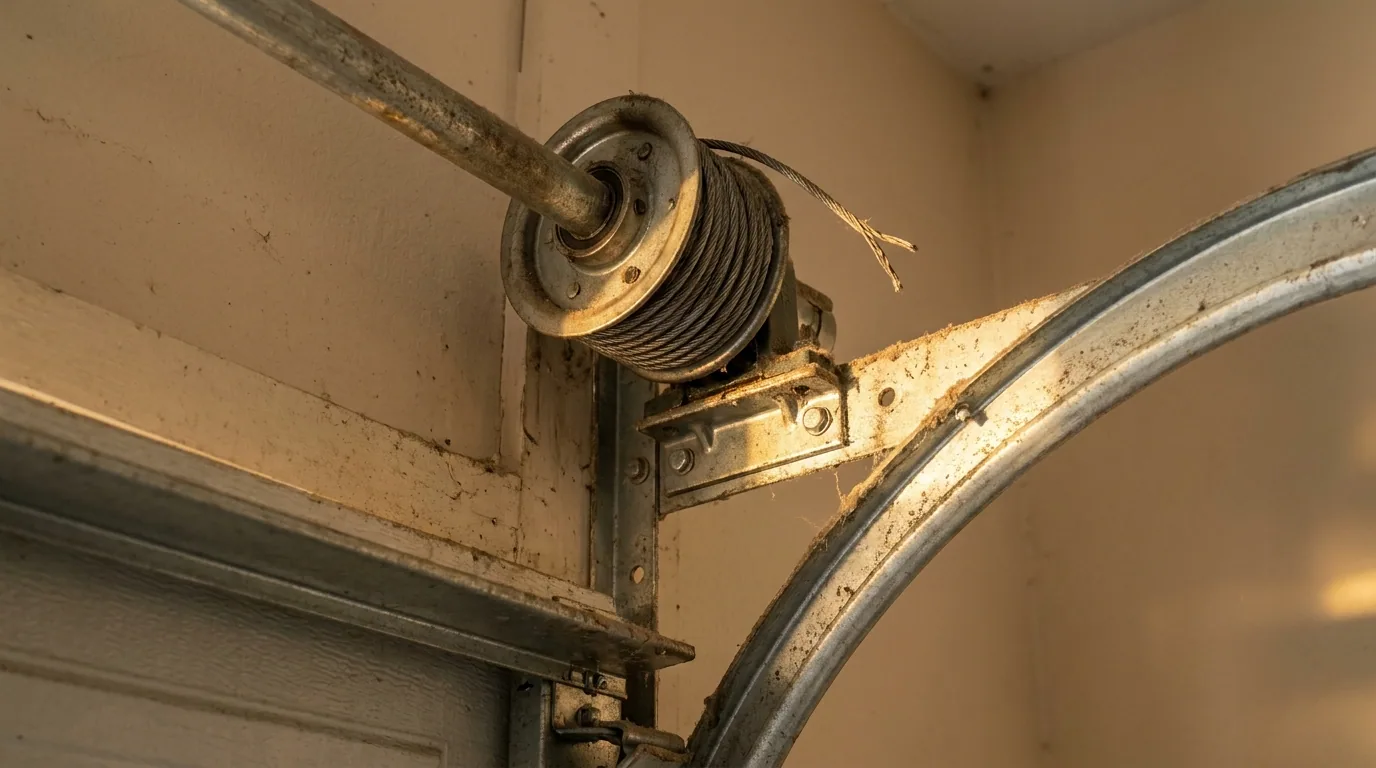
A bump that moves a track also moves the hardware that holds it. Straightening a track, reseating a roller, and tightening the brackets that carry the door's weight all put your hands near the springs, the cables, and a door that is under load. Those are the parts of the system that injure homeowners, and they are not a do-it-yourself adjustment, even when the fix looks small.
Do not bend a track back into shape, do not force a roller back into a track, and do not tighten or loosen the bolts that mount the track to the jamb, the wall, or the ceiling. A track that is forced can kink or crack, and a bracket that is adjusted while the door is under spring tension can shift suddenly. The same applies to the horizontal tracks above the door: a bend there can cause binding near the top of travel, and it is corrected with the door's weight controlled, not while it hangs on the springs.
If the door is crooked, hangs at an angle, or will not move at all after the bump, stop operating it. A door hanging at an angle can mean a snapped cable, a broken spring, or a track bent badly enough to trap a roller, and the alternatives are separated by inspection, not by running the door again. A loud bang followed by a door that will not lift is the classic broken-spring signature, and repeated operation only adds strain.
When the symptom is not the track at all
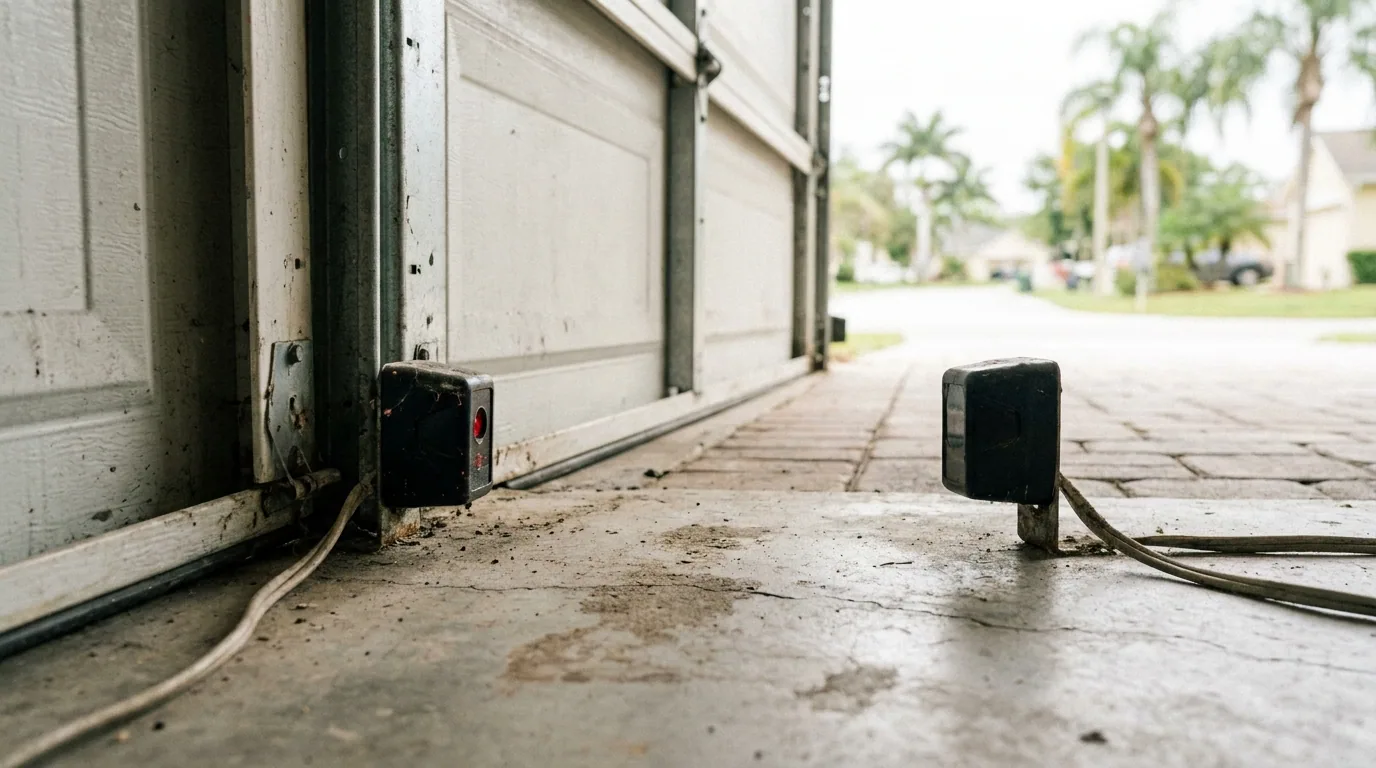
Not every problem that shows up after a bump is a track problem, and it helps to know which symptoms point elsewhere. If the motor runs but the door does not move, the cause may be a stripped opener gear rather than anything the bump touched. If the door reverses before it reaches the floor, that is a travel-limit or force-setting issue on the opener, not a track issue. A photo-eye only comes into play on a door that is closing: a blocked or misaligned photo-eye reverses a door during the down travel, and it has no role in a door that will not start or stops short on the way up.
If the door squeals or grinds at the start of a cycle, the source could be a roller, a hinge, or a dry bearing, and the sound alone does not tell you which. A technician isolates it by inspecting the moving parts with the door in a controlled position. Describe the noise, when in the cycle it happens, and whether it changed after the bump, and let the inspection sort out the source.
What a technician will do
A technician will inspect the springs and cables, check the rollers and hinges, and examine the track for bends and alignment along its full length. Straightening a track is often possible with the right tools and the door's weight controlled; a severely kinked track may need replacement. The technician will also confirm the door is balanced and that the opener's safety features work as they should. If you are in Sunrise, Fort Lauderdale, Tamarac, Plantation, Coral Springs, or Weston, The Broken Spring Garage Door Repair LLC handles this work. The company is licensed and insured, and you can reach it at 954-414-9504 or info@thebrokenspring.com. The address is 4850 Northwest 103rd Avenue, Sunrise, FL 33351. Hours are Mon-Fri 7:00 AM - 7:00 PM and Sat-Sun 8:00 AM - 6:00 PM, with emergency service available.