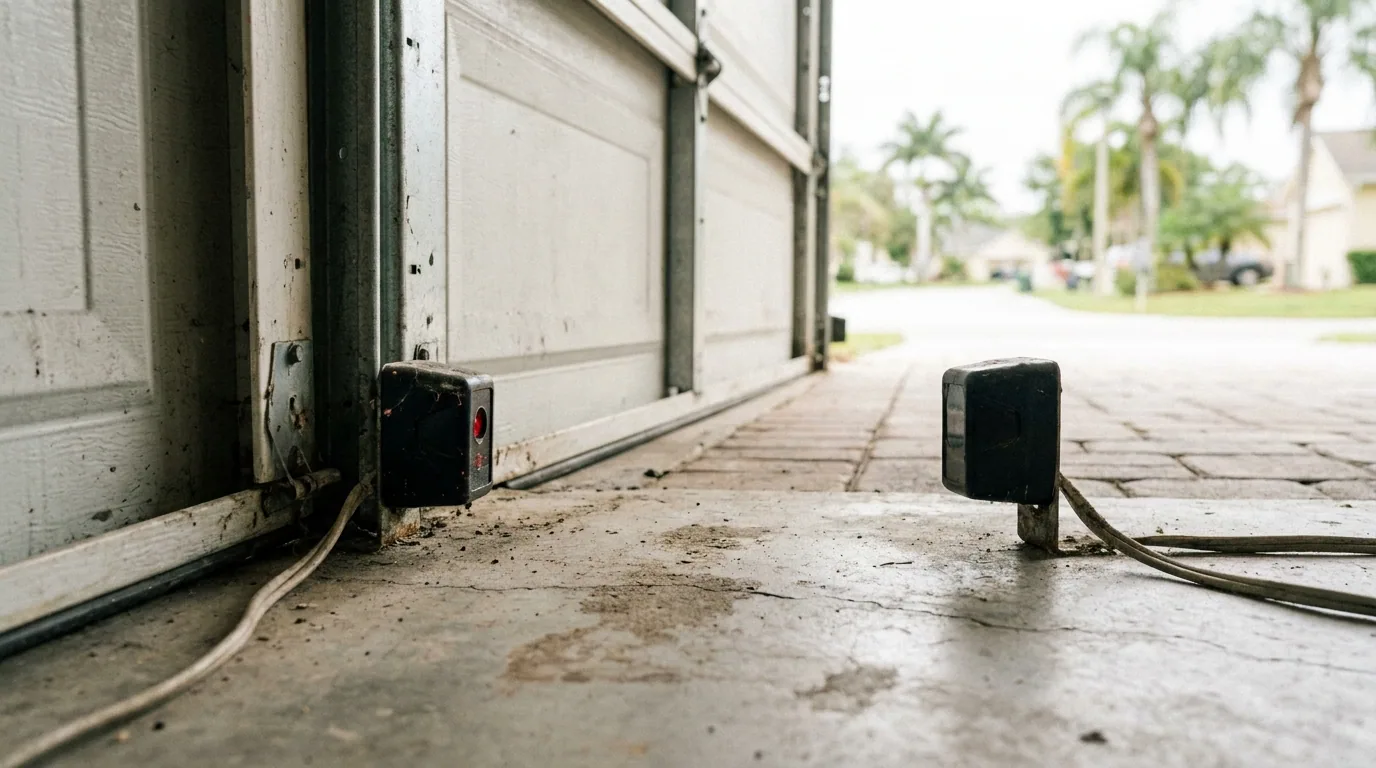
A door that rises a few inches, stops, and then travels back down is a common call for a garage door technician, and it is easy to misread from the floor of the garage. The instinct is to blame the safety sensors, because the sensors are the part everyone has heard of. But the photo-eye is a safety device on the closing travel. It has no role in a door that will not start, opens a little then reverses, or stops short on the way up. If your door reverses a few inches into an opening cycle, the sensors are not the cause. This article explains what the three likely causes look like from where you stand, how to narrow them down, and where the work stops being homeowner work.
First, be precise about which direction the door was moving
The two reversal directions are different problems, and mixing them up sends you down the wrong path.
- Reverses while closing. The door is on its way down, stops partway, and goes back up. This is the one case where a blocked or misaligned photo-eye is a genuine suspect, and only because the door was closing. Something in the beam's path or a sensor knocked out of alignment can do it. The technician checks the alignment and the wiring.
- Reverses while opening, or stops a few inches up and returns. The door starts to rise and then gives up. The photo-eye has no role here. The opener is being told the door has met resistance, or the travel limit is stopping the cycle early. That points to the travel limits, the force setting, or something mechanical binding the door.
If your door falls into the second group, set the sensors aside. The rest of this article is about that group.
What the travel limits and force settings do
Every opener has two settings that govern the cycle. The travel limits tell the opener where the fully closed and fully open positions are. The force setting tells it how much resistance to tolerate along the way.
When the up limit is set too low, the opener can decide the door has reached the top after a few inches and end the cycle. When the force setting is too sensitive, the opener can read normal resistance as an obstruction and reverse to be safe. Both produce the same thing from where you are standing: a door that starts up and comes back down.
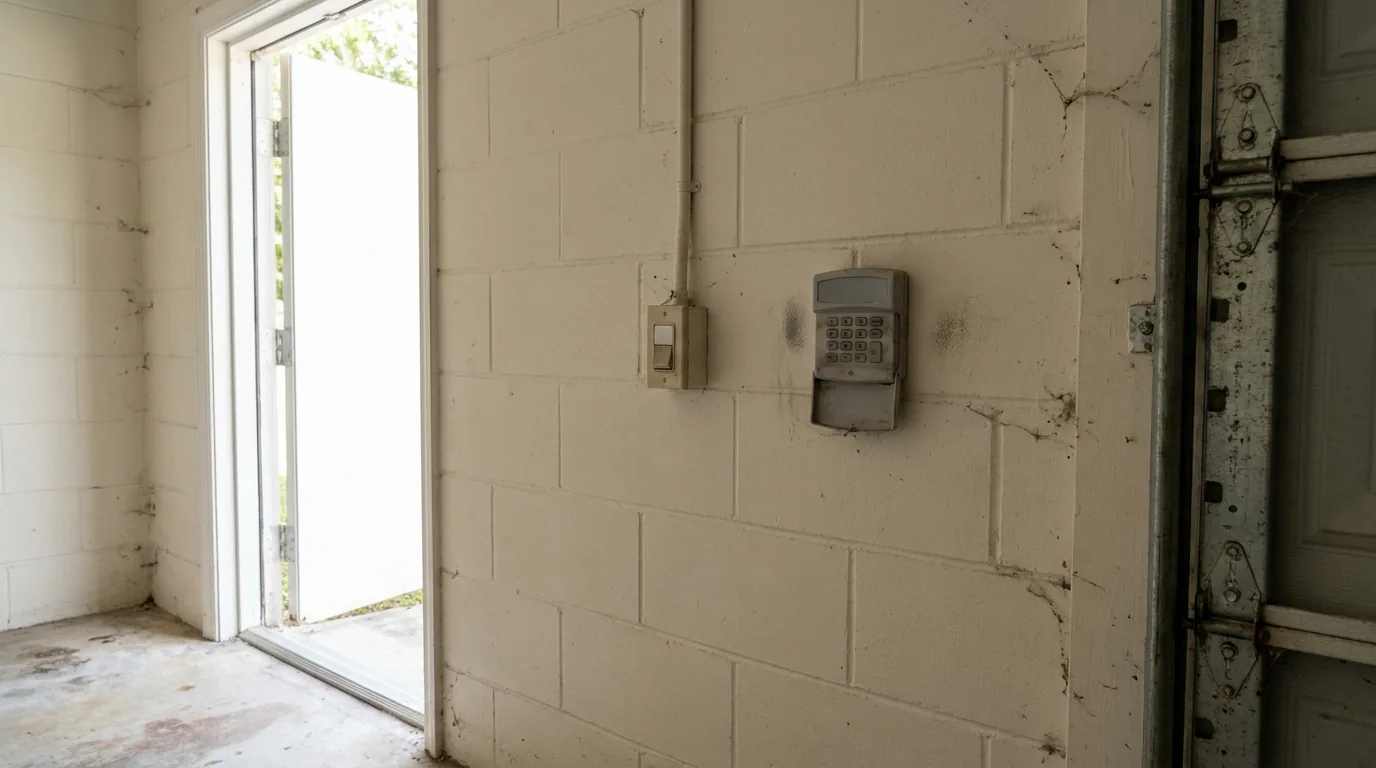
These settings can drift over time, and they can be thrown off after a power interruption or a reset. The controls are usually on the opener housing or behind a lens cover, and adjusting them is a technician's job. A limit set wrong in the other direction can send the door past its stop, and the force setting interacts with the mechanical condition of the door in ways that are hard to judge by ear.
What you can do is note the pattern. Does the door always stop at the same height, or does the stopping point move around? A consistent height points toward the limit. A stopping point that varies points more toward force sensing or a mechanical bind.
How a binding track shows up
A track that is out of alignment, dented, or loaded with hardened debris adds resistance that the opener reads as an obstruction. The door starts up, the rollers bind at a certain point, the opener feels the load, and it reverses.
You can gather useful evidence without touching anything. With the garage empty and the car out, stand outside and watch the door through a full attempt. Note whether one side of the door rises ahead of the other, whether a panel shudders as it passes a particular height, or whether the door makes a new scraping or grinding sound at the moment it stops. A door that shudders or hesitates at the same height every time is telling you the resistance is mechanical and it is happening at that height.
A crooked door can mean a snapped cable, a broken spring, or a bent track, and those are three different repairs. Do not try to sort out which one it is by hand. The technician inspects the springs, cables, rollers, and track on site and can tell you which component is responsible.
What you can safely do yourself
There is a short list of things a homeowner can handle that do not involve the springs, the cables, the sensors, or the opener's drive train.
- Clear the floor and the door's path. Sweep debris away from the opening and make sure nothing is stored where the door travels. Leave the sensor brackets and lenses alone; the technician handles those.
- Check that the door is fully closed and seated. A door that is not seated can start a cycle oddly.
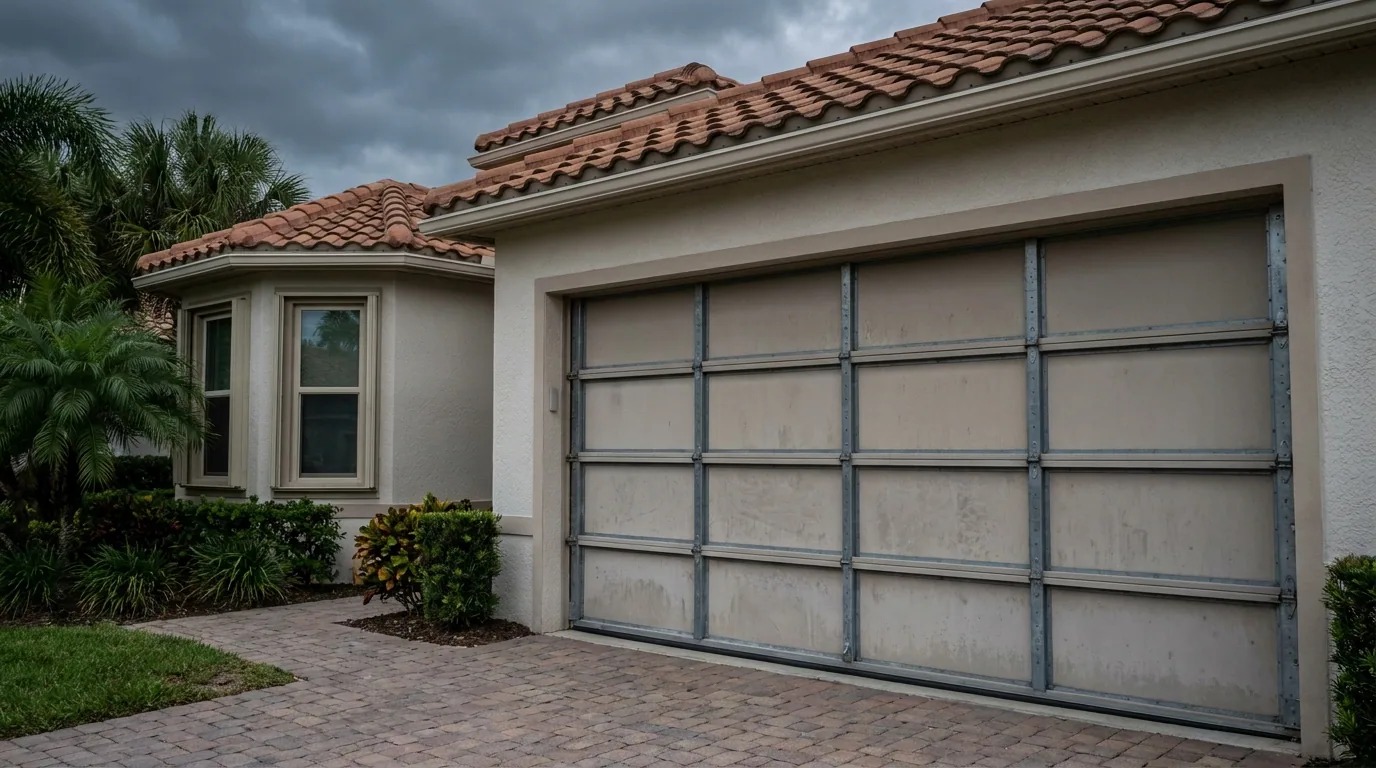
- Look at the door from outside with it closed. Note whether it sits level across the width, whether there is a gap along the top, and whether any panel is visibly out of line. Write down what you see.
- Listen. A new noise at the start of a cycle, a squeal, or a grinding sound is worth describing to the technician. A squeal can come from a roller, a hinge, or a dry bearing, and the technician can identify which.
- Note the pattern. Same height every time, or random? Every cycle, or only sometimes? That information shortens the diagnosis.
What you should not do is pull the emergency release and move the door by hand, lift the door to feel its weight, or attempt to test the balance. Those steps belong to a technician, and a door with a failed spring or cable can come down hard.
When to call it in
If the door reverses at the same height every time, if it shudders or scrapes as it stops, if it feels noticeably heavier in normal use than it used to, or if you can see that it sits crooked when closed, the next step is a technician's visit. The opener's travel limits, force settings, and the mechanical condition of the door are part of the same diagnosis, and they are easier to sort out together than one at a time.
The Broken Spring Garage Door Repair LLC serves Sunrise, Fort Lauderdale, Tamarac, Plantation, Coral Springs, and Weston. The business is licensed and insured, and its technicians handle residential garage door repair, spring and cable work, track and roller service, and opener repair. If your door is reversing a few inches into its cycle, call 954-414-9504 or email info@thebrokenspring.com. Weekday hours are 7:00 AM to 7:00 PM, weekend hours are 8:00 AM to 6:00 PM, and emergency service is available.