A garage door that shudders on its way up, stops halfway, or reverses for no clear reason often gets blamed on the opener. The motor is the part you hear, so it is the part that sounds guilty. But the opener only pulls and pushes; the door's weight rides on the tracks, and when those tracks are out of line, the opener has to fight the door. The strain shows up as noise, hesitation, or a door that will not close all the way. This article explains which symptoms point toward track alignment, which ones point elsewhere, and how to narrow it down without touching the springs, cables, or the opener's drive train.
What the tracks do, and why alignment matters
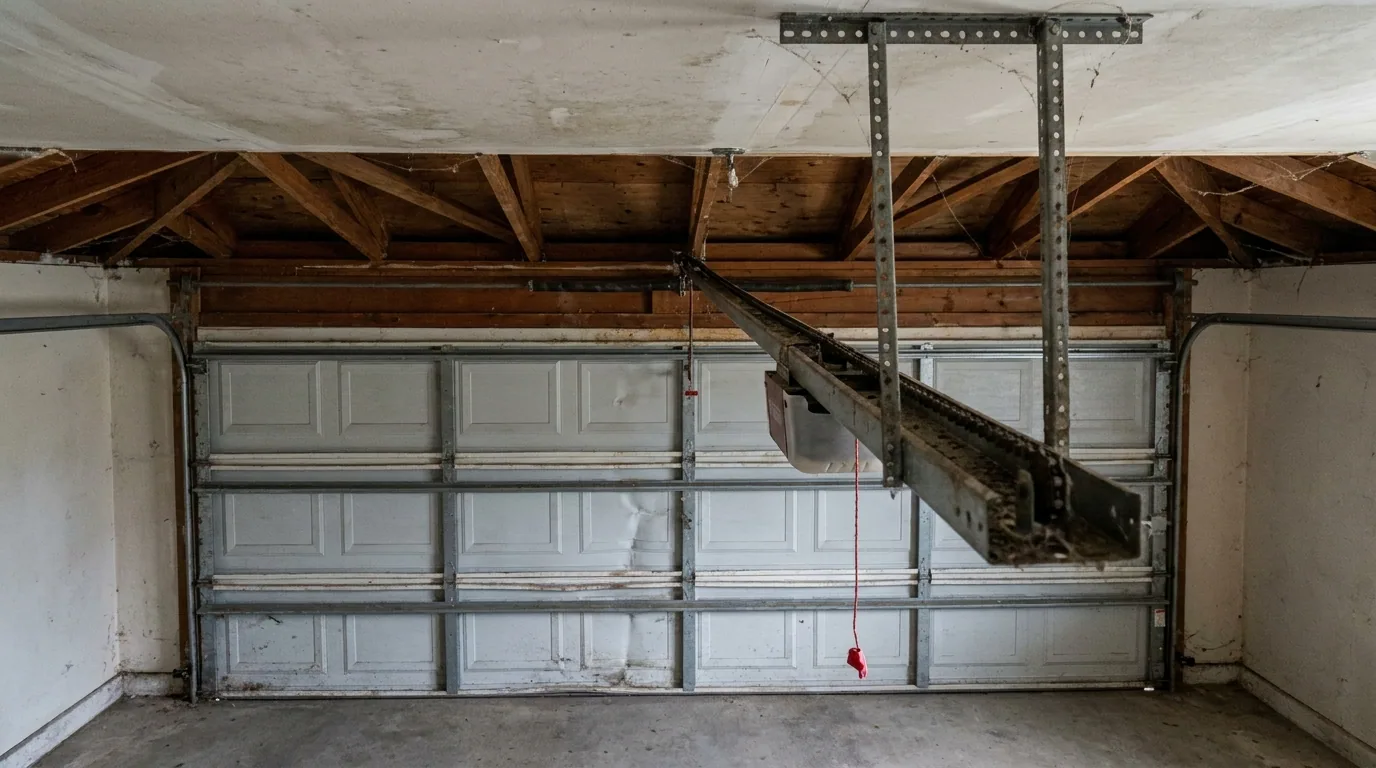
The vertical tracks guide the door as it rises from the closed position, and the curved and horizontal tracks carry it back under the ceiling. The rollers sit inside those tracks, and the door's panels ride on the rollers. For the door to move smoothly, the tracks have to be parallel, plumb, and at the correct distance from the door. A track that is out of line pinches a roller, and a pinched roller drags. The opener senses that drag as resistance. On a modern opener, resistance during the close cycle can trigger a reversal; during the open cycle it can cause the motor to strain or the door to stop short.
Tracks get out of line in ordinary ways. A car nudges the vertical track in a tight garage. A ladder leans against the horizontal track during a storage project. The door takes a hit from a bike or a trash can. Over time, the fasteners that hold the tracks to the jamb can loosen, and the track drifts out of plumb. None of these events involve the opener, but all of them can make the opener behave as if it were failing.
Symptoms that point toward the tracks
Several observable symptoms suggest a track problem rather than an opener problem. The door may bind at the same point on every cycle, usually where a roller meets a misaligned section of track. It may jerk or shudder as it travels, especially as it rounds the curve from vertical to horizontal. The door may sit crooked in the opening when closed, with one side lower than the other, even though the opener ran the same distance. You may hear a scraping or grinding sound that comes from the door itself rather than from the opener head. And the door may reverse during the close cycle even though nothing is in the photo-eye path.
These symptoms overlap with other causes, so none of them is proof on its own. A door that sits crooked can mean a snapped cable, a broken spring, or a bent track. A scraping sound can come from a dry roller, a worn hinge, or a track that has pulled away from the jamb. The point is not to diagnose from a single symptom but to notice the pattern and describe it accurately when you call for service.
What you can safely check from outside the door
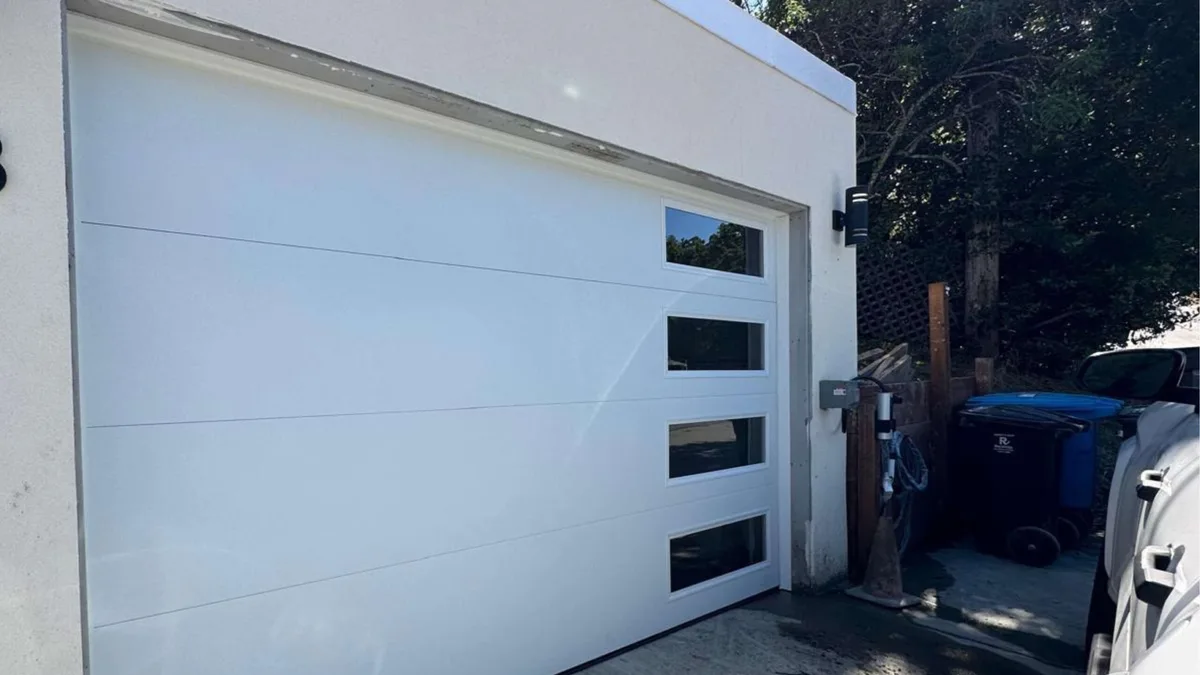
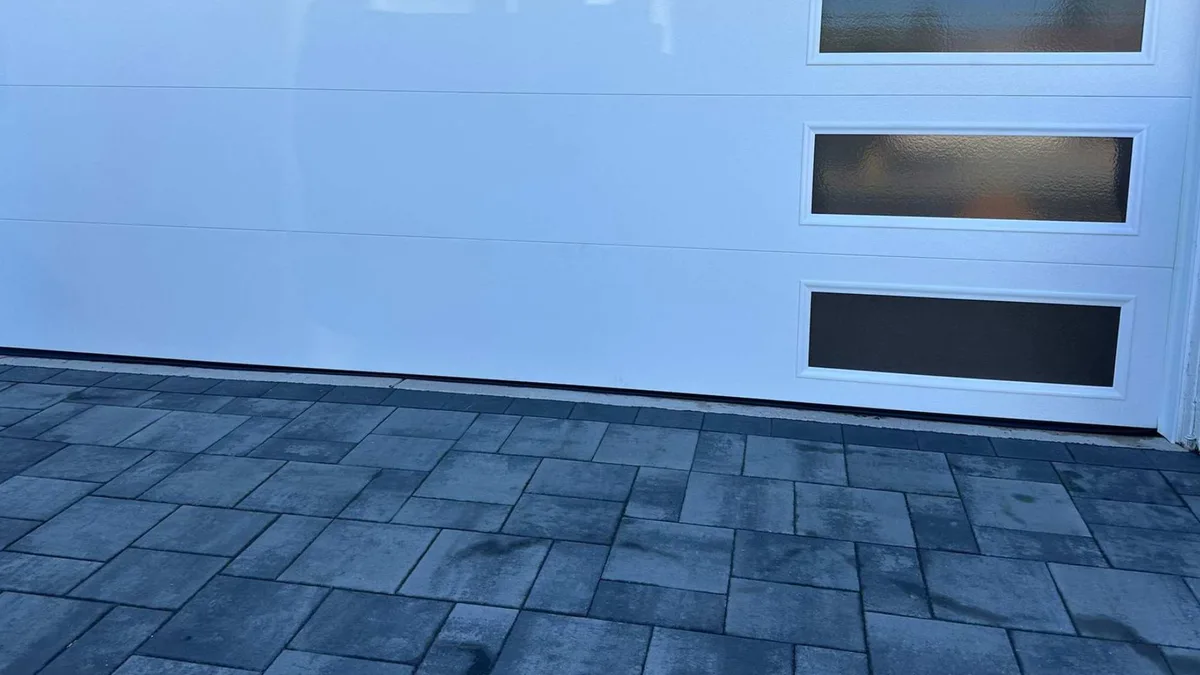
With the garage empty and the door closed, you can note a few things without touching any moving part. Stand back and look at the door's position in the opening. Is the gap along the top even from one side to the other? Does one side of the door sit lower than the other? Look at the vertical tracks where they meet the floor. Are they clear of obstructions such as a stored item or a built-up ridge of debris? You can also listen during a normal cycle. A new rattle, a scrape, or a thump that was not there before is worth writing down, along with where in the cycle it happens.
What you should not do is try to adjust a track, force a roller back into place, or loosen any fastener on the track assembly. The tracks are under tension from the door's weight, and a track that comes free can drop the door. The springs and cables are under even higher tension and are never homeowner territory. The same goes for the opener's drive train: do not open the opener housing or try to adjust the force or travel limits by guesswork. Those adjustments interact with the door's actual travel, and a wrong setting can cause the door to reverse or fail to close safely.
How a technician separates track problems from opener problems
A technician starts by disconnecting the opener from the door, using the emergency release, and moving the door by hand. That step tells the technician whether the door itself moves freely. If the door binds or drags with the opener out of the picture, the problem is in the door's mechanical parts: the tracks, the rollers, the hinges, or the springs and cables. If the door moves smoothly by hand, the technician looks at the opener's settings, the drive train, and the safety devices.
From there, the technician checks the tracks for plumb and parallel alignment, inspects the rollers for wear or flat spots, and confirms that the track fasteners are secure. The technician also inspects the springs and cables, since a track that has been out of line can put extra stress on them. If the tracks are sound, the technician moves on to the opener: the travel limits, the force settings, the photo-eye alignment, and the drive gear. A stripped gear, for example, lets the motor run without moving the door, and that is an opener problem, not a track problem. The sequence matters because adjusting the opener to compensate for a binding track only masks the real issue and puts more strain on the motor.
When to call for service
If your door binds at the same point, sits crooked, scrapes during travel, or reverses during the close cycle, the cause could be the tracks, the rollers, the springs, or the opener. The safe next step is to have a technician inspect the door and the opener together. The Broken Spring Garage Door Repair LLC serves Sunrise, Fort Lauderdale, Tamarac, Plantation, Coral Springs, and Weston from its location at 4850 Northwest 103rd Avenue, Sunrise, FL 33351. The business is licensed and insured, and emergency service is available. You can reach the office at 954-414-9504 or info@thebrokenspring.com. Weekday hours are 7:00 AM to 7:00 PM, and weekend hours are 8:00 AM to 6:00 PM.