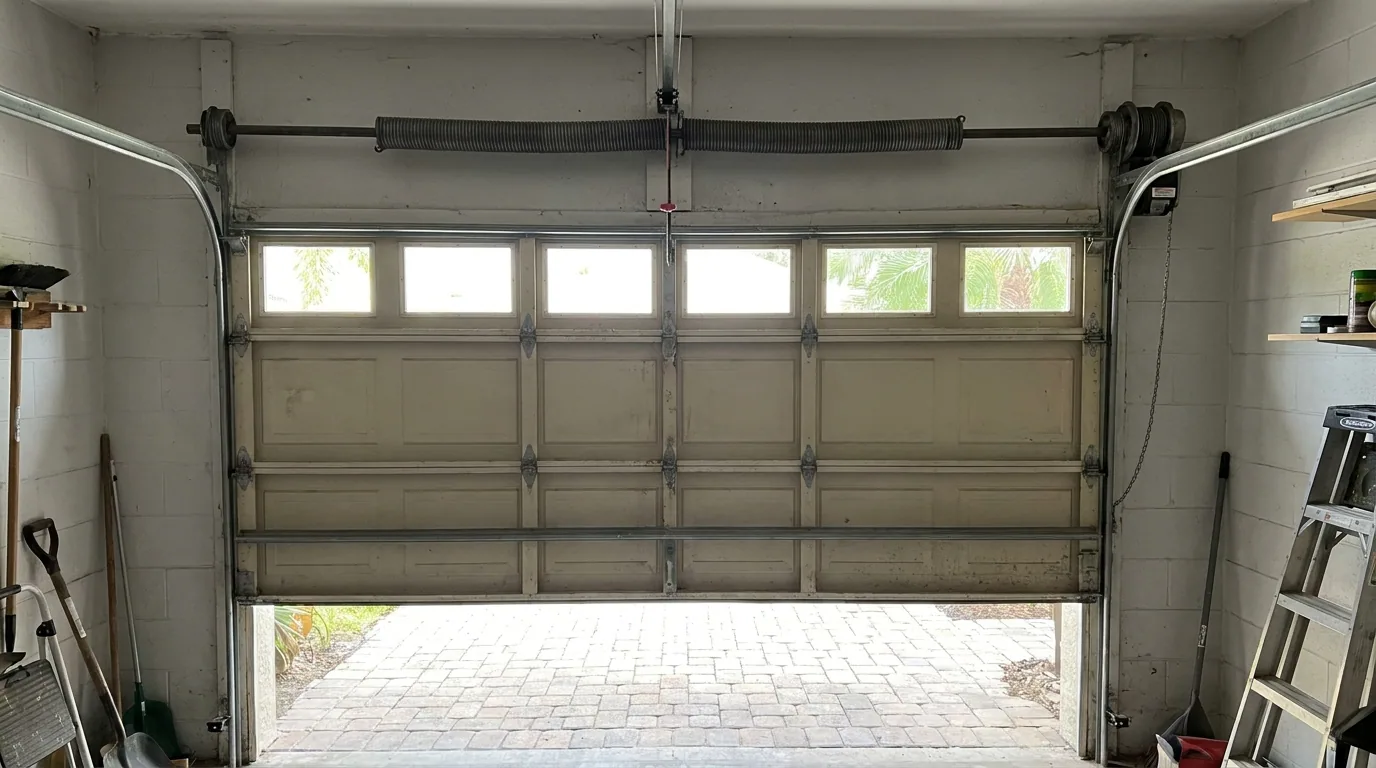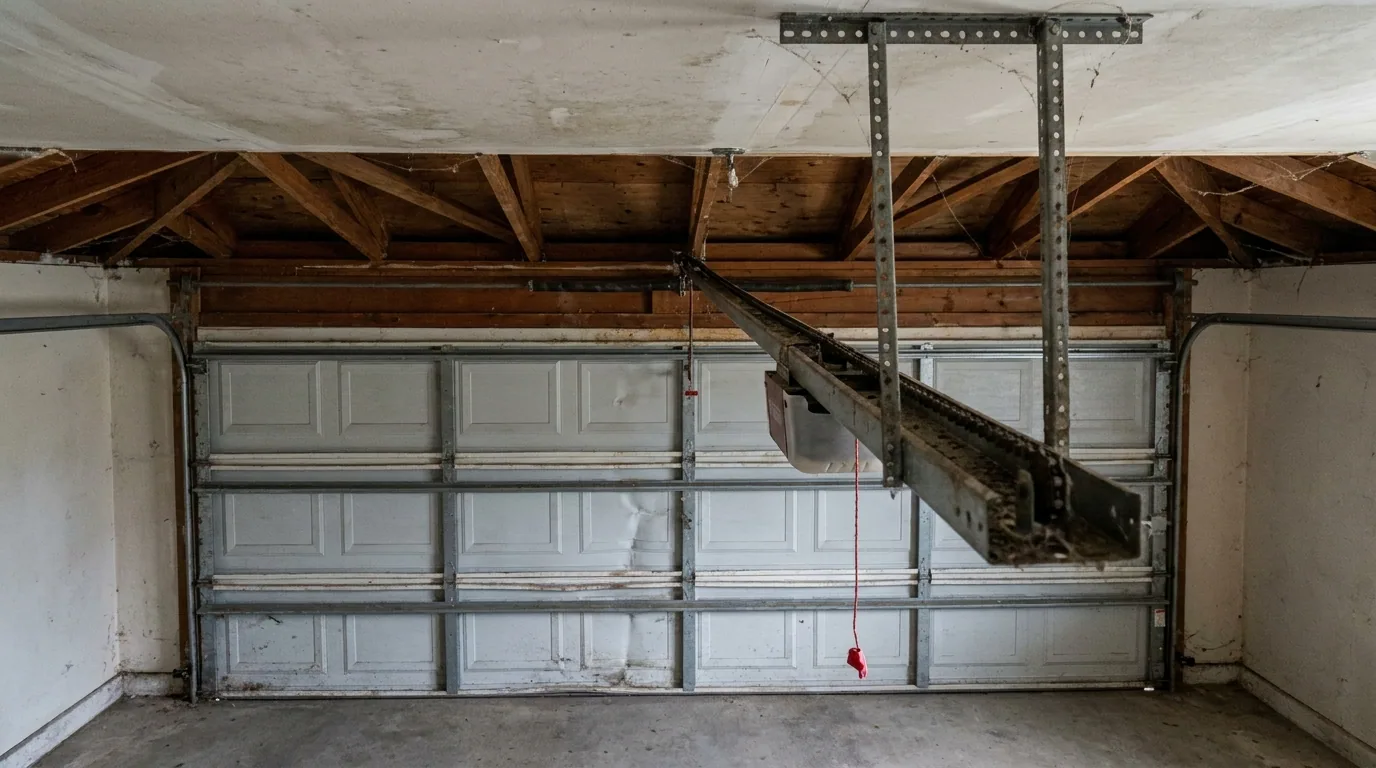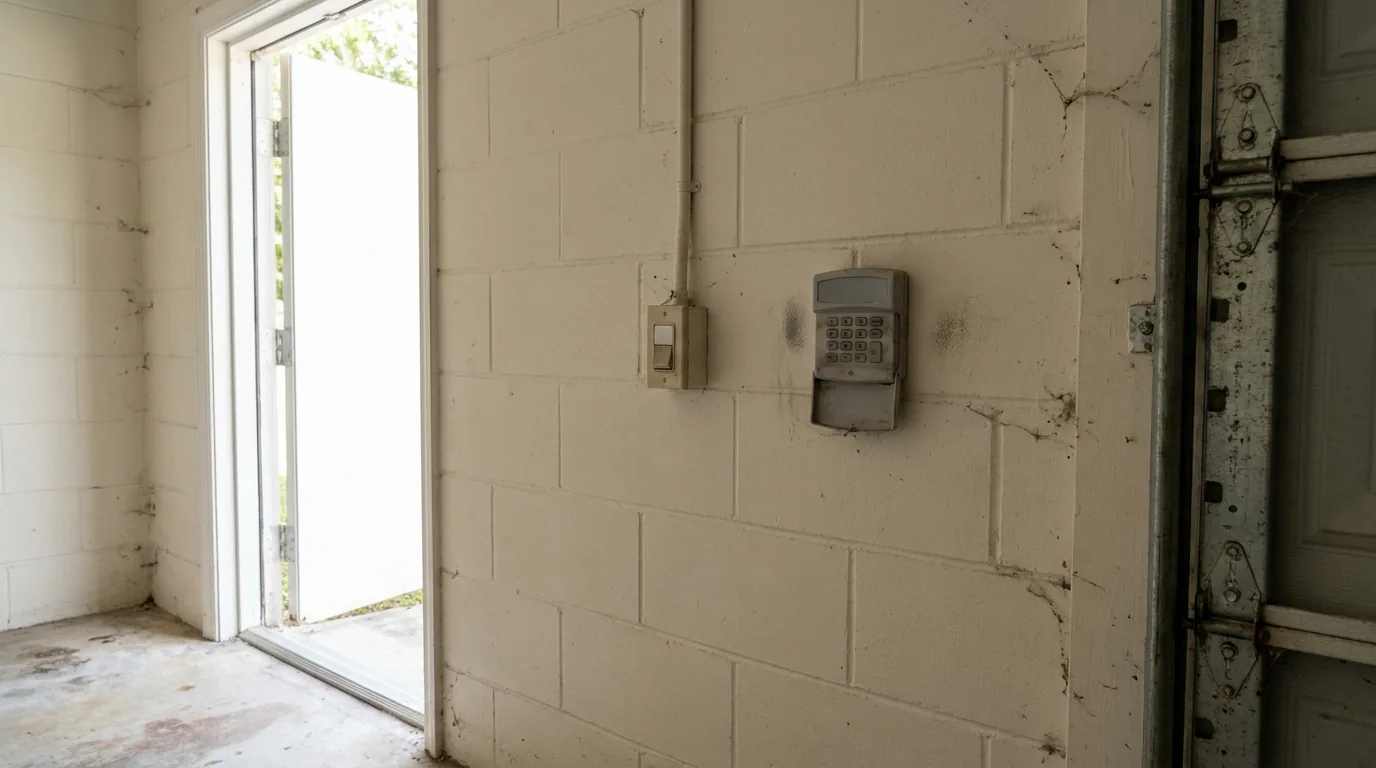
A garage door cable that has left its drum or lost its tension is one of the few problems where the right move is to stop using the door. The cables run from the bottom corners of the door up to drums at the ends of the shaft, and they work as a pair with the springs to keep the door level and under control. When one cable is no longer doing its job, the two sides of the door are no longer held evenly. The opener keeps pushing against a system that is out of balance, and a repairable problem can turn into a bent panel, a damaged track, or a door that comes down hard. This article covers what you can safely observe from outside the door with the garage empty, why the opener should stay off, and what the technician handles once the door is secured.
What the cables do, and why tension matters
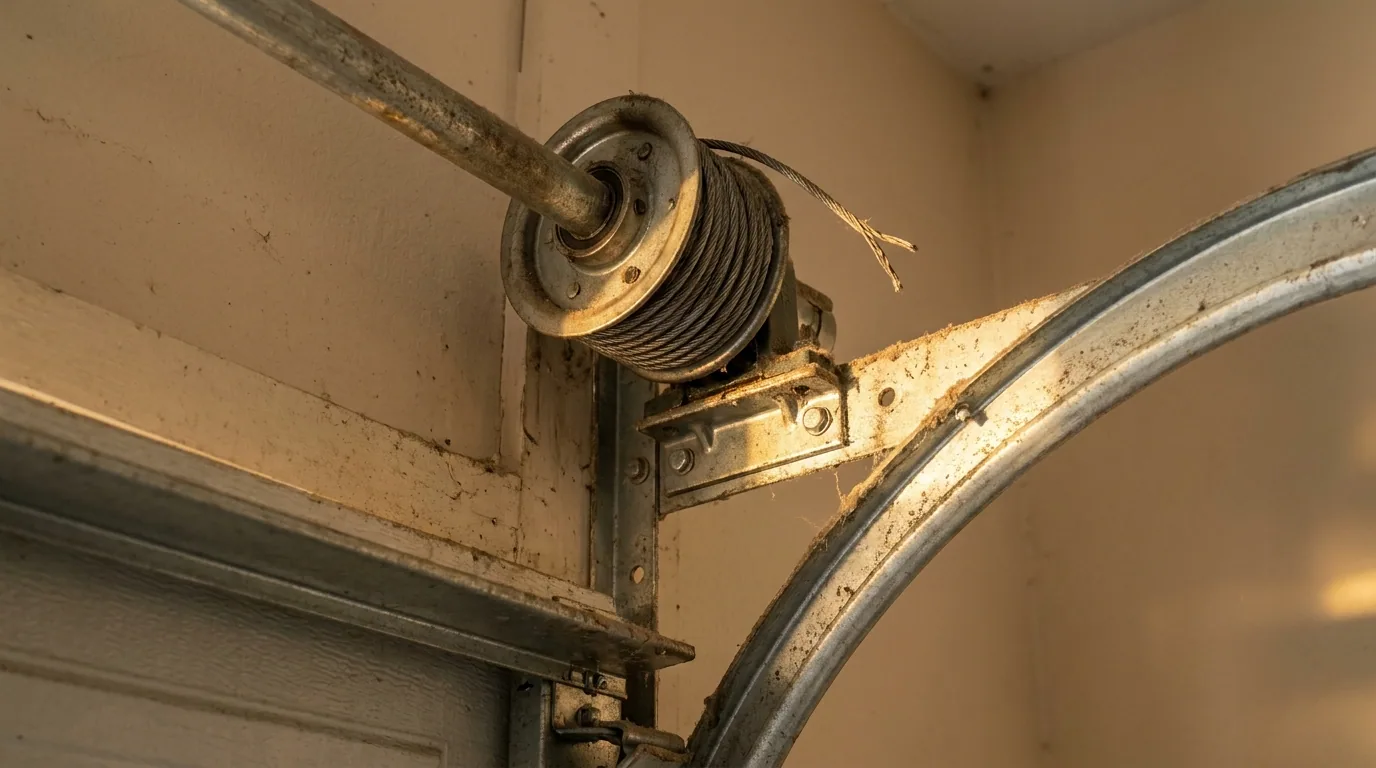
Each cable is anchored at the bottom corner of the door and winds onto a drum at the top of the track as the door closes. The springs carry most of the door's weight. The cables keep the two sides moving together and hold the door to the springs, so the weight stays shared between them through the whole travel.
A cable that has gone slack is not holding its side of the door. A cable that has left its drum has come out of the groove it is supposed to wind into, so it cannot wind or unwind correctly as the door moves. In either case the door's weight is no longer divided evenly, and the opener — built to move a door the springs and cables have already balanced — is now working against a load it was never meant to carry.
Why the opener should stay off
The opener's job is to move a door that is already balanced. When a cable is slack or off its drum, that balance is gone. Running the opener in that condition can pull the door further out of line, drag a panel against the track, or let one side of the door drop faster than the other. It also puts strain on the opener's drive train and on the brackets that hold the track.
So the practical rule is simple: if you suspect a cable problem, leave the door where it is and keep the opener off. Do not pull the emergency release and try to move the door by hand to see how it feels. That is exactly the situation where a door with a compromised cable can come down unexpectedly. A technician has the tools to secure the door before anything is moved.
What you can recognize from outside the door
With the garage empty and the door fully closed, you can read a good deal from the door itself without touching the springs, cables, or hardware. What you are looking for is the door sitting or moving differently than it usually does.
- The door hangs at an angle. One side sits visibly lower than the other when closed. A snapped cable will do this, and so will a broken spring or a bent track. The angle alone does not tell you which, but it tells you the door is not being held evenly.
- An uneven gap along the top or bottom. A door that used to meet the floor evenly and now shows a wedge-shaped gap is out of alignment somewhere in the system.
- The door feels heavier in normal use. If the door seems to labor on the way up or drops faster than it used to on the way down, the springs or cables are not carrying the weight the way they should.
- A new noise at the start of a cycle. A pop, snap, or scrape in the first second of travel is worth noting and describing to a technician.
- The door stops partway and will not continue. An opener that runs but cannot lift the door may be fighting an unbalanced door, or it may have a stripped gear or a travel-limit problem. Those are different failures with different fixes.
What you cannot safely determine from outside is which of these causes is at work. A crooked door can mean a snapped cable, a broken spring, or a bent track. A door that feels heavy can mean a spring problem, a cable problem, or drag in the track. The technician separates them by inspecting the springs, cables, drums, and track directly.
What the technician checks
When a technician arrives, the first job is to secure the door so it cannot move unexpectedly. From there the inspection covers the springs and their tension, the cables and how they sit on the drums, the drums and shaft, the bottom brackets, and the track alignment. The technician will also check whether the opener itself was damaged while it was running against the unbalanced door.
Repair usually means restoring the cable to its drum and correcting whatever caused it to leave — a worn drum, a loose set screw, a damaged cable end, or a spring that has lost tension. In some cases the cable and drum hardware are replaced rather than reused. The door is then cycled and checked for level travel before it goes back into service.
When to call
If the door hangs at an angle, shows an uneven gap, or has stopped moving the way it used to, stop using the opener and call for service. The Broken Spring Garage Door Repair LLC works in Sunrise and the surrounding communities of western Broward County, and emergency service is available. You can reach the office at 954-414-9504 or info@thebrokenspring.com, or visit at 4850 Northwest 103rd Avenue, Sunrise, FL 33351. Weekday hours are 7:00 AM to 7:00 PM, weekend hours are 8:00 AM to 6:00 PM. The business is licensed and insured.
One last note for homeowners who like to stay ahead of problems: the time to have cables and springs checked is before something lets go. A door that has started to feel heavy or sit unevenly is telling you something, and a technician can confirm what it is without you having to touch the parts that hold the door's weight.