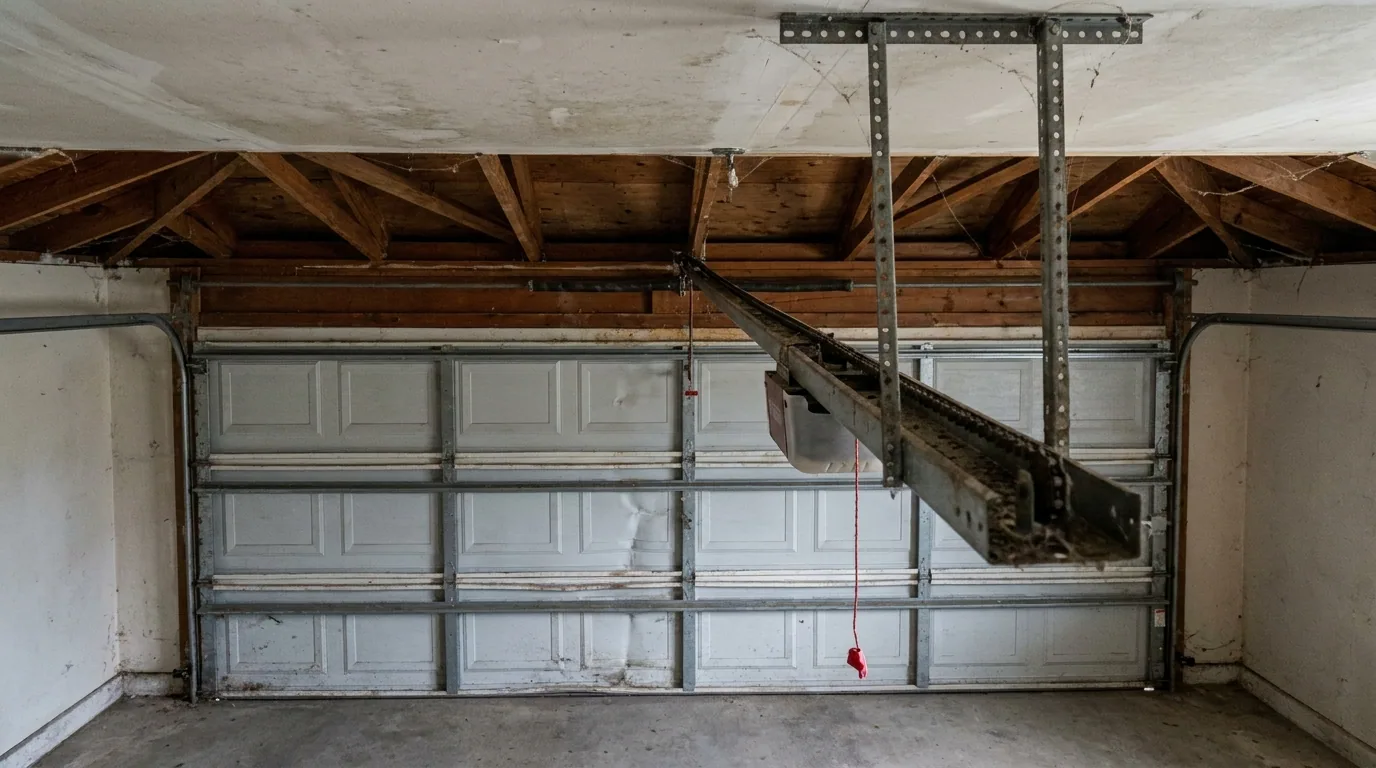
A chain or belt that looks loose, hangs low, or makes a slapping or grinding sound as the door moves is one of the more common opener complaints, and it is easy to assume the drive is simply worn out. Sometimes it is. Sometimes the drive is fine and something else is loading it. The chain or belt on a residential opener runs between the motor unit and the trolley that pulls the door, and how it behaves tells you something about the whole assembly, not just that one part. This article covers what a homeowner can safely notice from outside the door with the garage empty, the most likely reasons a drive sags or slips, and the tests that separate them. The chain, belt, sprockets, and opener drive train are technician territory, and nothing here asks you to touch them.
What a slipping or sagging drive looks like from outside
With the garage empty, close the door and watch a full cycle from the floor. You do not need to climb a ladder or open the motor housing to notice the things that matter.
- The door pauses or lurches. The motor runs, the door starts to move, then it stalls for a beat and catches again. That jerky start is worth noting.
- A slapping or rattling sound from overhead. A drive that is loose can slap against its rail as it moves. The sound is usually most obvious at the start and end of a cycle.
- The motor runs but the door does not move. This is a different symptom from slipping and points somewhere else, covered below.
- The door reverses or stops partway. The drive may be involved, but so may the travel limits or force settings, and those need to be separated.
Note what you hear and when in the cycle it happens. That timing is the most useful thing you can hand a technician, because it narrows the list before anyone arrives.
Why a chain or belt goes slack
A drive does not loosen on its own for no reason. There are a few common explanations, and they call for different work.
The drive has simply stretched or worn
Chains and belts are under constant tension and they do stretch over time. A chain that has stretched enough will hang lower than it should and can skip on the sprocket. A belt can develop slack the same way. This is ordinary wear, and it is one of the reasons a drive eventually needs attention.
The tension has been disturbed
If the opener was recently installed, serviced, or moved, the drive may not have been tensioned correctly afterward. A drive that was fine before recent work and is slack now is worth mentioning when you call.
Something else is loading the door
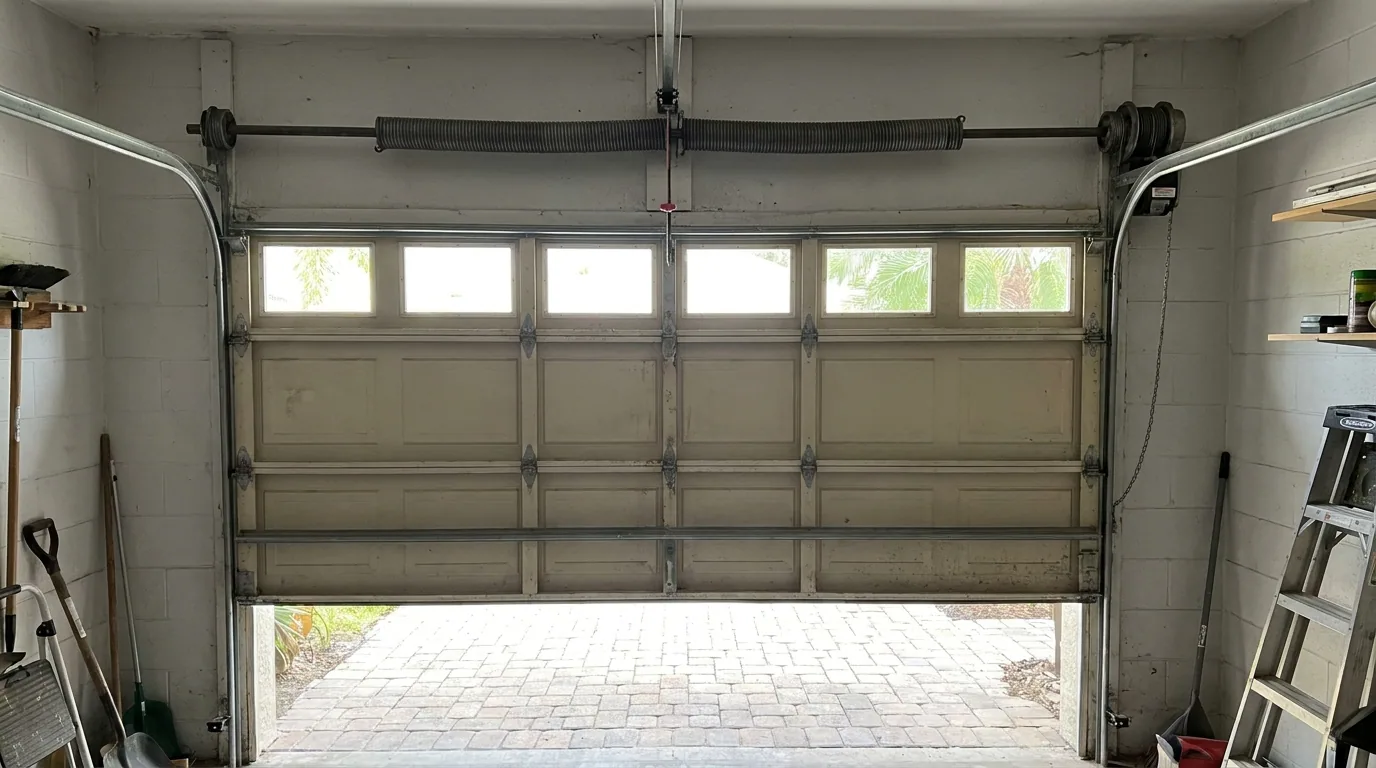
This is the one homeowners most often miss. A drive that slips can be reacting to a door that has become harder to move. A roller that has seized, a hinge that has stiffened, or a track that has been knocked slightly out of line all add resistance, and the drive takes the strain. In that case, tightening or replacing the drive alone does not solve the problem.
The sprocket or trolley is worn
A worn sprocket can let a chain skip even when the tension is correct. A worn trolley can bind on the rail. Both are technician findings, not something to judge from the floor.
The motor runs but the door does not move: a separate problem
This symptom is often confused with a slipping drive, but the mechanism is different. When the motor runs and the door stays put, one common cause is a stripped gear inside the opener, which lets the motor turn without driving the trolley. Another possibility is that the trolley has come loose from the carriage, or the emergency release has been left engaged. These are not the same failure and they are not fixed the same way.
The test that separates them is a technician's: the housing comes off, the gear is checked, and the trolley is examined on the rail. From outside, all you can reliably say is that the motor runs and the door does not move, and that is exactly what to report.
What a technician checks, and what stays off your list
When a technician arrives, the drive tension is measured against the opener's specification, the sprocket and trolley are inspected for wear, and the door itself is checked for resistance that could be loading the drive. The springs and cables are inspected as part of that, because a door that is out of balance puts extra load on everything upstream of it. If the door feels heavier than usual in normal use, say so. That is a useful observation and it belongs in the conversation.
What does not belong on your list: adjusting the chain or belt, tightening the tension, removing the motor housing, or reaching for the springs, cables, or opener drive train. Those are licensed technician work, and a drive that is adjusted wrong can damage the opener or leave the door in a state where it will not hold position safely.
When to stop using the door and call
If the door lurches, stalls, or reverses repeatedly, stop running it and call. A door that is binding or out of balance can put sudden load on the drive and on the lifting hardware, and continuing to cycle it makes the eventual repair larger. The same applies if you hear a sharp report from the door area or the door sits crooked in the opening.
The Broken Spring Garage Door Repair LLC serves Sunrise, Fort Lauderdale, Tamarac, Plantation, Coral Springs, and Weston. The company is licensed and insured, and emergency service is available. Reach the team at 954-414-9504 or info@thebrokenspring.com, or at 4850 Northwest 103rd Avenue, Sunrise, FL 33351. Weekday hours are 7:00 AM to 7:00 PM, and weekend hours are 8:00 AM to 6:00 PM.