A garage door that opens by itself gets your attention. You close it, walk inside, and later find it standing open. Sometimes it happens in the middle of the night; sometimes you catch it partway up and then settling back down. The important thing to understand first is that this is not one problem with one cause. A door that rises on its own can be an opener receiving a stray signal, a travel limit set wrong, a logic board misreading its own inputs, or a mechanical fault that lets the door drift up once the opener has released it. This article explains what each of those looks like, which observations separate them, and where the line sits between what you can check yourself and what belongs to a technician.
Start with when it happens, not with the opener
The single most useful thing you can do is note the circumstances. A door that opens at random times of day, including when nobody is home, points toward a signal or control problem. A door that opens shortly after you close it, every time, points toward a travel limit or force setting. A door that opens once and then behaves for a week is harder to place, and the pattern matters more than the single event.
Write down three things: the time of day, whether anyone was home, and whether the door had just been used. If it happens more than once, the pattern usually narrows the possibilities faster than anything else. When you call, that log is worth more than a general description.
Remotes, wall controls, and stray signals
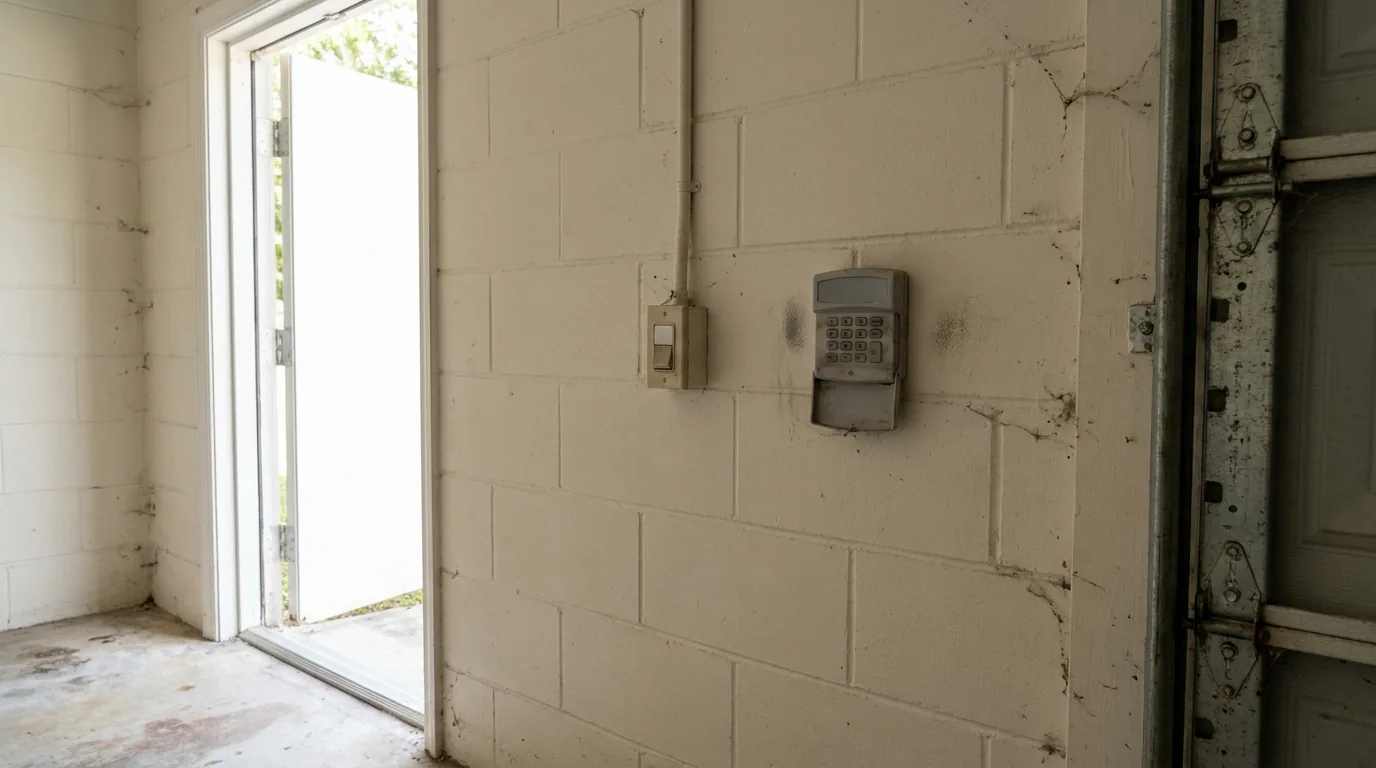
An opener that receives a command it did not expect will do exactly what it was told. The command can come from a remote in a pocket or a drawer with a button pressed against something, from a wall console with a stuck button, or from a neighbor's remote that happens to share a code on an older unit. On openers that use fixed codes, a matching remote nearby can trigger the door. Newer openers that pair with their remotes are far less prone to this, but a stuck button is still a stuck button.
To narrow it down, take the batteries out of the remotes you keep in the car and the house for a day or two and see whether the door still opens on its own. If it stops, the problem is in a remote or its button. If it continues, the remote is not the source and the next place to look is the wall control and the opener's own logic.
Travel limits and force settings
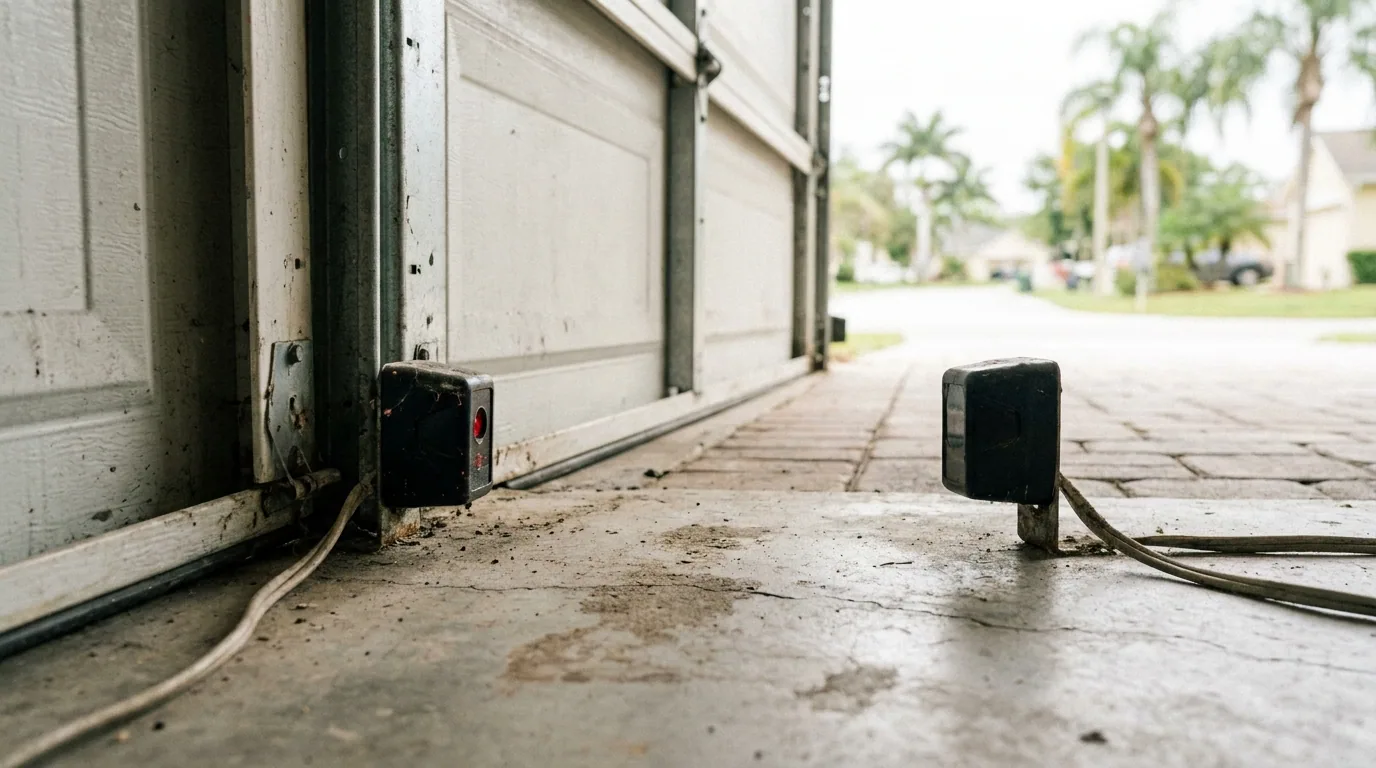
Every opener has settings that tell it where the door should stop at the top and bottom, and how much resistance it should tolerate before it reverses. If the up limit is set too far, the opener keeps pushing after the door has reached the top and the door can be pulled back down or left in an odd position. If the force setting is too sensitive, a small change in resistance during the close can trigger a reversal, and a door that reverses and then sits can look from a distance like a door that opened by itself.
This is adjustment work on the opener's drive train and its settings, and it belongs to a technician. What you can do is describe the behavior precisely: does the door go all the way up, or does it stop partway? Does it reverse during the close, or does it open from a closed position? Those two descriptions lead to different settings.
When the door drifts up after the opener lets go
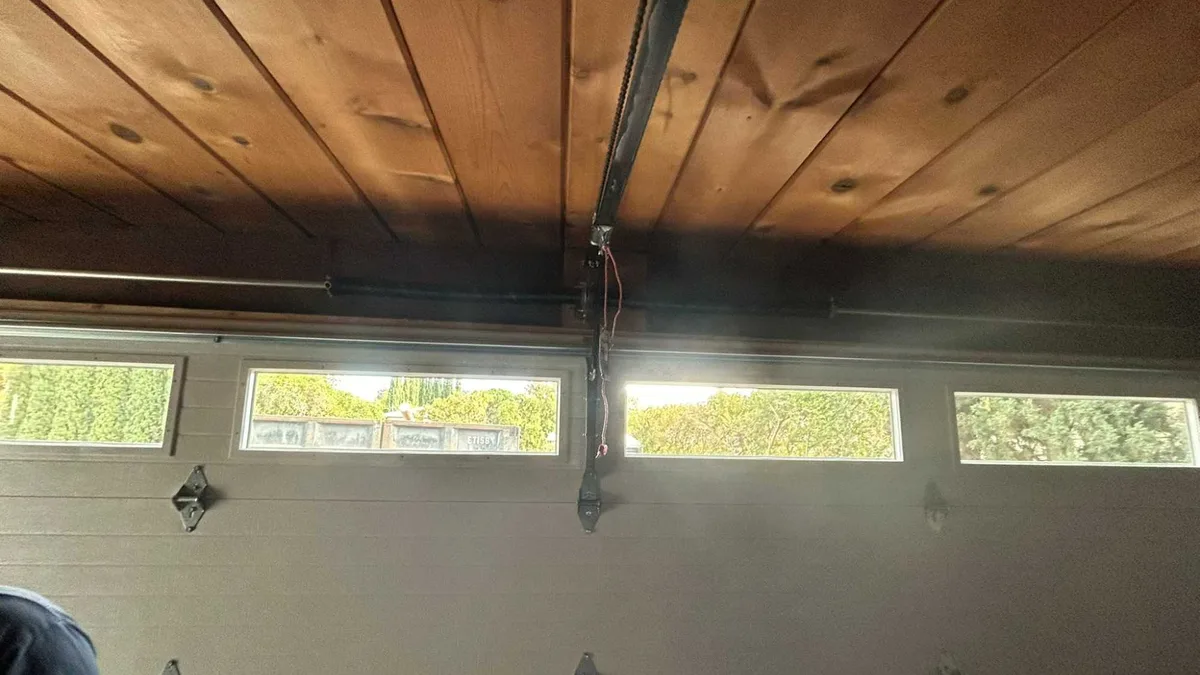
If the door opens slowly and quietly with no motor sound at all, the opener is not the cause. In that case the door is being lifted by something other than the opener, and the usual suspects are the springs and cables that carry the door's weight. A torsion spring that has lost tension, or a cable that has come off its drum, can leave the door unbalanced enough that it drifts. A door in that condition is also a door that can come down hard, which is why it should be treated as urgent rather than observed for a few more days.
The technician inspects the springs and cables directly, because those parts are under tension at all times and are not homeowner work. From outside the door with the garage empty, you can note whether the door sits crooked when closed, whether there is a gap along the top, or whether the door feels heavier than usual when you use it normally. Those observations help the technician before arrival.
What to do while you wait for service
If the door is opening on its own, the safest short-term step is to keep the door closed and stop using the opener until it has been looked at. Unplugging the opener will prevent it from acting on a stray command, but it will not help if the door is drifting on its own, because the drift is mechanical. Do not pull the emergency release and move the door by hand to test it, and do not attempt to adjust the springs, cables, or the opener's drive train. Those are the parts that cause injuries.
If the door is in a position where it could close on a person or a vehicle, or if it has already come down unexpectedly, call for service rather than waiting. The Broken Spring Garage Door Repair LLC serves Sunrise, Fort Lauderdale, Tamarac, Plantation, Coral Springs, and Weston, and can be reached at 954-414-9504 or info@thebrokenspring.com. The company is licensed and insured, and emergency service is available. Weekday hours are 7:00 AM to 7:00 PM, and weekend hours are 8:00 AM to 6:00 PM.
What to have ready when you call
- When the door opened on its own, and whether it has happened more than once.
- Whether the door rose with motor sound or in silence.
- Whether the door sits crooked or shows a gap along the top when closed.
- Whether the door feels heavier than usual during normal use.
- Whether any remotes or wall controls have been acting oddly.
None of that requires touching the springs, cables, or opener drive train. It is observation, and it is the fastest way to get a technician to the right part of the problem.