A garage door that will not close all the way is one of the more frustrating failures to deal with, because the door often looks fine. It travels down, stops, and goes back up, or it stops a few inches above the floor and sits there. Sometimes it closes and then reverses as though it changed its mind. The important thing to understand before you start is that most of these symptoms are the door or the opener doing exactly what it was designed to do when something is in the way or out of adjustment. The job is to work out which something, and a few of the checks are ones you can do yourself in a few minutes. Others involve parts you should leave alone.
Start with the photo-eye
The most common cause of a door that reverses on its own is the safety system. Most openers have a pair of photo-eye sensors mounted a few inches off the floor on each side of the opening, and the door will not close if the beam between them is broken. This is not a fault; it is the opener refusing to close on something it cannot see past.
Look at both sensors. Each one usually has a small indicator light. If one is lit and the other is dark or flickering, the beam is not getting through. Common reasons are a sensor knocked out of alignment by a broom or a car bumper, a spider web or leaf stuck over the lens, or sunlight hitting the receiving eye at the same time each day. Wipe the lenses, check that both are pointed at each other, and see whether the indicator on the receiving unit steadies. If the door only fails at a particular time of day, watch whether direct sun is falling on one of the sensors.
If the lights are steady on both units and the door still reverses, the problem is elsewhere. Do not start disconnecting the sensors to get the door closed. That bypasses the one safety feature that stops the door on a person or a pet.
Check the travel and force settings
Openers have adjustments for how far the door travels and how much resistance the motor will push through before it gives up and reverses. These are set at installation and can drift over time, or they can be thrown off when something else changes, such as a track that has shifted or a roller that has worn.
A door that stops at the same point every time, a few inches short of the floor, often points to a travel limit that needs adjusting. A door that closes most of the way and then reverses near the bottom, or reverses the moment it meets any resistance, often points to a force setting that is too sensitive. Both adjustments are described in your opener's manual, and the model number is usually on a label on the motor housing. Follow the manual rather than guessing, because turning a force setting up to force a binding door closed is how people end up with a damaged door or a stripped gear.
Before you touch either setting, close the door by hand with the opener disconnected, using the release cord, and see whether it moves freely. If it binds or feels heavy, the opener settings are not the real problem, and adjusting them will only mask it.
Look at the tracks and rollers
With the door disconnected from the opener and raised partway, look down each track from the floor. The tracks should be straight and parallel. A track that has been bumped, usually by a car or a ladder, can pinch the rollers and stop the door short. You can often see the bend, and you can see whether a roller is sitting crooked or has come out of the channel.
Rollers are worth a look too. A dry steel roller on a dry track will squeal and drag, and a roller with a flat spot or a worn bearing will bind at the same point on every cycle. If the door is noisy and stops in the same place each time, watch the rollers as the door moves and see whether one of them hesitates. Lubricating rollers and tracks with a garage door lubricant is a reasonable homeowner task. Straightening a bent track or replacing a roller is not, because the door has to be supported while it is done.
When the door hangs crooked or will not budge
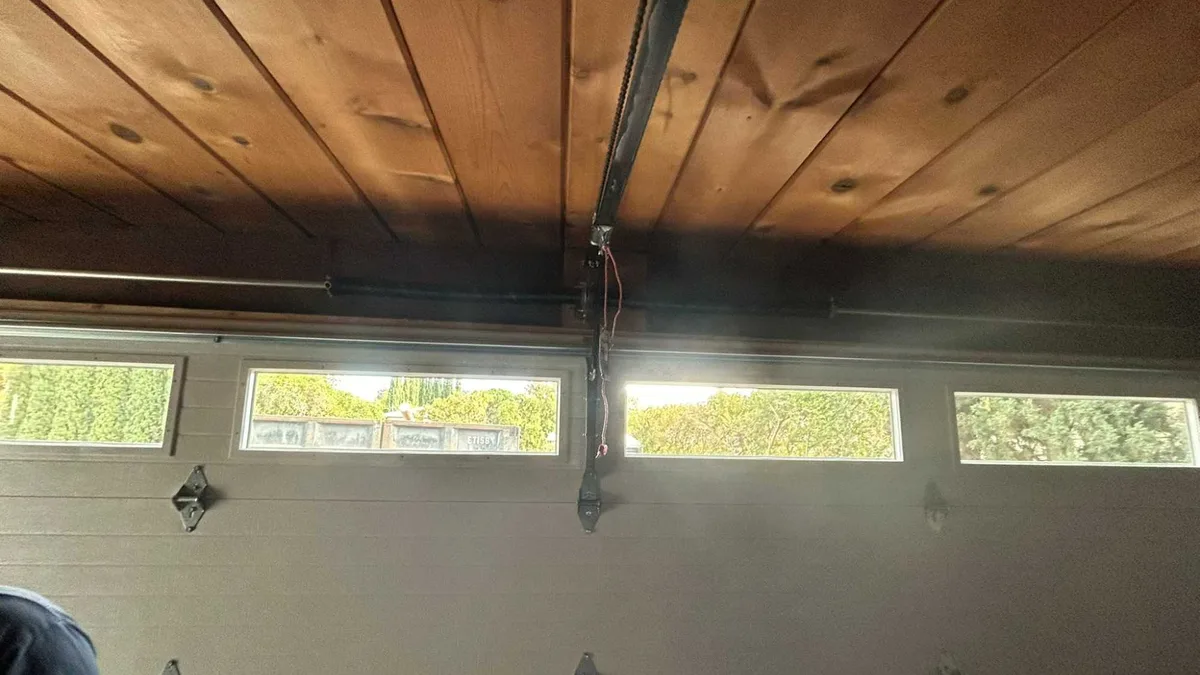
If the door comes down at an angle, with one side lower than the other, stop. A door hanging unevenly usually means a cable has come off a drum or snapped, and the door is no longer supported evenly. Do not run the opener. Do not try to straighten the door by hand. A door in that condition can come down hard, and the cables are under heavy tension. Call a technician.
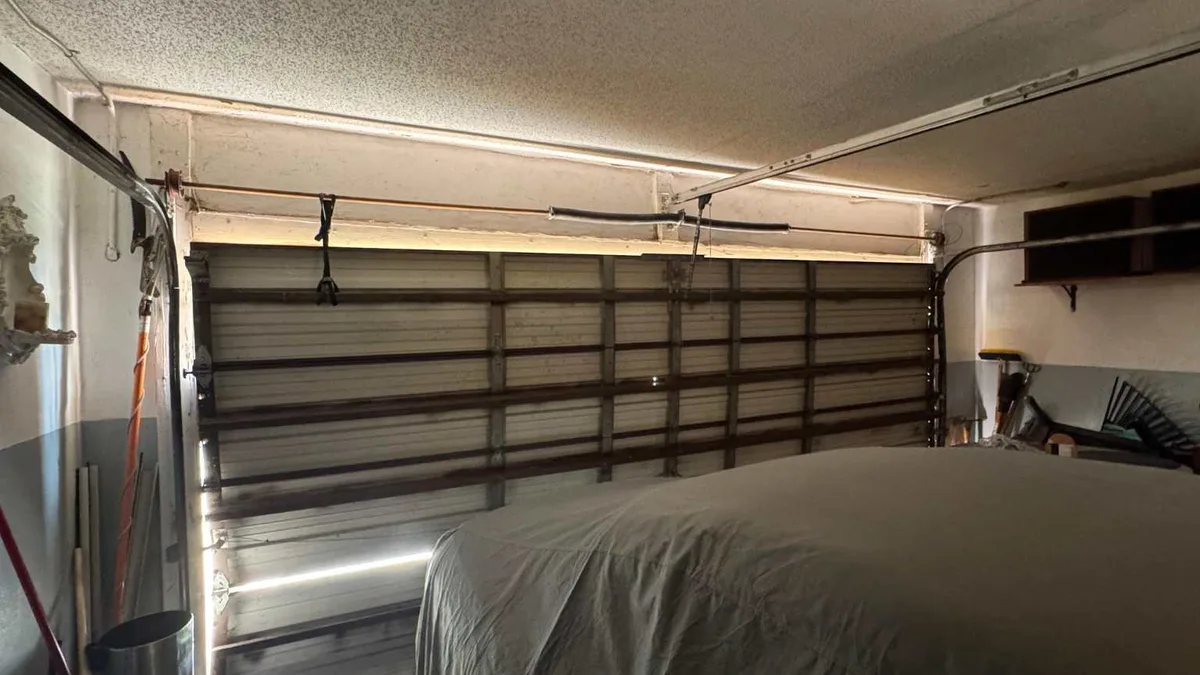
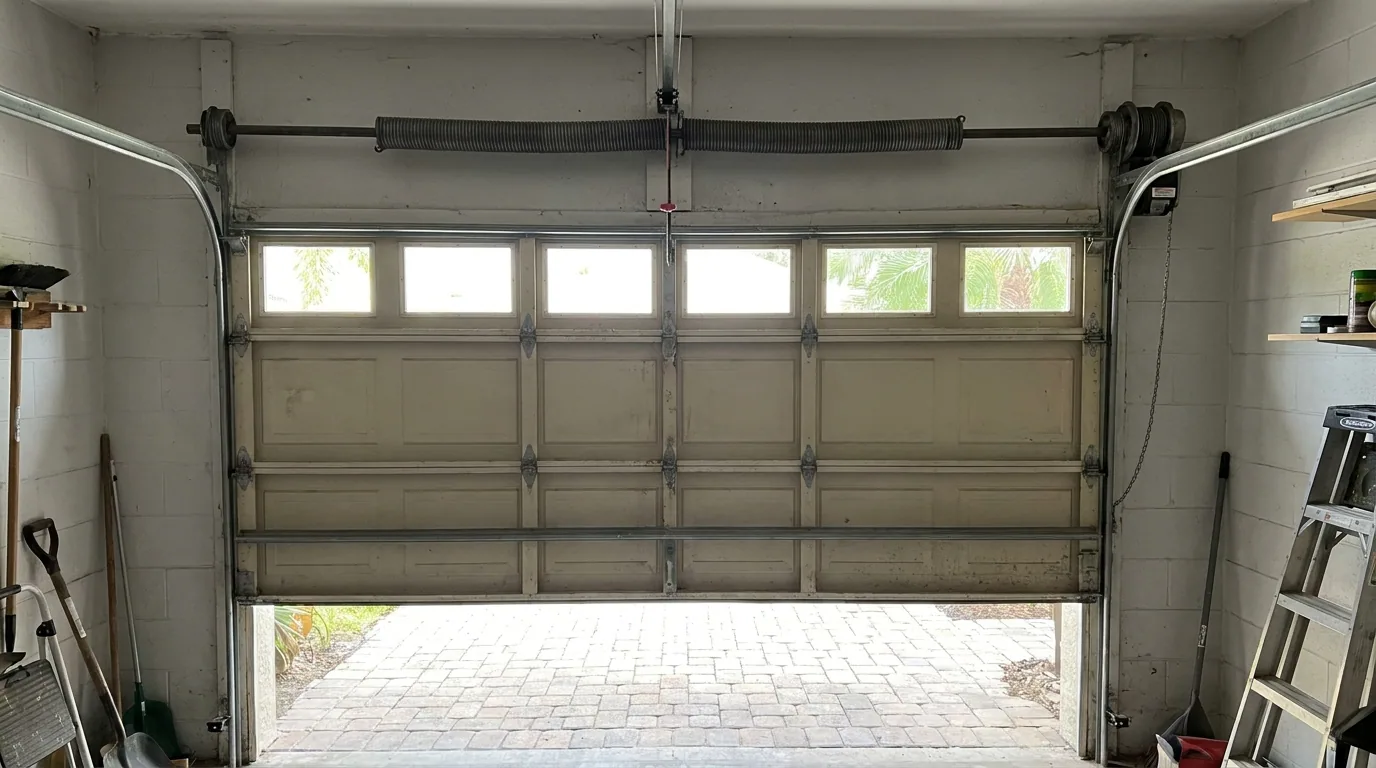
The same applies to anything involving the springs. If the door feels extremely heavy when you lift it by hand, or if you can see a gap in a torsion spring above the door, the spring has failed and cannot hold the door's weight. Torsion springs, cables, and the opener's drive train are all parts to route to a technician rather than investigate yourself.
What to tell the technician
When you call, the details you gathered make the visit faster. Note whether the door reverses immediately or closes partway first, whether it happens every time or intermittently, whether the photo-eye indicators are steady, and whether the door moves freely by hand with the opener released. If you are in Sunrise, Fort Lauderdale, Tamarac, Plantation, Coral Springs, or Weston and the door will not close, The Broken Spring Garage Door Repair LLC can be reached at 954-414-9504. The company is licensed and insured, serves western Broward County, and offers emergency service outside its regular hours of Mon-Fri 7:00 AM to 7:00 PM and Sat-Sun 8:00 AM to 6:00 PM.
One last thing worth doing while you wait: leave the door open rather than propping it or forcing it down. A door that will not close is inconvenient, but a door that comes down uncontrolled is a hazard, and the difference between the two is usually a check you can do safely from the floor.