A garage door opener that hums but does not move the door is one of the more common calls a technician gets, and the sound itself is useful information. A hum means the motor is receiving power and trying to turn. What it is not doing is transferring that motion to the door. The gap between the motor and the door is where the answer usually sits, and it narrows the possibilities to a short list. This article covers what you can safely notice from outside the door with the garage empty, the most likely reasons a humming opener leaves the door in place, and the tests a technician uses to separate them. The springs, cables, and opener drive train are technician territory, and nothing here asks you to touch them.
What the hum tells you before anyone touches anything
The motor running without the door moving is a specific kind of failure. It rules out a dead circuit, a tripped breaker, and a remote that has lost its pairing, because in those cases you would hear nothing at all. It also rules out a door that is simply locked or blocked at the bottom, because a blocked door usually produces a strain or a short attempt rather than a steady hum.
What remains is a break in the chain of motion between the motor shaft and the door itself. That break can sit in several places, and the sound alone will not tell you which one. A technician narrows it down by checking the drive train, the trolley, and the door's own hardware in sequence.
The most likely causes, and how they are told apart
A stripped opener gear
Many residential openers use a plastic or nylon gear inside the motor housing that meshes with the drive. When that gear wears smooth, the motor spins freely and the drive does not turn. The symptom is a steady hum with no door movement and no change in pitch. This is one of the more common causes, but it is not the only one, and it cannot be confirmed without opening the housing. That is technician work.
A broken torsion spring
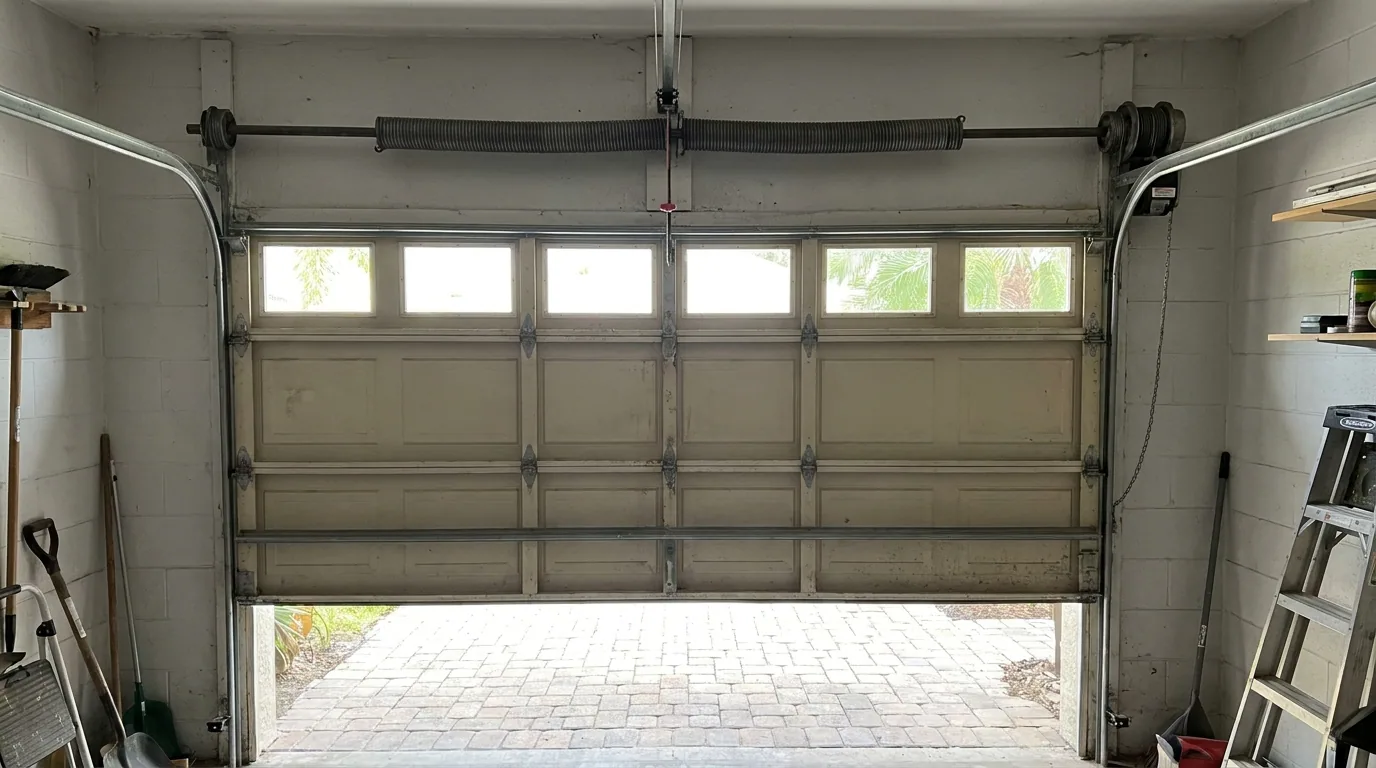
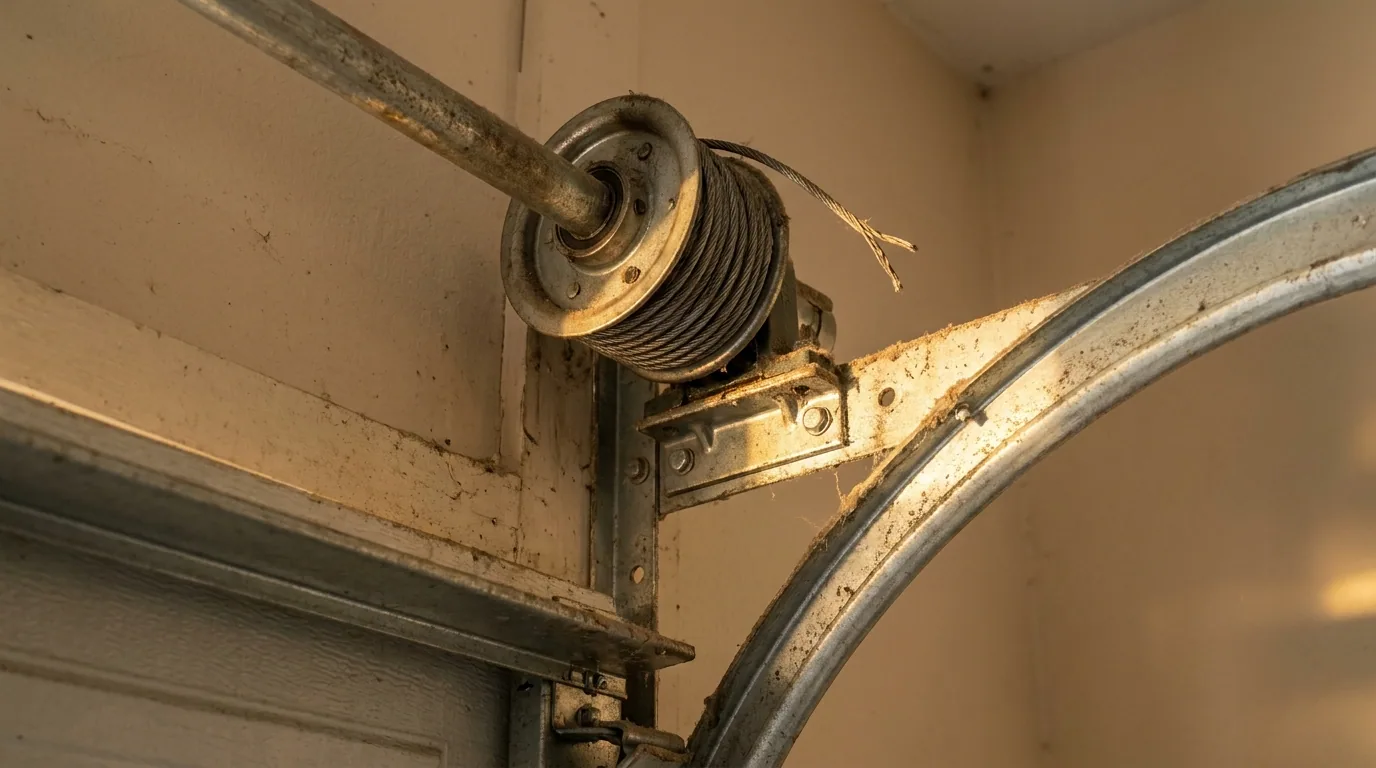
A torsion spring carries most of the door's weight. When it breaks, the door becomes far too heavy for the opener to lift, and the motor may hum against a load it cannot move. A broken spring is mechanically certain in one respect: it cannot hold the door's weight. What a homeowner may notice is that the door feels heavier in normal use, that it sits crooked, or that a gap has opened along the top. The technician confirms the spring and the cables during the visit.
A snapped cable
A door with a snapped cable hangs at an angle. If you see the door sitting crooked in the opening with the garage empty, a cable is one of the possibilities, along with a broken spring and a bent track. Those three produce a similar outward picture, and only an inspection of the hardware separates them.
A disengaged trolley or a failed drive connection
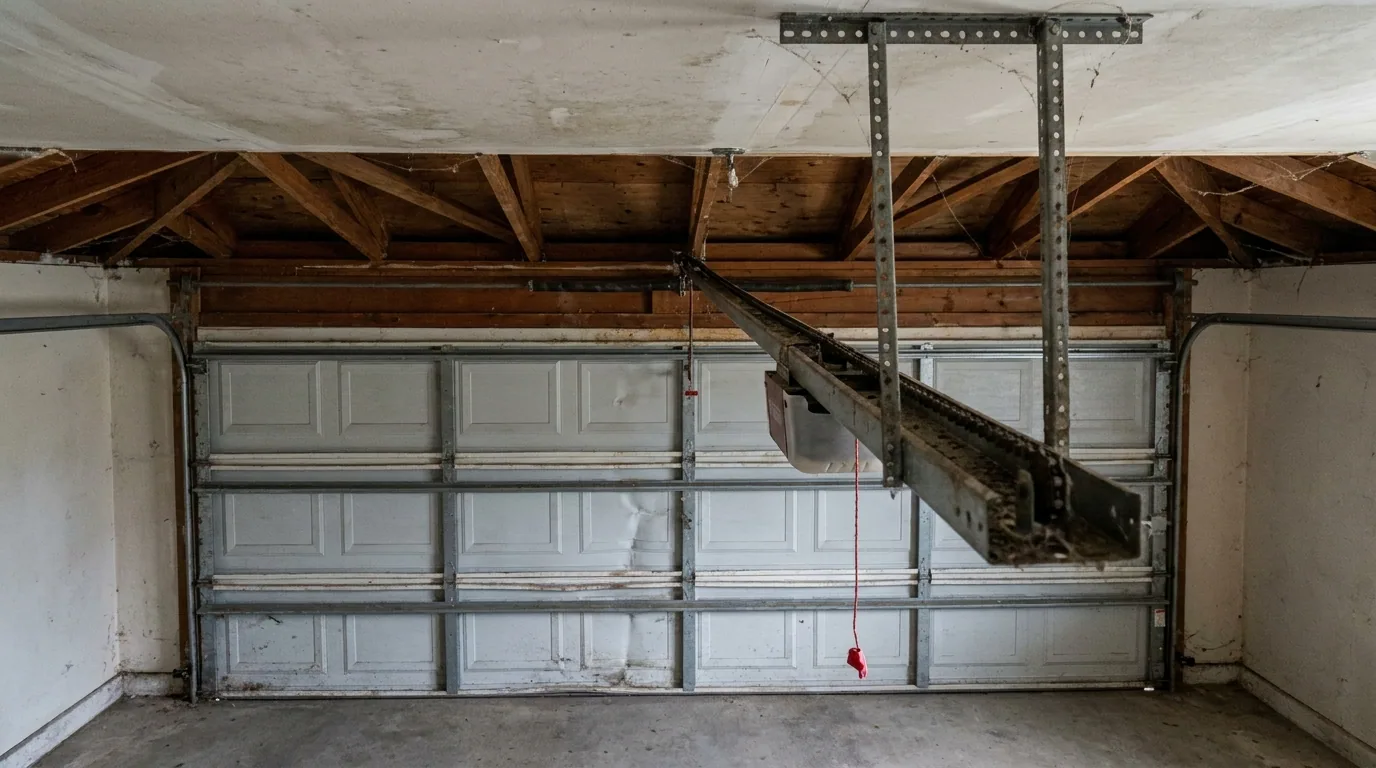
The trolley is the carriage that rides the rail and pulls the door. If it has come loose from the door arm, or if the drive chain or belt has come off its sprocket, the motor will run and the trolley will not travel. This is a connection problem rather than a motor problem, and it is checked at the rail and the door arm.
A failed capacitor or motor winding
Less often, the motor hums because it cannot develop starting torque. A failing capacitor can leave a motor unable to turn under load, and a damaged winding can do the same. These are diagnosed with a meter at the motor, which is technician work.
What you can safely observe with the garage empty
You do not need a ladder or a tool to gather useful information. Close the door, clear the garage floor, and watch and listen from the floor.
- Does the door move at all? A door that shifts an inch and stops is different from one that does not budge. Note which.
- Does the hum change pitch? A hum that rises and falls suggests the motor is trying to turn against a load. A flat, steady hum suggests the motor is turning freely with nothing connected.
- Is there a click or a snap at the start? A new noise at the beginning of a cycle is worth reporting to the technician.
- Does the door sit level in the opening? A crooked door points toward the door hardware rather than the opener.
- Is there a gap along the top of the door? A gap that was not there before is another observation to pass along.
Write down what you see and hear, including whether the door moves at all and whether the sound is steady or changing. That description saves time on the visit.
What not to do
Do not pull the emergency release and try to move the door by hand to see whether it is stuck. Do not attempt to lift the door to judge its weight, and do not test the balance by hand. A door that has lost spring tension or a cable can come down hard, and the release cord puts you directly under a door that may not be supported. Do not open the motor housing to look at the gear, and do not reach for the springs or cables. All of that belongs to a technician.
If the door is stuck open, leave it where it is if it is stable, keep people and vehicles clear of the opening, and call for service. If it is stuck closed, use another entrance until it is repaired.
When to call
A humming opener that will not move the door is not a problem that resolves on its own, and repeated attempts to run the motor against a stuck door can turn a small repair into a larger one. Stop cycling the opener once you have confirmed the symptom.
The Broken Spring Garage Door Repair LLC serves Sunrise, Fort Lauderdale, Tamarac, Plantation, Coral Springs, and Weston in western Broward County, Florida. The company is licensed and insured, handles residential and commercial garage door repair, spring repair and replacement, opener installation and repair, and panel and weather seal work. Hours are Monday through Friday from 7:00 AM to 7:00 PM and Saturday and Sunday from 8:00 AM to 6:00 PM, with emergency service available. Reach the office at 954-414-9504 or info@thebrokenspring.com, or visit 4850 Northwest 103rd Avenue, Sunrise, FL 33351.