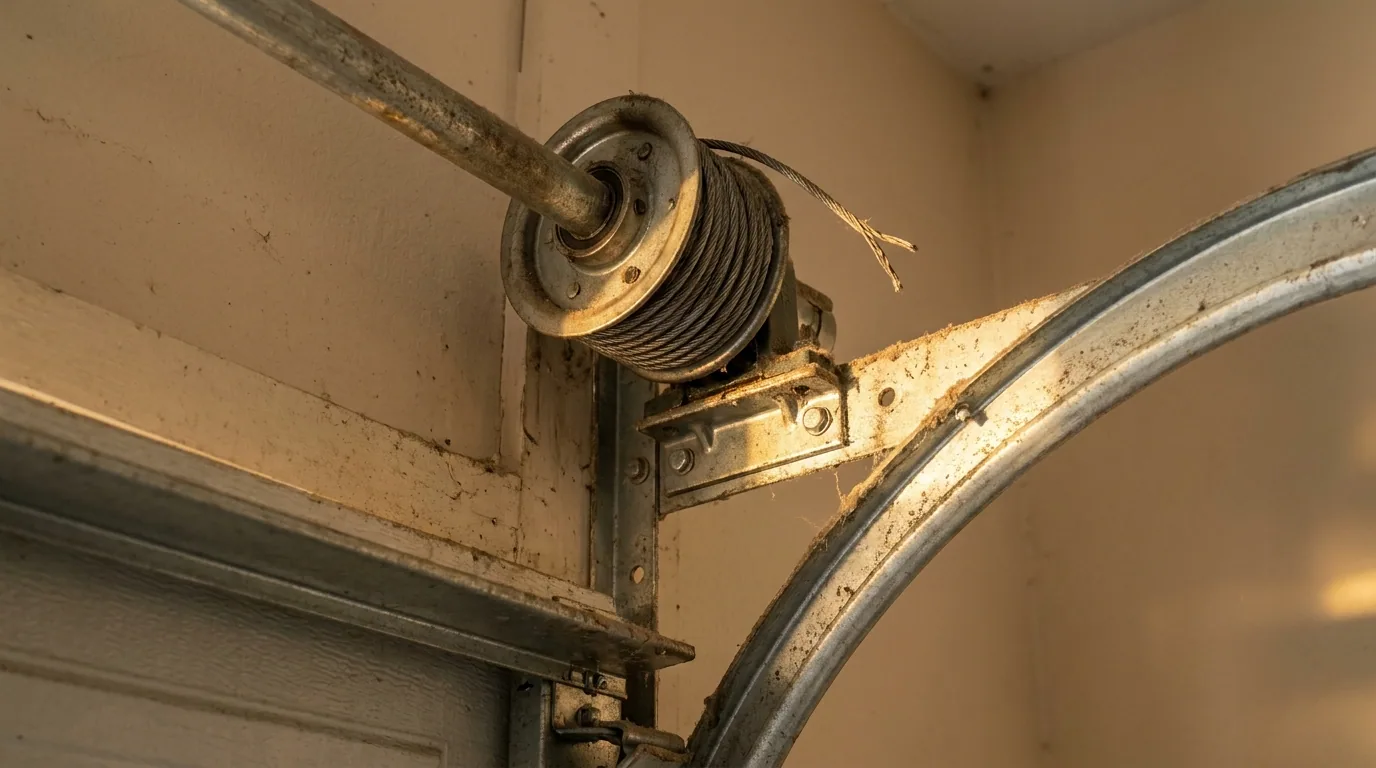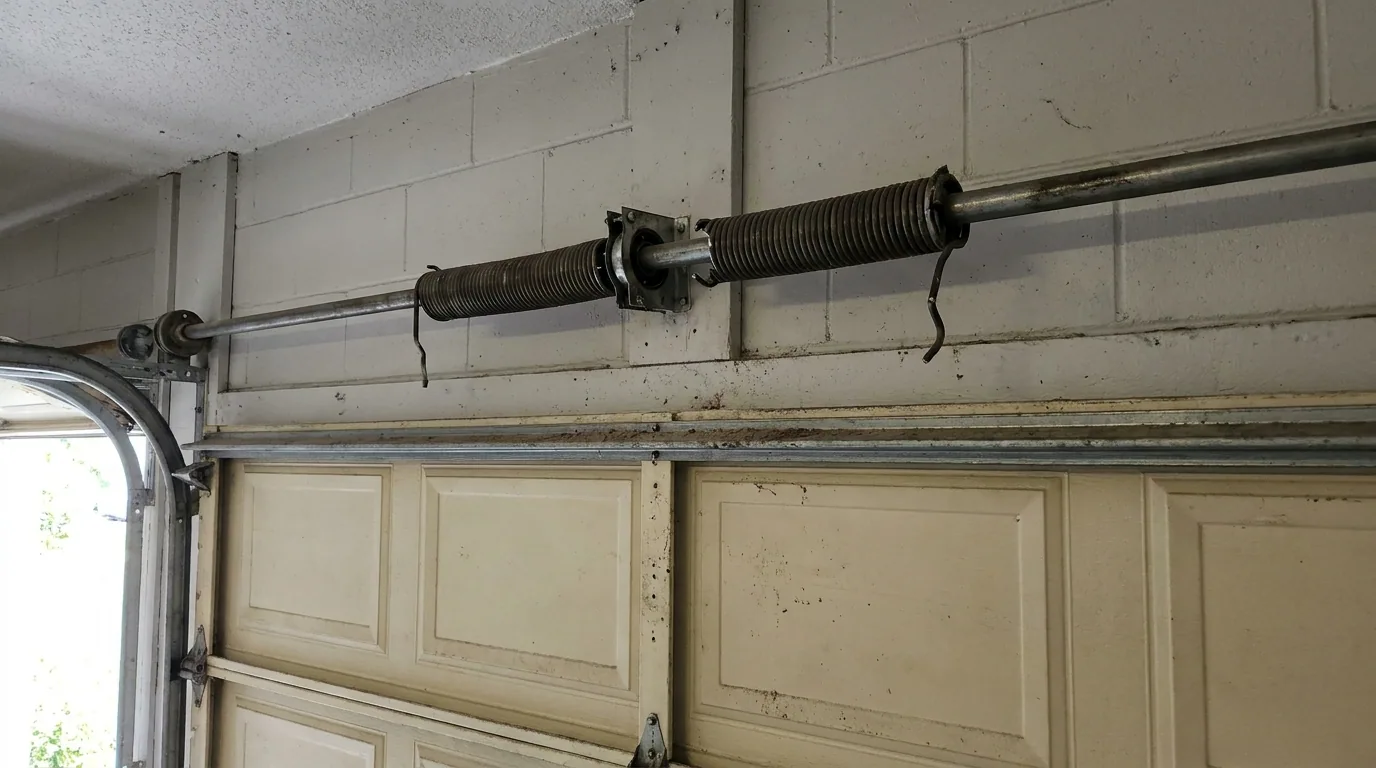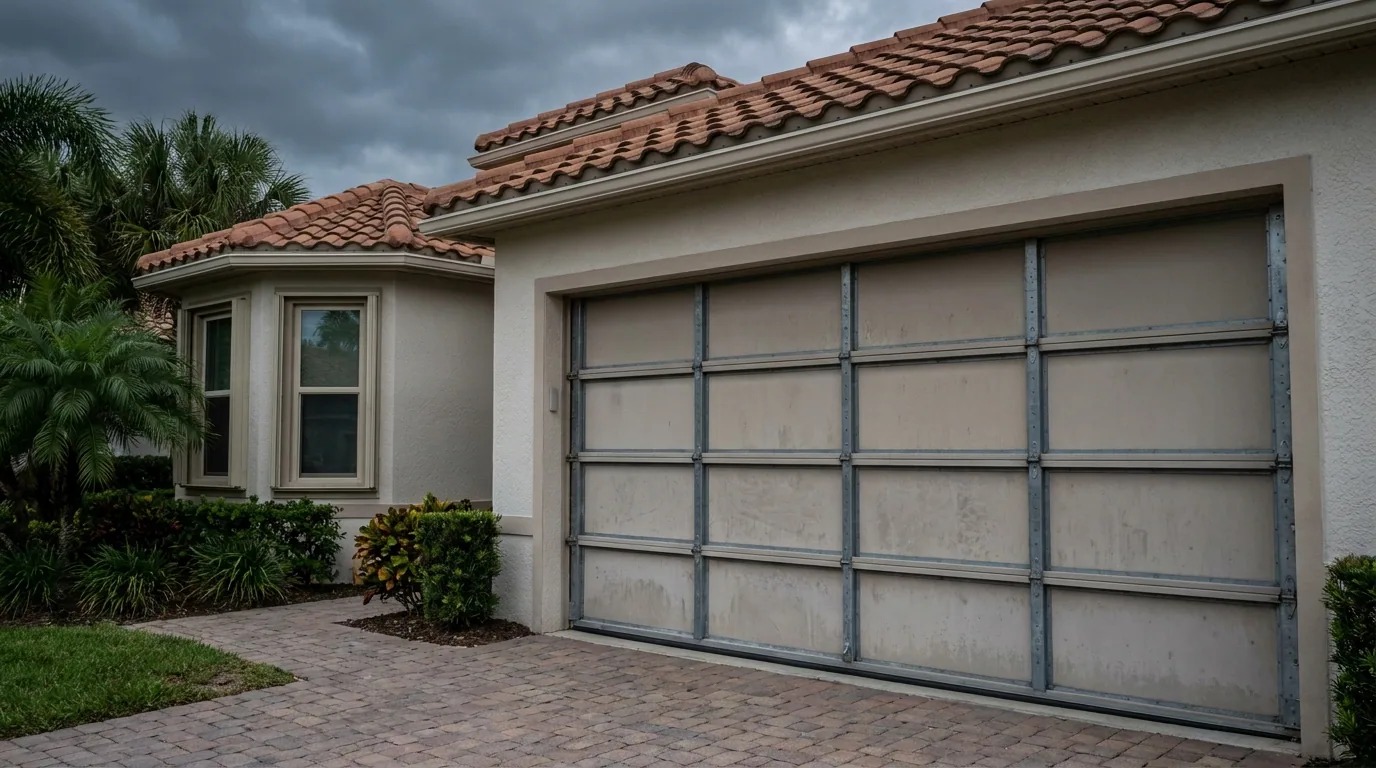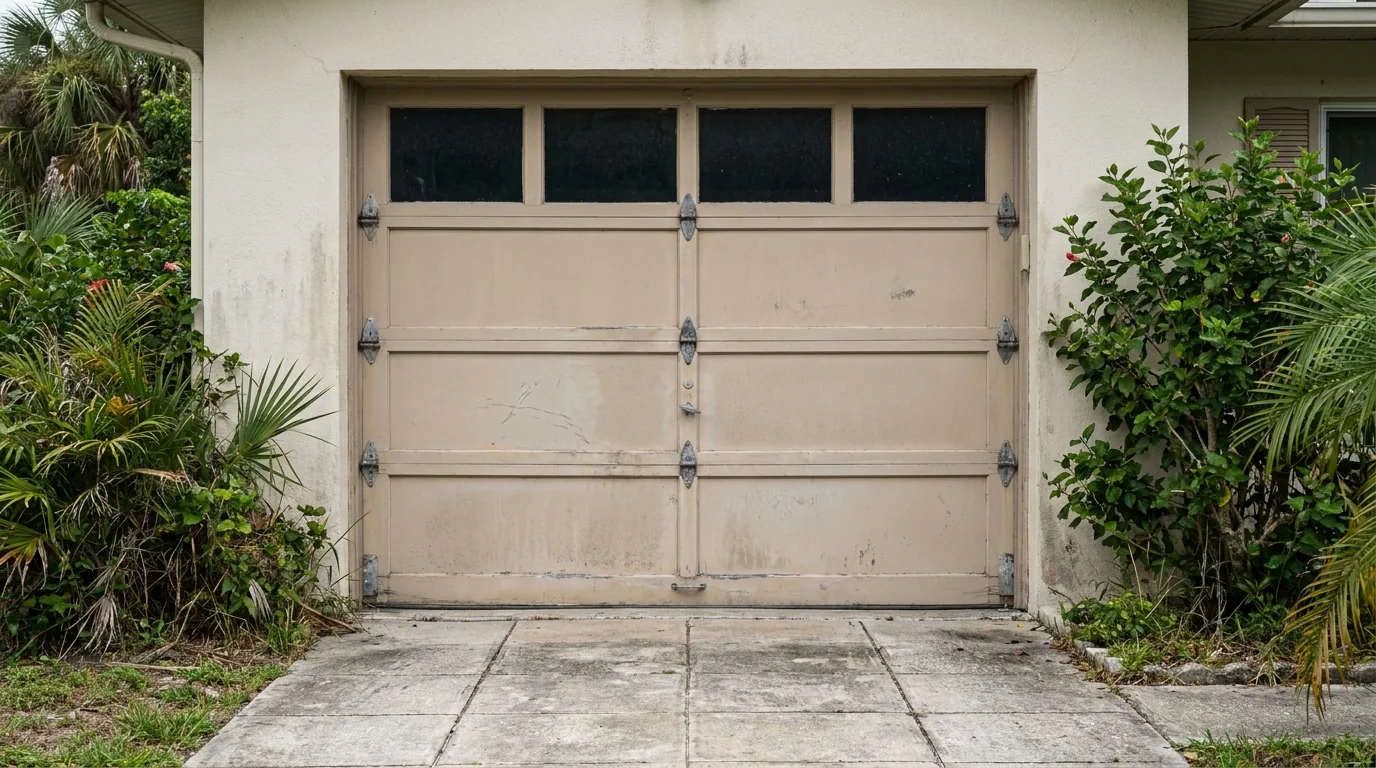
A dented garage door panel is one of the most common things a homeowner notices and one of the hardest to judge. The door still opens and closes, so it seems fine. But a dent is not always just a mark on the surface. Sometimes it changes how a panel sits in the track, how the weather seal meets the floor, or how the door's weight is carried. Other times it is purely cosmetic and will sit there for years without causing a problem. This article covers what a dent can affect, what you can safely observe from outside the door with the garage empty, and how a technician separates a cosmetic dent from one that needs attention. The springs, cables, hinges, and track are technician territory, and nothing here asks you to touch them.
What a dent actually is
Most garage door panels are made of steel or aluminum with a hollow space behind the face. A dent is a permanent bend in that face. The metal stretches on the outside of the bend and compresses on the inside, which is why a dent does not spring back on its own. On a steel door, the paint or coating over the dent can crack, and that crack is where rust starts. On an aluminum door, the metal is softer and dents more easily but does not rust the same way. A dent near the edge of a panel, where it meets a hinge or a stile, behaves differently from a dent in the middle of a flat face. The edge is where the panel's strength is concentrated, and a dent there can pull the panel slightly out of shape.
When a dent is cosmetic
A dent is most likely to be cosmetic when it is shallow, in the middle of a panel face, and the door still runs smoothly and closes evenly. With the garage empty and the door fully closed, stand outside and look at the door's lines. If the panels are level, the gaps between panels are even, and the door meets the floor in a straight line across its width, the dent is probably not affecting operation. Open and close the door once from the outside and listen. A door that runs at the same speed and sound as before the dent is not showing a mechanical symptom. A cosmetic dent may still be worth repairing for appearance or to prevent rust where the coating has cracked, but it is not an urgent operational problem.
When a dent affects the door's operation
A dent is more likely to matter when it sits near a panel edge, near a hinge, or along the bottom edge where the door meets the floor. A dent in those areas can change how the panel sits in the track or how the weather seal contacts the floor. Watch for these signs with the garage empty:
- The door looks crooked when closed, or one side sits lower than the other.
- A gap appears along the top or down one side that was not there before.
- The door feels heavier in normal use, or the opener sounds like it is working harder.
- A new noise at the start of a cycle, or a knock as a particular panel passes a certain height.
- The door reverses before it reaches the floor, or stops short.
None of these signs points to one cause on its own. A crooked door can mean a snapped cable, a broken spring, or a bent track. A new noise can come from a roller, a hinge, or a dry bearing. A door that reverses before reaching the floor is a travel-limit or force-setting problem, not a photo-eye problem — a blocked or misaligned photo-eye reverses a door only while it is closing. A technician uses these observations, plus an inspection of the springs, cables, rollers, and track, to separate the possibilities before any repair is made.
Why a dent near the bottom edge deserves attention
The bottom edge of the door carries the weather seal, and that seal is what keeps rain and wind-driven water out of the garage. A dent that pushes the bottom edge out of line can leave a gap under part of the door. In western Broward County, where afternoon storms are common, a gap at the bottom is the kind of thing that shows up as a wet floor after a heavy rain rather than as a door that will not open. A dent that lifts the bottom edge can also change how the door meets the floor on closing, which the opener's force settings may interpret as an obstruction. If the door closes and then reverses before touching the floor, that is a signal to have a technician check the travel limits and the bottom edge together.
What not to do with a dented panel
Do not try to push a dent out from behind the panel, and do not drill or cut into a panel to reach it. The space behind the face contains the door's structure, and on some doors it also contains insulation. Pushing on a panel from the inside can bend the stile or pull the panel out of its hinge, turning a cosmetic dent into a structural problem. Do not pull the emergency release and move the door by hand to check whether the dent is affecting travel — that is technician work, and a door with a compromised spring or cable can come down hard. Do not adjust the opener's force or travel settings to compensate for a dent. Those settings are safety limits, and changing them to force a misaligned door closed removes the protection they provide.
How a technician evaluates a dented panel
A technician looks at the dent in the context of the whole door. That means checking whether the panel is still square in its hinges, whether the rollers on that panel run freely in the track, whether the bottom edge meets the floor evenly, and whether the springs and cables are carrying the door's weight as they should. If the dent is cosmetic, the options are usually to leave it, repair the finish to prevent rust, or replace the panel. If the dent has affected the panel's fit, replacing the panel is often the cleaner repair, because a bent panel that is forced back into shape tends to return to its bend. The Broken Spring Garage Door Repair LLC handles panel repair and replacement along with spring, cable, opener, and weather seal work for homeowners in Sunrise, Fort Lauderdale, Tamarac, Plantation, Coral Springs, and Weston. The business is licensed and insured, and can be reached at 954-414-9504 or info@thebrokenspring.com. If a dent has come with a change in how the door runs, closes, or sounds, that is the point to have it looked at rather than to keep cycling the door and hoping the symptom settles.