A garage door that has stopped working or started misbehaving leaves most homeowners with two questions: what is wrong with it, and is it worth fixing. The second question is harder than it looks, because the honest answer depends on what has actually failed, how much of the door's hardware is original, and whether you are looking at one repair or the beginning of a pattern. This article walks through how to think about that decision in practical terms. It does not quote prices, because this business has not published any, and it does not pretend a phone call can substitute for an inspection. What it can do is help you understand which facts matter, so that when a technician gives you an assessment you can follow the reasoning and ask useful questions.
Start with what has actually failed
The repair-or-replace question is really several smaller questions, and they have different answers. A door is not one component. It is panels, a track, rollers, hinges, cables, springs, and an opener, and each of those ages on its own schedule. Before anything else, it helps to separate the failure into one of three rough categories: damage to the door itself, wear in the moving hardware, or a problem confined to the opener.
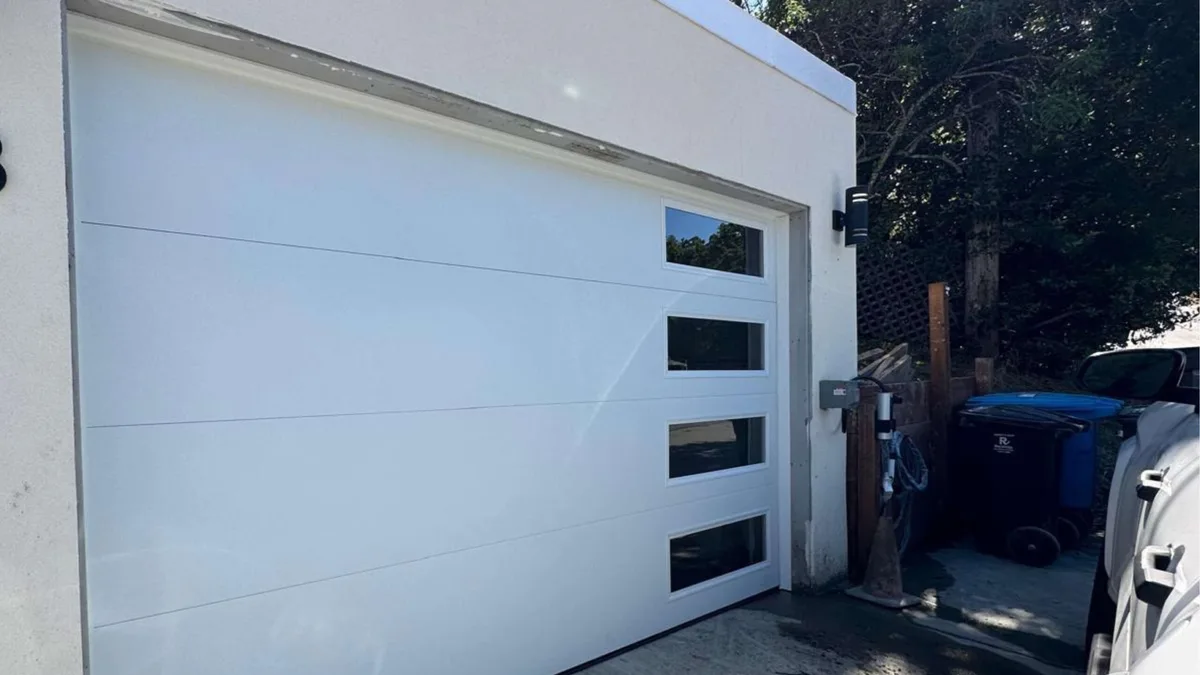
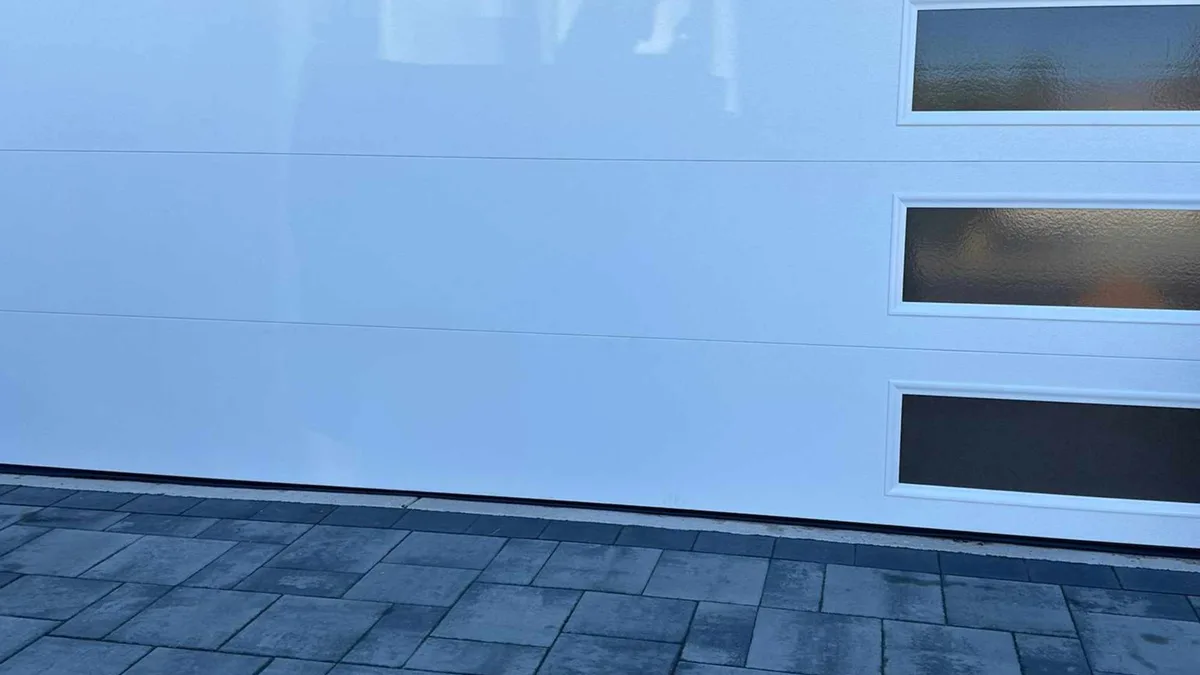
Damage to the door is the easiest to see and describe. A backed-into panel is dented or creased. A panel that has rusted through along its bottom edge has lost material. Storm debris may have punctured or bent a section. This kind of damage is usually local, and local damage is often repairable, because panels and sections can be replaced without touching the rest of the door. The business offers panel repair and replacement for exactly this reason.
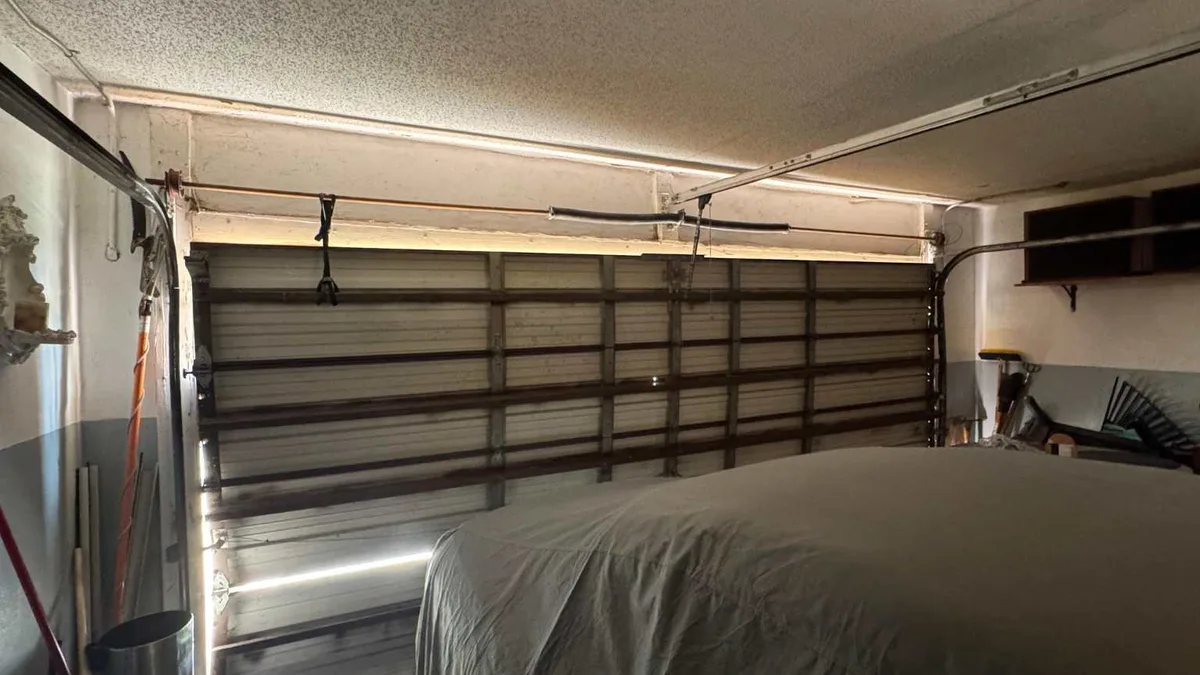
Hardware wear is a different matter. Springs, cables, rollers, and hinges all carry load and all wear out. A single worn part is a repair. But hardware tends to age together, and a door whose springs, cables, and rollers are all at the end of their working life is a door that will keep asking for attention. That distinction, one worn part versus a whole set of them, is the heart of the repair-or-replace decision.
When repair is the clear answer
Repair is usually the right call when the failure is well-defined and the rest of the door is sound. A few situations fit that description plainly.
- A single damaged panel. If the door still runs smoothly and the damage is confined to one section, replacing that section addresses the problem without disturbing anything else.
- A failed spring or cable on an otherwise healthy door. A broken torsion spring cannot hold the door's weight, and a snapped cable will let the door hang at an angle. Both are serious, both are technician work, and both are repairable on a door whose panels and track are in good condition.
- An opener problem on a door that moves freely. A stripped gear lets the motor run without moving the door, and that is an opener repair, not a door replacement.
- A weather seal that has hardened or torn. Seals are consumables. Replacing them is routine maintenance, and the business offers weather seal and insulation work for doors that let in drafts, water, or heat.
In each of these cases the door's structure is intact and the failure is a component. Fixing the component restores the door. There is no reason to replace a sound door because one part of it wore out.
When replacement starts to make sense
The calculation shifts when the damage is structural rather than local, or when the hardware has reached the end of its life as a set. A few signs point that way.
The track is bent or out of alignment. A track that has been struck, or that has pulled away from the framing, can sometimes be straightened or re-secured. But a track that is bent in several places, or that has rusted thin, is a sign the door has taken repeated abuse or has aged past its hardware. A door that sits crooked can mean a snapped cable, a broken spring, or a bent track, and only an inspection separates those. If the answer turns out to be a track that is beyond straightening, the repair conversation changes.
The panels are failing in more than one place. One dented panel is a repair. Several panels with rust creeping up from the bottom, or with creases from repeated contact, suggest the door's skin is giving out. Rust is worth taking seriously in this climate, where humid air and frequent rain keep the bottom edge of a steel door wet for longer than it would be in a drier place. Once rust has eaten through the bottom section, the door is losing structural material, not just paint.
The door is heavier than it used to be, or sounds different at the start of a cycle. A door that feels heavier in normal use, or that lands harder than it once did, may have springs that are losing tension. That is a repair. But if the door is also old, noisy, and has had several spring or roller replacements already, the technician may find that the hardware is worn across the board. At that point the question is not which part to fix but whether the door is worth another round of parts.
Repairs are repeating. This is the clearest signal of all, and it is a pattern rather than a single event. One repair is normal. Two in a year on the same door is worth noting. When you find yourself calling about the same door every few months, for different reasons each time, the money is going into a door that keeps finding new ways to fail. That is the point at which a technician will usually lay out both paths honestly: keep repairing, or replace the door and its hardware together.
What the technician is actually checking
When a technician assesses a door, the inspection is not just about the part that failed. It is about the condition of everything that carries load. The technician inspects the springs and cables, checks the track for bends and alignment, examines the rollers and hinges for wear, and looks at the panels for rust, creases, and separation. The opener is checked separately, because an opener that has been straining against a heavy door may itself be near the end of its life.
This is also why a phone diagnosis has limits. You can describe a symptom accurately, and that helps. But whether a bent track can be straightened, whether a panel is replaceable on its own, and whether the springs and cables are near the end of their life are questions that need the door in front of someone. The useful thing you can do is describe what you see and hear: the door sitting crooked, a gap along the top, the door feeling heavier when you use it, a new noise at the start of a cycle, or the opener running without the door moving.
Where the homeowner's part ends
Springs, cables, and the opener drive train are technician work, and that is not a matter of caution for its own sake. A torsion spring under tension stores enough energy to cause serious injury, and the adjustment procedures are not something to learn from a video. The same goes for cables, which are under load whenever the door is up, and for anything inside the opener housing. Do not attempt to adjust, loosen, or remove any of these. Do not test the door's balance by hand, and do not pull the emergency release to move the door yourself. If a spring has broken, the door is dead weight and should be left down until a technician arrives.
What you can do is observe, describe, and decide. Note when the problem started, whether it is constant or intermittent, and what the door does at the start of a cycle. That information shortens the inspection and helps the technician bring the right parts.
If you are in Sunrise, Fort Lauderdale, Tamarac, Plantation, Coral Springs, or Weston and your door has stopped working, is noisy, or will not close properly, The Broken Spring Garage Door Repair LLC can inspect it and tell you plainly whether repair or replacement is the better path. The business is licensed and insured, handles residential and commercial garage door repair along with spring and opener work, and can be reached at 954-414-9504 or info@thebrokenspring.com. The office is at 4850 Northwest 103rd Avenue, Sunrise, FL 33351, with weekday hours of 7:00 AM to 7:00 PM, weekend hours of 8:00 AM to 6:00 PM, and emergency service available.
The decision itself is rarely as close as it feels when the door is stuck open and you are late for work. A sound door with one failed part is a repair. A door with structural damage, worn-out hardware across the board, or a history of repeat failures is a candidate for replacement. An inspection is what tells you which one you have.