
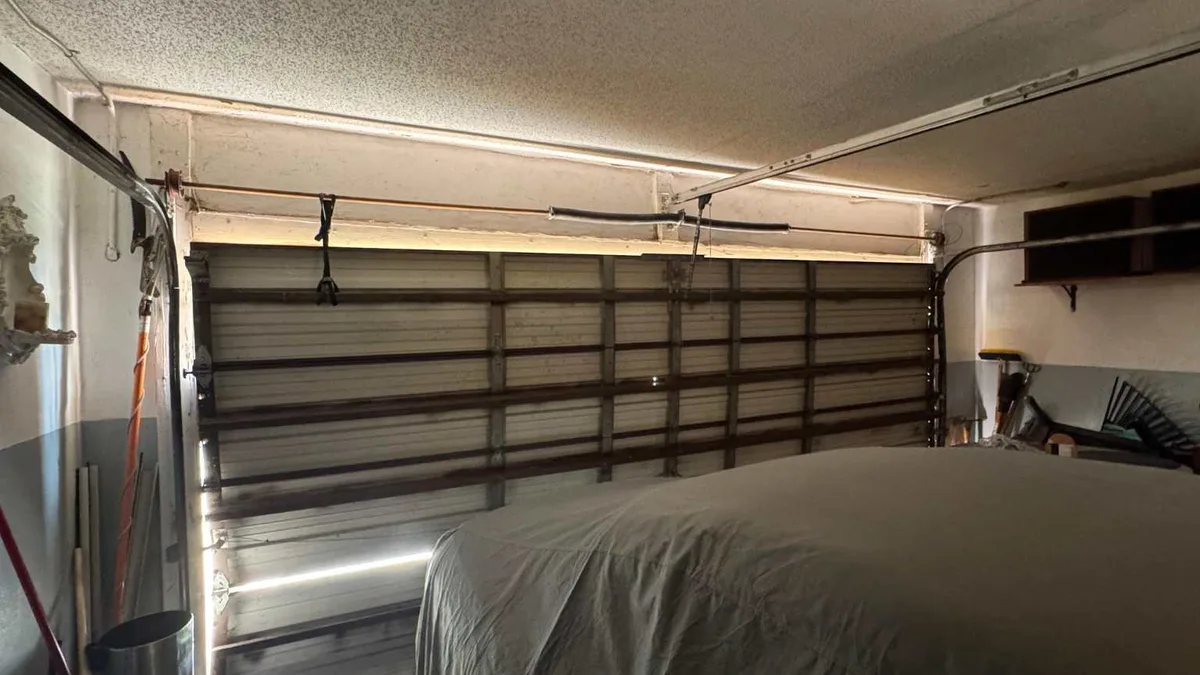
A garage door spring in western Broward County works in conditions that are harder on it than most of the country offers. The garage sits under a roof that holds heat, the air carries a lot of moisture for much of the year, and the door cycles several times a day. None of that snaps a spring on its own. Springs fail because they accumulate cycles, and heat and humidity add conditions that can wear the spring and the hardware around it faster than a cycle count alone would suggest. This article explains what the climate actually does to a torsion assembly, what a homeowner can reasonably notice from outside the door, and when the right move is to call a technician. It does not quote prices, because this business has not published any, and it does not promise a response time.
What heat does to a torsion spring
A torsion spring is a coil of steel wire held under heavy tension, wound to store the energy that lifts the door. Every open and close flexes the spring through part of its range and returns it. That flexing is the wear mechanism, and the count of those cycles is what ultimately decides when a spring fails.
Heat matters because a garage in this region can get very warm, especially an attached garage with a west- or south-facing door that takes direct sun for hours. A spring that runs hot and cools again repeatedly is expanding and contracting on top of its normal flexing. That does not mean a hot spring snaps without warning, and it does not mean every warm garage breaks springs early. It means the metal is working under conditions harder on it than a stable, moderate temperature would be. The practical result is that a spring here may reach the end of its life on a door that is otherwise in good shape, and that failure should not come as a surprise.
What humidity does to the parts around the spring
Humidity is harder on the surrounding hardware than on the spring wire itself. The shaft the springs mount on, the bearings that carry it, the hinges, the rollers, and the track all have surfaces that can corrode in moist air. Corrosion on a bearing or a hinge changes how smoothly the door moves, and a door that drags puts more load on the spring and the opener with every cycle.
This is why lubrication matters more here than in a dry climate. A technician servicing the door lubricates the moving points that are meant to be lubricated and notes any hardware that has corroded enough to need replacement. A homeowner can help by keeping the garage as dry as the building allows, but the main defense is regular service on the moving parts. If the door gets louder over a period of months, or you hear a grinding or scraping sound at the start of a cycle, that is worth a call. It may be a dry bearing, a worn roller, or a hinge that has stiffened, and a technician can tell which.
What you can notice from outside the door
Most spring problems announce themselves before the door stops working entirely. With the garage empty and the door closed, here is what is fair to watch for:
- The door sits crooked in the opening, with one side lower than the other.
- A gap appears along the top of the door that was not there before.
- The door feels heavier than usual in normal use, or the opener strains to lift it.
- A new noise at the start of a cycle, or a door that rises partway and stops.
- The opener motor runs but the door does not move.
Those symptoms have more than one possible cause. A crooked door can mean a snapped cable, a broken spring, or a bent track. A motor that runs without lifting the door can be a stripped opener gear, a broken spring, or a disconnected trolley. The point of listing them is not to pick one. It is to tell you that the symptom alone does not identify the fault, and that the test that separates them is work for a technician. Do not reach for the springs, the cables, or the opener drive train. Those parts store energy and can injure someone who is not trained to work on them.
When to call, and what the technician will check
If the door will not open, opens partway and hangs, sits crooked, or the opener runs without moving it, stop operating it and call a technician. Continuing to run an opener against a door that cannot lift puts strain on the opener and the door hardware, and it does not fix the underlying problem.
On arrival, the technician inspects the springs and cables, checks the balance of the door, examines the track and rollers, and tests the opener and its safety devices. If a spring has failed, the technician will explain what was found and what replacement involves. The same visit is the right time to lubricate the moving parts and note any corroded hardware, which is the maintenance that helps the next set of springs last. The Broken Spring Garage Door Repair LLC serves Sunrise, Fort Lauderdale, Tamarac, Plantation, Coral Springs, and Weston, is licensed and insured, and can be reached at 954-414-9504 or info@thebrokenspring.com. Weekday hours are 7:00 AM to 7:00 PM, weekend hours are 8:00 AM to 6:00 PM, and emergency service is available.