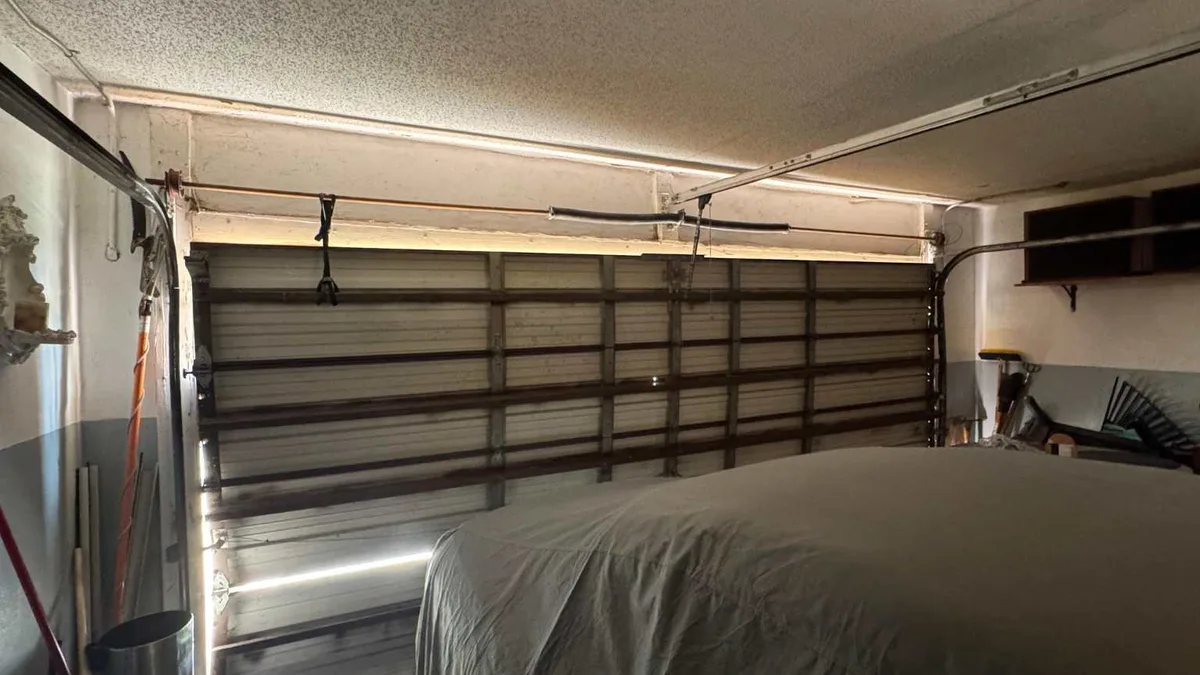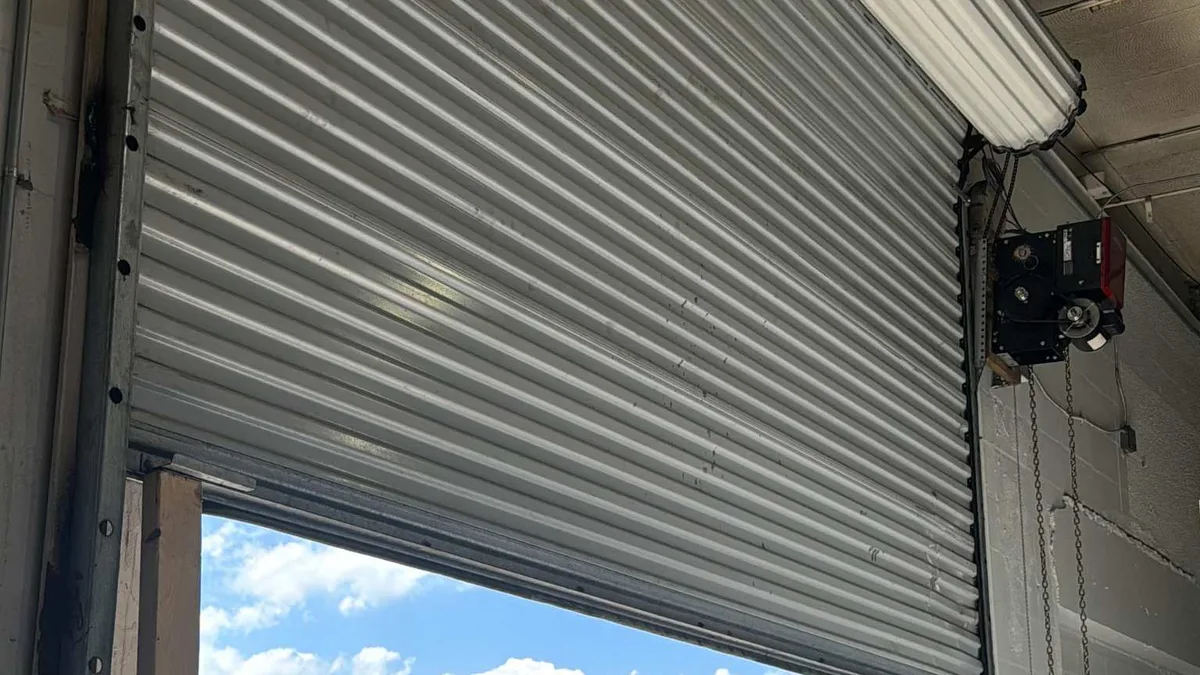
A garage door that has gotten louder is telling you something changed. The door still opens, the opener still runs, and nothing has visibly failed, so it is tempting to turn the radio up and keep going. But the noise is usually the first evidence of wear in the moving assembly, and it is available to you before any visible damage appears. What matters is not that the door is loud. It is what kind of loud, where the sound comes from, and whether the door still behaves the way it used to. This article walks through the noises homeowners most often describe, the parts that commonly produce each one, and the small set of things you can safely observe yourself before calling a technician.
Describe the noise before you describe the door
"It's loud" is a starting point, not a diagnosis. A high squeal, a low grinding rumble, a rattle that seems to come from overhead, and a single sharp clunk at the start of the cycle each point toward different hardware, and the same door can produce more than one of them. Before you call anyone, run the door once with the garage empty and listen for where the sound seems to originate: overhead near the springs and shaft, along the tracks at the sides, or at the opener unit itself.
That description is genuinely useful to a technician. What it does not do is identify the failed part, because a squeal can come from a roller, a hinge, or a dry bearing, and separating those requires hands-on inspection of the hardware.
Squealing and chirping
A high-pitched squeal that follows the door through its travel is usually metal moving against metal without enough lubrication, or a roller that has stopped turning and is dragging in its track instead of rolling. Rollers, hinges, and bearings are all candidates, and more than one can be involved on the same door. This is the distinction that matters most in practice: lubricating a roller that still turns is maintenance, but lubricating a roller whose bearing has seized does not make it roll again. The technician checks each component and replaces what has worn rather than quieting it.
Grinding and rumbling
Grinding is heavier and lower than a squeal. It can come from a roller with a worn or frozen bearing, from the opener's drive train, or from hardware that has worked loose and is rubbing as the door passes. If the grinding comes with the door moving unevenly or sitting at an angle, that combination points more strongly at the lifting or guiding hardware, and it is worth a prompt call rather than a wait-and-see.
Rattling overhead and clunks at the start
A rattle that seems to come from above the door often traces to loose fasteners or a hinge that has vibrated free over time. It is frequently the least serious of these sounds, and it is also the easiest to leave alone until a loose part becomes a broken one or drops onto the door.
A single sharp clunk as the door begins to move is a different animal. It can come from slack in the opener's drive train, from the torsion assembly as load shifts onto it, or from the door itself shifting as it comes off the floor. Those are different mechanisms and different repairs, and a technician can tell them apart by watching the door through a full cycle.
What you can safely observe
The list of things a homeowner can check is shorter than most people expect, and none of it involves touching the moving hardware. With the garage empty and the door closed, note whether the door sits level across the opening or whether one side looks lower than the other. Note whether there is a gap along the top or the sides. Run the door and listen for whether the noise happens at the same point every time, or whether it changes with the time of day. Note whether the door feels heavier than usual when you operate it normally, and whether it reverses or stops short.
That is the extent of it. Do not reach for the springs, the cables, or the opener's drive train. A torsion spring is under heavy tension and a cable is under load, and both can injure someone who does not know how to work around them. The technician inspects the springs and cables as part of the diagnosis. Your job is to describe what the door does and where the sound comes from.
When the noise is the smaller problem
Noise by itself is rarely an emergency. Noise combined with a change in how the door behaves is a different matter. A door that hangs crooked can mean a snapped cable, a broken spring, or a bent track, and only an inspection separates those three. A motor that runs without lifting the door can point to a stripped opener gear, among other causes. A door that reverses before it reaches the floor is a travel-limit or force-setting problem, not a photo-eye problem — the photo-eye is a safety device on the closing travel and reverses a door that is on its way down. If the door will not close at all, that is worth a call the same day.
The Broken Spring Garage Door Repair LLC serves Sunrise, Fort Lauderdale, Tamarac, Plantation, Coral Springs, and Weston, and offers emergency service. The business is licensed and insured and can be reached at 954-414-9504 or info@thebrokenspring.com. Weekday hours are 7:00 AM to 7:00 PM and weekend hours are 8:00 AM to 6:00 PM.
What a service visit covers
A technician diagnosing a noisy door will run it and listen, then inspect the moving hardware: rollers, hinges, bearings, tracks, the torsion assembly, and the opener's drive train. The goal is to find the part that has actually worn or failed rather than to quiet the symptom. Lubrication belongs to maintenance, not repair, and applying it to a worn component can mask a problem for a while without solving it.
The most useful thing you can do before that visit is write down what you heard and when. A noise that appears only on the way up, only in the first few feet of travel, or only after the door has sat closed overnight is a clue, and a clear description shortens the diagnosis.