A remote that used to open the door from the end of the driveway and now only works when you are right in front of it is one of the most common calls a garage door technician gets. It is also one of the easier problems to sort out, because the symptom itself tells you a lot. A remote that works sometimes but not others, a remote that needs two or three presses, and a remote that does nothing at all are three different situations, and they point in different directions. This article walks through what each pattern usually means, what you can safely check yourself, and where the work stops being homeowner work.
Start with the battery, then the second remote
The first question is whether the problem is the remote or the door. A weak battery is the most common reason a remote loses range, and it usually fades rather than failing outright. You press, nothing happens, you press again harder, and eventually it works. That pattern is worth a fresh battery before anything else.
The second question is whether the problem follows the remote. If you have a second remote, or a keypad, try it. If the second remote works from the same distance the first one used to, the problem is in the first remote. If both are equally slow, the problem is at the opener or in the space between. That single test saves a lot of guessing.
When the door responds only from close range
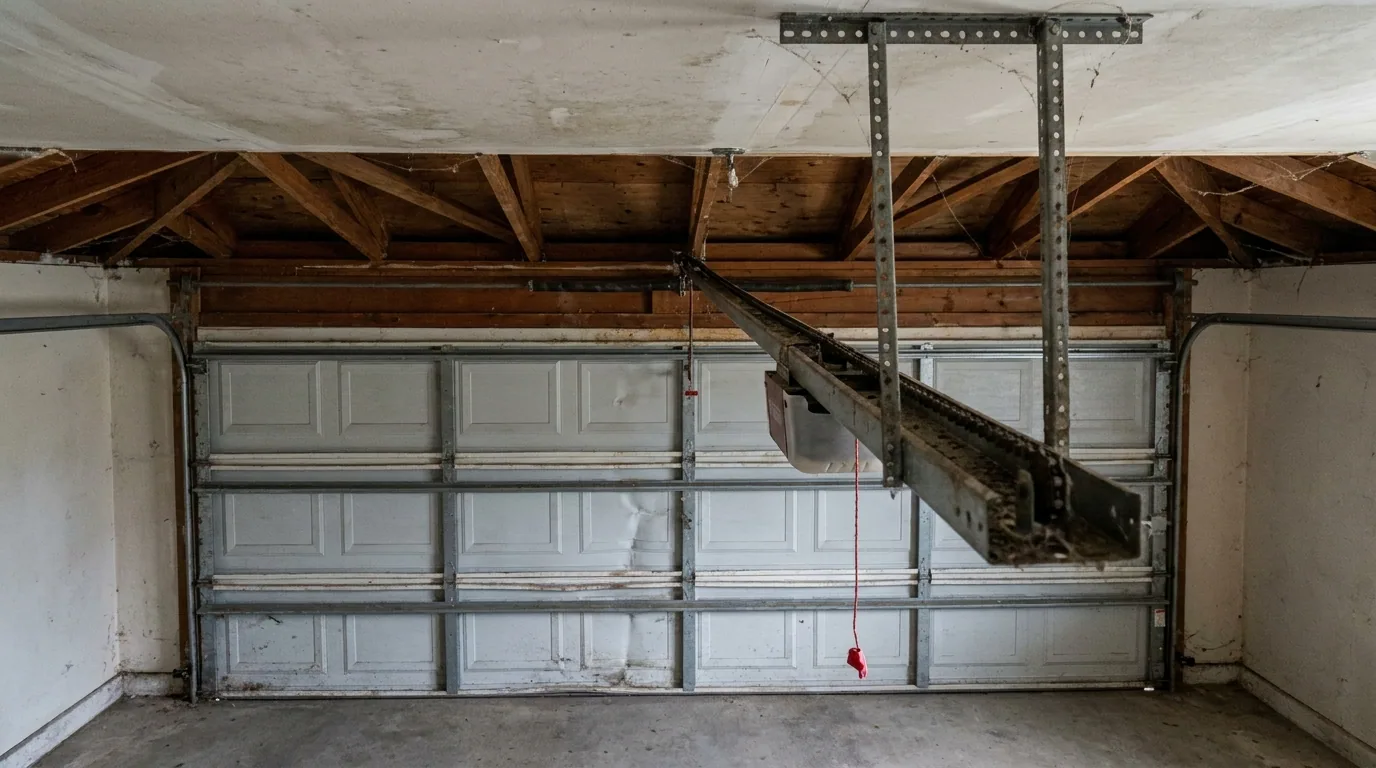
A remote that works reliably but only when you are a few feet away is a range problem, and range problems have a short list of causes. The battery is one. The antenna is another: most openers have a thin wire hanging from the head unit, and if it has been pushed up against the ceiling, tucked behind a stored item, or shortened, reception drops. The technician checks the antenna and its connection during a service call.
The third cause is interference, and this is where Florida homes can be frustrating. A remote that works in the morning and not in the afternoon, or works from one angle but not another, can be losing its signal to something nearby. LED bulbs in the opener itself or in fixtures close to it, a Wi-Fi router mounted near the head unit, and metal shelving or a metal garage door between you and the opener are all worth ruling out. The test is simple: move the suspect item or turn it off temporarily and see whether the remote's range comes back. If it does, you have found the cause without touching the opener.
If nothing nearby has changed and the range has been poor since the door was installed, the opener's logic board or its receiver may be the issue. That is technician work, and it is diagnosed with a meter rather than by trial and error.
When the remote works but the door is slow to move
There is a second kind of slow, and it is easy to confuse with the first. In this version the remote is fine, the door starts when you press, but the door itself moves sluggishly or hesitates at the start of its travel. That is not a remote problem at all, and changing the battery will not help.
A door that moves slowly or strains can be a spring that is no longer carrying its share of the weight, a roller or hinge that is binding, a track that is out of alignment, or an opener that is working harder than it should. These are not equally likely and they are not distinguishable from the driveway. What separates them is a technician's inspection of the springs, cables, rollers, and track, along with a check of the opener's force settings. Do not try to narrow this one down by hand. The springs and cables store enough energy to injure someone who does not know what they are doing, and the opener's drive train should be left to a technician as well.
What you can note is the pattern: does it happen on every cycle or only when the door is cold, only in the morning, only after a long day of opening and closing? Write it down. That record is genuinely useful to whoever services the door.
When the remote does nothing at all
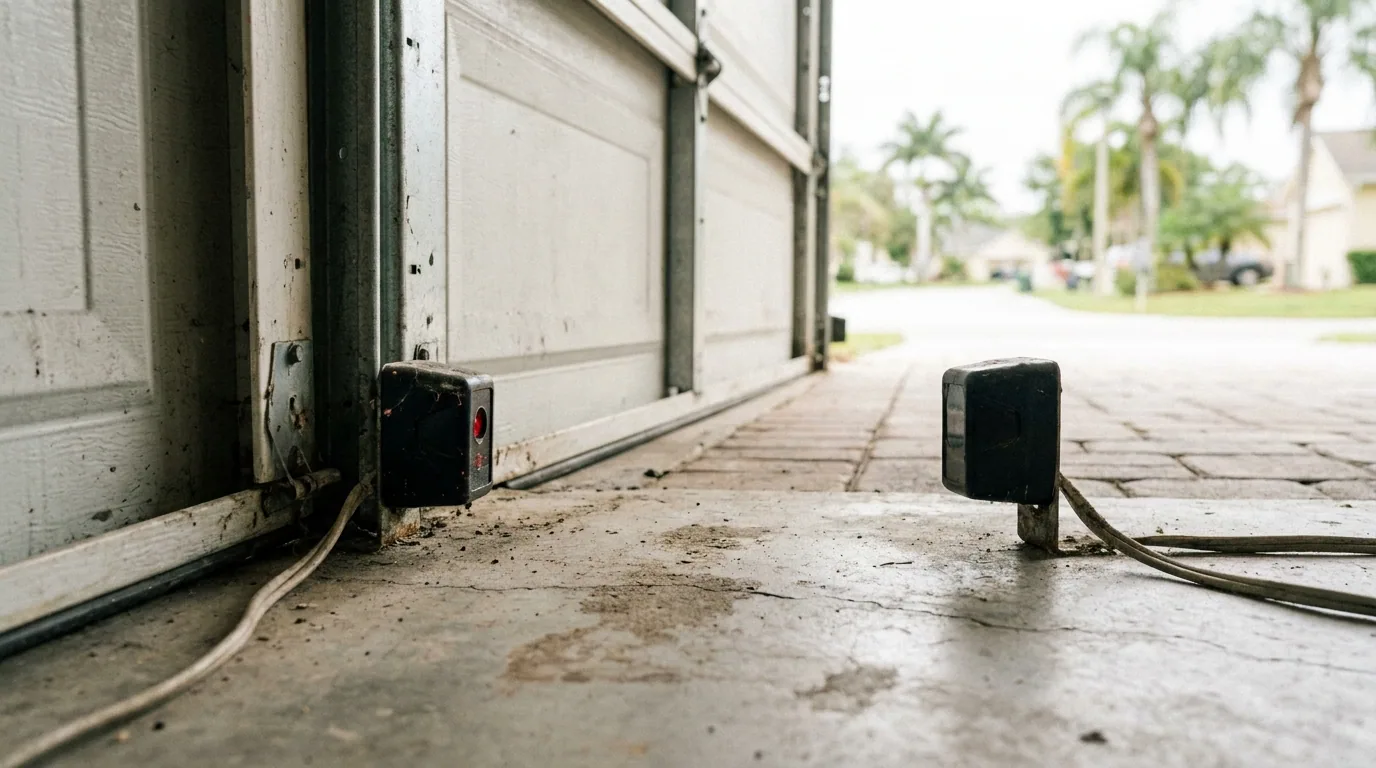
A remote that has stopped working entirely, with no partial response, narrows things quickly. If a second remote or the wall button still operates the door, the opener is fine and the problem is the remote, its battery, or its programming. If the wall button also does nothing, the problem is at the opener, and the likely candidates are power, a logic board fault, or a safety device holding the door. A photo-eye that is blocked or misaligned will reverse a door that is closing, and only while it is closing; it is not the reason a door will not start at all. A door that will not start, or that opens a little and then reverses, points toward travel limits or force settings instead.
Reprogramming a remote is something many homeowners can do from the opener's manual, and it is worth trying before calling. If the remote will not take the programming, the remote itself may have failed.
What to have ready when you call
When you call a technician, the details that speed things up are the ones you already know: whether the wall button works, whether a second remote behaves the same way, whether the problem is range or speed, and whether anything in the garage has changed recently. If you are in Sunrise, Fort Lauderdale, Tamarac, Plantation, Coral Springs, or Weston, 954-414-9504 reaches The Broken Spring Garage Door Repair LLC, which is licensed and insured and serves western Broward County. The company is at 4850 Northwest 103rd Avenue, Sunrise, FL 33351, and can also be reached at info@thebrokenspring.com. Hours are Monday through Friday, 7:00 AM to 7:00 PM, and Saturday and Sunday, 8:00 AM to 6:00 PM, with emergency service available.
Most slow-remote complaints turn out to be small: a battery, an antenna, a nearby LED, a programming issue. The ones that turn out to be mechanical are the reason the distinction matters. Sort out which kind you have first, and the rest follows.