You press the button, the opener's light comes on and blinks, and the door does not move. Or the motor hums for a second, the light flashes, and everything stops. Either way, the light is not decoration. On most openers it is the unit's way of reporting that it stopped on purpose, and the pattern of the flashes is the closest thing you have to a readout. The useful part of your day is spent working out which signal you are looking at, because the fixes for the common causes are very different from one another — and a couple of them are jobs for a technician.
First, count the flashes
Most openers built in the last few decades blink the overhead light a set number of times, pause, and repeat. The count is the code. It is worth standing there for two full cycles with a notepad, because the difference between four flashes and five changes the answer completely.
You do not need to guess at what the code means. The owner's manual for your model lists the flash patterns and what each one points to, and the model number is usually on a label on the back or underside of the motor housing. If the manual is long gone, the same label carries the model number you need to look it up. Reading the code off the label beats any guesswork, including mine.
If the light blinks steadily without a repeating count, or the opener is old enough that it has no diagnostic codes at all, treat it as a general stop and work through the causes below.
The safety reversal is the most common reason a door refuses to close
This is the one that catches people out, because the door often opens fine and only balks on the way down. The opener has two safety systems that can stop a closing door, and both are designed to override your command.
The first is the pair of photo-eyes: the small lenses mounted a few inches off the floor on each side of the opening, aiming at each other across the doorway. If the beam between them is broken, the opener will not close the door, and on many units it flashes the light to say so. The beam gets broken by ordinary things — a garbage can pushed into the path, a bicycle leaning against the track, a cobweb or a leaf stuck on the lens, or a lens that has been knocked slightly out of line by a bump. Wipe both lenses with a dry cloth, clear anything standing between them, and look at each one while the door is trying to close: most have a small indicator light that should be steady, not flickering or dark.
The second is the force setting, which senses resistance. If the door meets something on the way down — or if the tracks, rollers, or hinges have stiffened enough that the opener reads the drag as an obstruction — it reverses. You can see whether the door is binding by watching it travel: a door that jerks, pauses, or leans to one side is telling you the problem is in the door's movement, not in the opener's electronics.
When the motor runs but the door does not
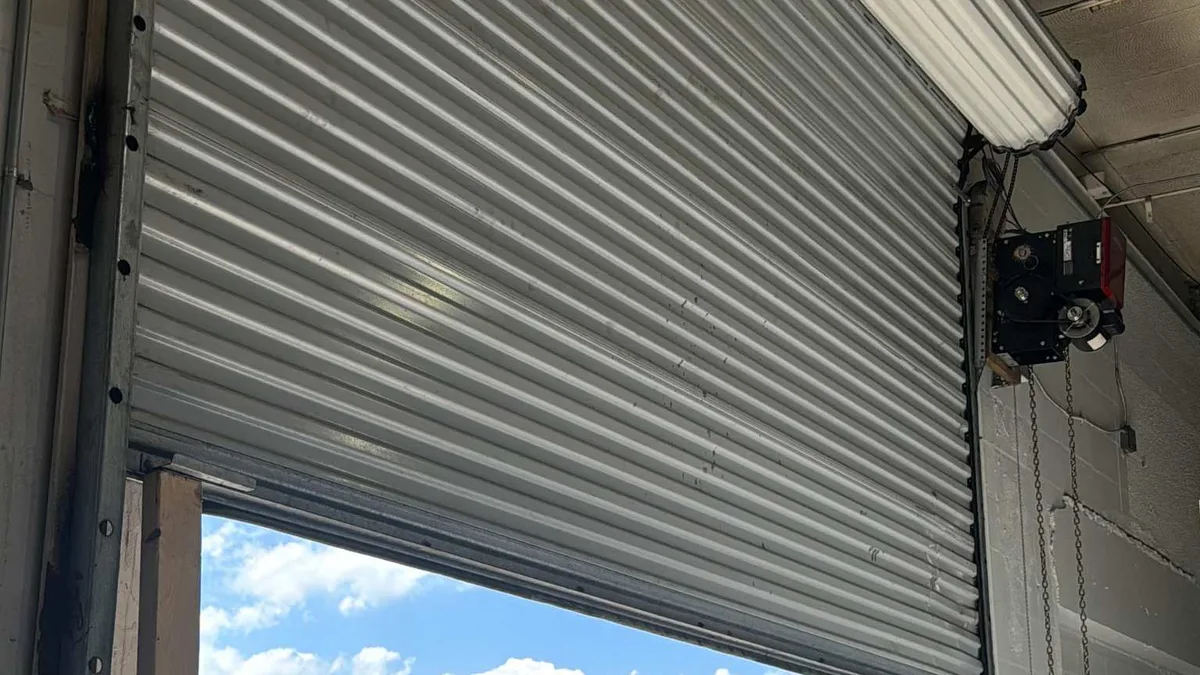
This is a different symptom and it points somewhere specific. If you hear the motor turning for a few seconds — a whirring or humming with no door movement — and then it stops, the drive is not transferring power to the door. On a belt or chain opener the usual cause is a stripped gear inside the unit: the motor spins, the gear teeth that should carry that motion to the rail are worn smooth, and nothing reaches the trolley. The light flashing is the opener reporting that it ran and saw no movement.
On a chain or belt unit you can sometimes confirm this without opening anything by watching the rail while a helper presses the button. If the motor is clearly running and the chain or belt is not moving at all, the fault is inside the head. That repair means opening the housing and working around the drive train, which is technician territory.
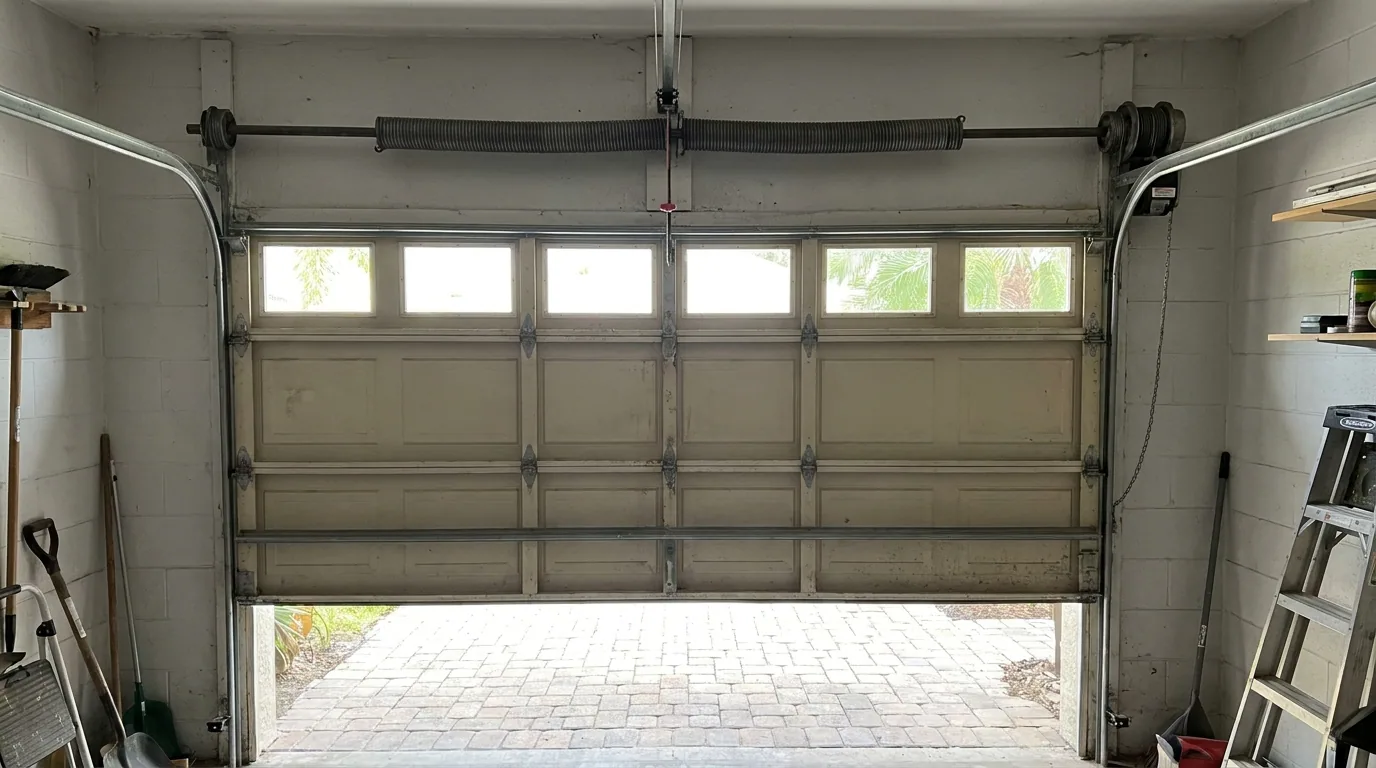
There is a second possibility worth ruling out first, and you can check it safely: the manual release. If someone has pulled the red release cord — during a power cut, say, or to open the door by hand — the trolley is disconnected from the carriage and the opener will run without moving anything. Look at the cord and the trolley. Reconnecting it is a matter of following the release mechanism back to its engaged position, and the manual describes the procedure for your model.
When nothing happens at all
If there is no motor sound, just the light, the opener is not getting a command it will act on. Check the simple things in order: the wall button, the remotes, and whether the lock or vacation mode has been switched on, which on many units disables the remotes while leaving the light working. A wall button that works when the remote does not narrows it to the remote or its battery; neither working points back toward the opener or its power.
One caution here. Do not go reaching into the opener housing or over the door to check the drive train, the springs, or the cables. A torsion spring holds the full weight of the door, and a door with a snapped cable hangs at an angle and can drop. Those parts are for a technician, and the flashing light is not an invitation to start unscrewing things.
What to have ready when you call
If the checks above do not settle it, the call goes faster with three things in hand: the opener's model number from the label, the flash count you observed, and a plain description of what the door does — opens but will not close, hums without moving, or does nothing at all. The Broken Spring Garage Door Repair LLC serves Sunrise and the surrounding communities in western Broward County, and can be reached at 954-414-9504 or info@thebrokenspring.com. The company is licensed and insured, and emergency service is available outside the regular hours of Mon-Fri 7:00 AM to 7:00 PM and Sat-Sun 8:00 AM to 6:00 PM.