A door that comes down partway, stops, and climbs back up is one of the more common calls a garage door technician gets, and it is also one of the most misdiagnosed from the floor of the garage. The instinct is to blame the safety sensors, because the photo-eye is the part everyone has heard of. But the photo-eye is a safety device on the closing travel, and it only does its job while the door is on its way down. If your door reverses before it reaches the floor, the sensors are one possible suspect among several, and often not the one. This article explains what the different patterns look like from where you stand, how to tell them apart, and where the work stops being homeowner work.
First, be precise about where the door turns around
"It reverses" covers several different behaviors, and they point in different directions. Watch a full cycle and note exactly where the door turns around.
- It reverses a few inches off the floor. The door travels almost all the way down, then goes back up. This is the classic travel-limit or force-setting pattern. The opener thinks it has reached the floor before it actually has, or it meets enough resistance near the bottom that it treats the resistance as an obstruction.
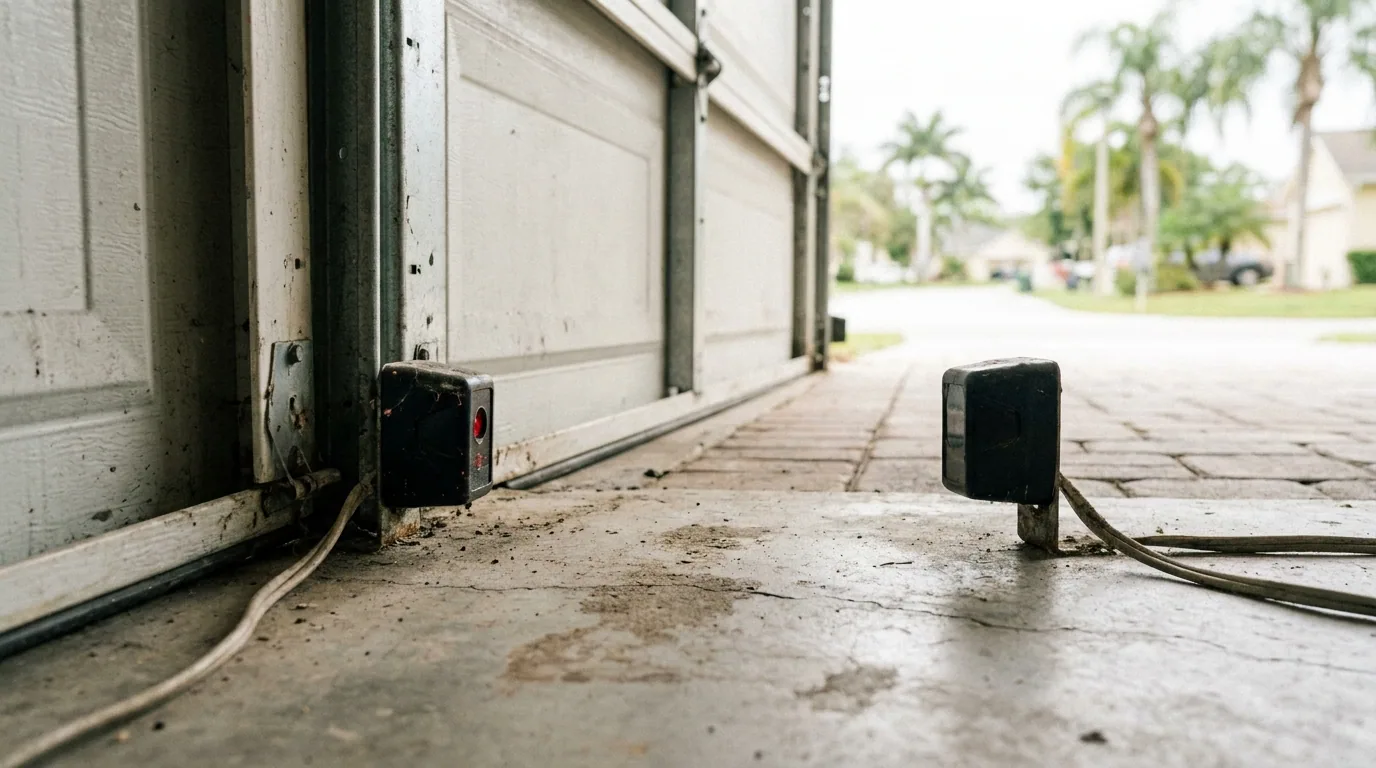
- It reverses at the same spot every time, well above the floor. Something is physically in the way, or the down-limit is set too high. A misaligned or blocked photo-eye is a genuine suspect here, but only because the door was closing and the beam was interrupted. The technician checks the alignment and the wiring.
- It reverses at a different spot each time. That inconsistency is worth describing to the technician, because it narrows the list. A limit switch that is simply set wrong tends to produce the same stopping point every cycle. A door that stops at random heights points more toward a binding track, a roller catching, or a force setting that is too sensitive.
- It reverses only in cold weather or only in the morning. Note it and pass it along. Do not assume a mechanism. The technician can sort out whether it is the door, the hardware, or the opener.
The photo-eye, to be clear, is not the answer to a door that will not start, opens a little then reverses, or stops short on the way up. It is a safety device on the down travel, and it belongs in the conversation only when the door was closing.
What the down-limit and force settings actually do
The opener has two adjustments that work together. The down-limit tells the motor where the floor is. When the door reaches that point, the opener stops driving. If the limit is set too high, the opener stops the door before it reaches the floor and, depending on the model, may reverse it. If it is set too low, the opener keeps pushing after the door has landed, which strains the door and the opener.
The force setting tells the opener how much resistance to tolerate before it gives up and reverses. Every opener has a force adjustment, and it exists for safety: if the door meets a person, a bicycle, or a trash can on the way down, the opener should stop and go back up. When the force is set too light, ordinary resistance from a dry track, a stiff roller, or a door that is binding slightly is enough to trigger a reversal. When it is set too heavy, the safety function is weakened, which is worse.
The two settings interact. A door that reverses near the floor can be a limit problem, a force problem, or both, and adjusting one without checking the other tends to move the symptom rather than fix it.
What you can safely check yourself
There is a short list of things a homeowner can do without touching the springs, the cables, or the opener's drive train.
- Clear the path of the beam. With the door open and the opener idle, check that nothing is sitting in front of either photo-eye: a broom, a recycling bin, a bag of soil, a parked car's mirror. A sensor that has been nudged out of alignment by a bump is also worth noting, but leave the realignment to the technician.
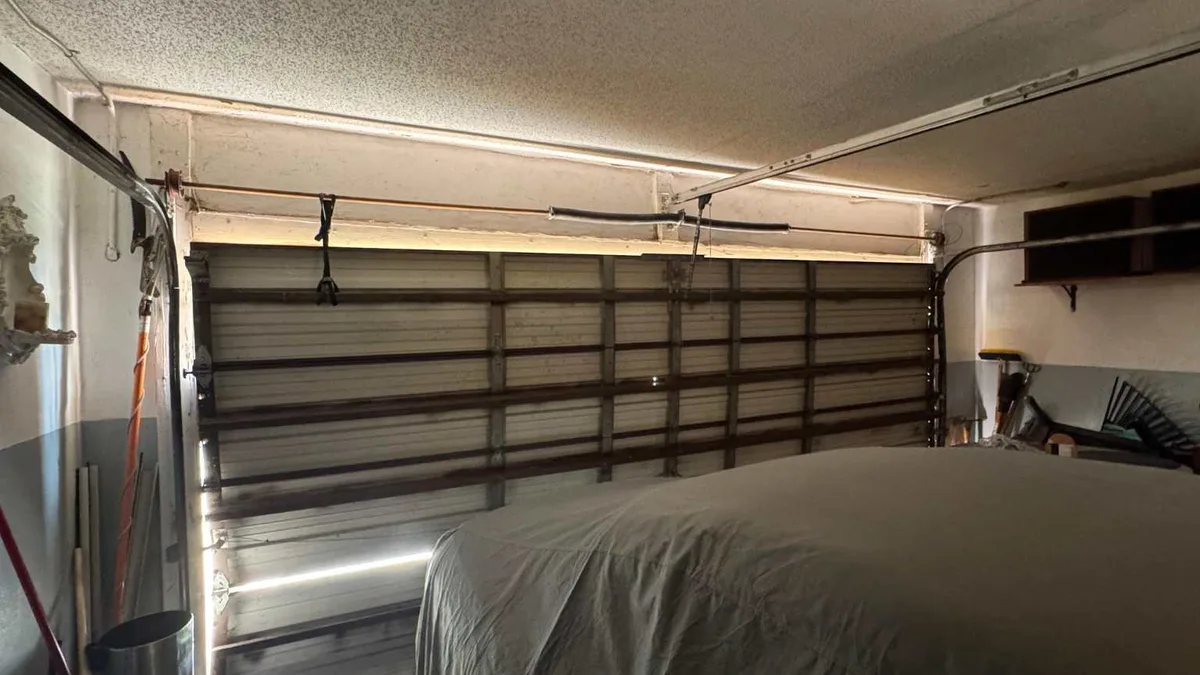
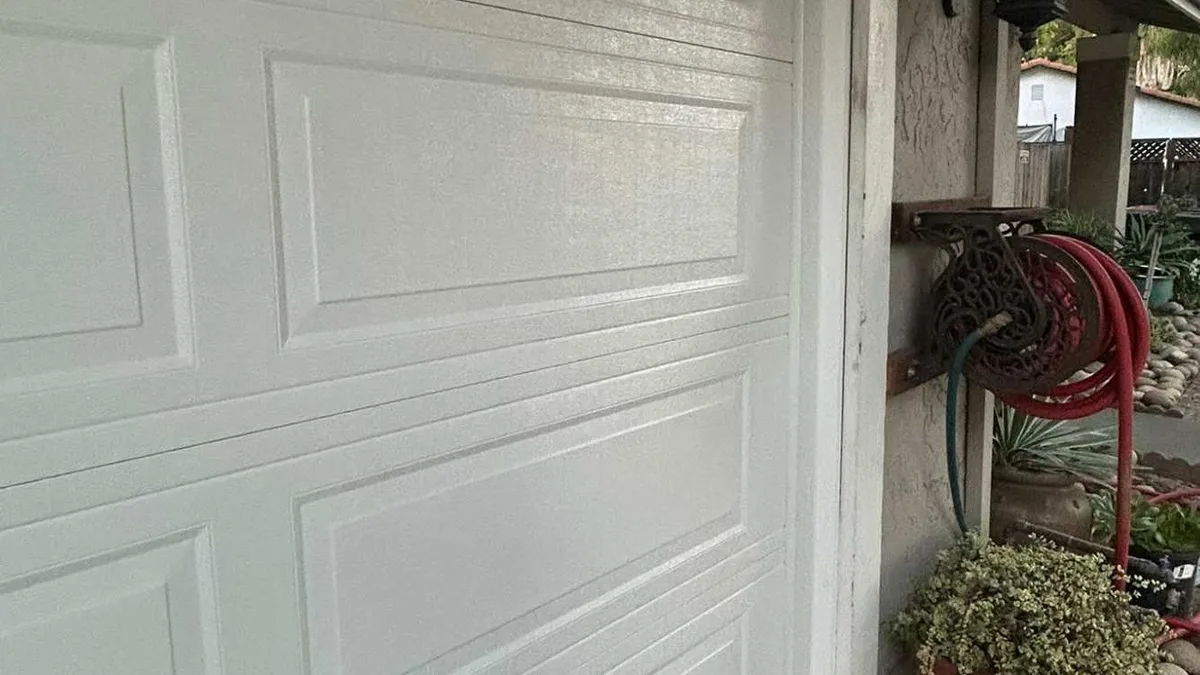
- Look at the door from outside with the garage empty. A door that sits crooked, with one side lower than the other or panels out of level across the width, can mean a snapped cable, a broken spring, or a bent track. Those are different repairs, and the technician sorts them out on site. Do not try to diagnose which one from the floor.
- Listen at the start of a cycle. A new squeal, a grind, or a rattle that was not there before is worth describing. A squeal can come from a roller, a hinge, or a dry bearing, and the technician can tell which by where it comes from and when in the cycle it happens.
- Note whether the door feels heavier in normal use. If it takes more effort to close than it used to, say so. Do not test the balance by hand or pull the emergency release to move the door. That is technician work, and it is how people get hurt.
What you should not do is start turning adjustment screws on the opener to see if it helps. The limit and force settings are the two adjustments most often made worse by guesswork, and a door that reverses because of a binding track will keep reversing no matter where the limit is set.
Why the adjustment alone is often not the fix
Homeowners sometimes call after adjusting the down-limit themselves, and the door now closes but strains at the bottom or the opener runs longer than it should. That is the sign that the limit was compensating for something else. A track that is out of alignment, a roller that has flat-spotted, a hinge that has worn, or a door that is binding on one side will all show up as a door that reverses near the floor. Turning the limit down can force the door past the binding, but it does not remove the binding, and the opener and the door both take the load.
The technician's job is to find out whether the door is meeting resistance on the way down, and if so, where. That means checking the track, the rollers, the hinges, and the door's alignment, then setting the limit and force to match a door that moves freely. The settings are the last step, not the first.
When to call
Call a technician if the door reverses at the same point every cycle, if it reverses at random heights, if it sits crooked, if it feels heavier than it used to, or if you have adjusted the limit and the door still will not close reliably. The Broken Spring Garage Door Repair LLC serves Sunrise, Fort Lauderdale, Tamarac, Plantation, Coral Springs, and Weston, and the company is licensed and insured. Reach the office at 954-414-9504 or info@thebrokenspring.com. Weekday hours are 7:00 AM to 7:00 PM, weekend hours are 8:00 AM to 6:00 PM, and emergency service is available.