Storm preparation for a garage door is mostly about the things you can see and hear from the floor of an empty garage, plus a short list of items that belong to a technician. The goal is not to storm-proof the door. It is to catch the problems that a strong wind or a heavy rain would turn into a bigger one, and to make sure the door is in a state where it will close and stay closed when you need it to. This article covers what to check, what to leave alone, and how to tell the difference.
Clear the opening and look at the door from outside
Before anything else, empty the garage floor near the door and pull the car out. With the space clear, stand outside and look at the closed door the way a neighbor would see it. Two things are worth noting.
- The door sits crooked. One side is lower than the other, or the panels are not level across the width. A door hanging at an angle can mean a snapped cable, a broken spring, or a bent track. Those are different repairs, and the technician sorts them out on site.
- There is a gap along the top or down one side. A gap that was not there before usually points to the door not sitting fully closed, which can come from a track out of alignment, a roller out of its channel, or an obstruction on the floor.
If either of those is present, stop there and call a technician. A door that is not sitting square is not ready for weather, and it is not something to adjust yourself.
Listen to a full cycle
Run the door through one complete open-and-close cycle and listen. You are not diagnosing the noise, just noticing whether it is new. A squeal, a grind, or a rattle at the start of the cycle can come from a roller, a hinge, or a dry bearing, and those are three different fixes. A single loud bang followed by a door that will not lift is a different situation entirely and should be treated as a repair, not a maintenance item.
If the door feels heavier than usual in normal use, that is worth mentioning when you call. Do not try to lift it by hand to check, and do not pull the emergency release to move it. The springs and cables carry the door's weight, and a technician is the one who tests that.
Check the weather seal and the bottom of the door
The seal along the bottom and sides of the door is the part that keeps wind-driven rain out of the garage, and it is also the part a homeowner can reasonably assess. With the door closed, look at the rubber or vinyl strip along the floor. A seal that is cracked, flattened, or torn away in sections will let water in during a heavy rain. A seal that has pulled loose at one corner will flap in wind.
The bottom seal and the side seals are replaceable, and replacing them is straightforward work. If the seal is intact but the floor near the door stays damp after rain, the issue may be the seal not making contact with an uneven floor, which is a fit question rather than a material question.
What to leave to a technician before a storm
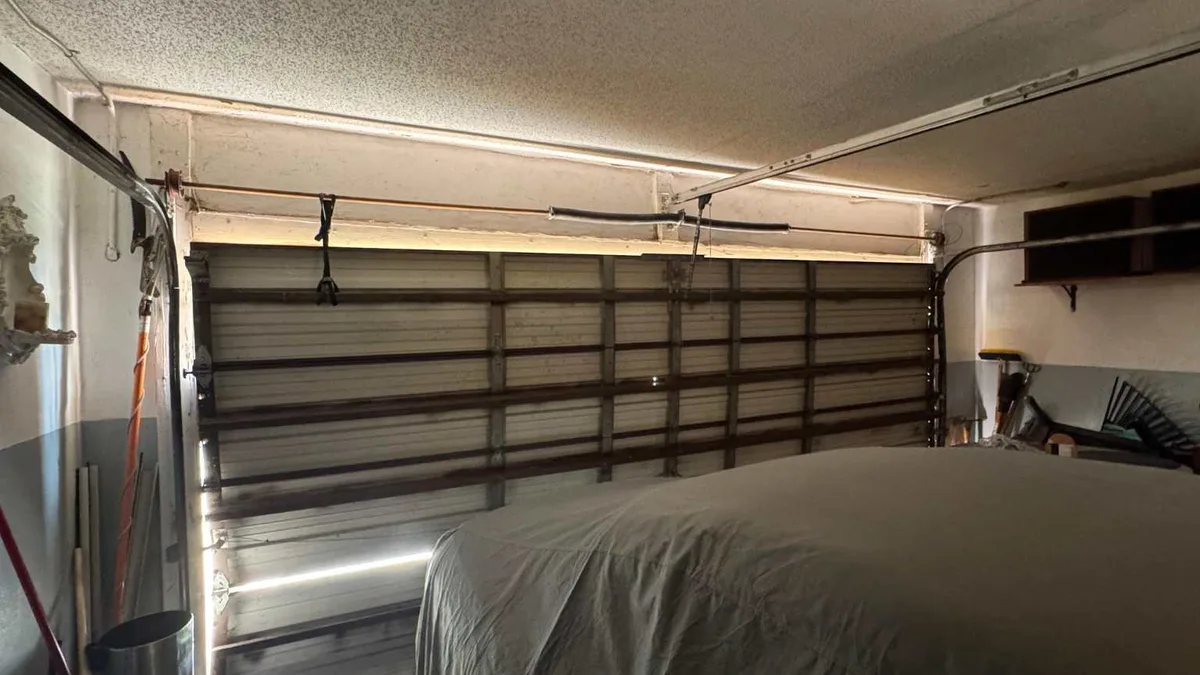
Several parts of the door should not be touched by a homeowner at any time, and storm season is not the moment to make an exception. Torsion springs, extension springs, cables, and the opener drive train all store or transmit force, and working on them without the right tools and technique is how people get hurt.
The technician inspects the springs and cables, checks the track alignment, and confirms the door is balanced and traveling correctly. If the door has been noisy, slow, or uneven since the last storm, that is the visit to schedule before the next one rather than after.
Make the call before the weather arrives
Garage door problems tend to surface at the worst possible time, which is usually the day the storm is forecast. If the door is crooked, will not close fully, or has developed a new noise, book the visit while the weather is still calm. The Broken Spring Garage Door Repair LLC serves Sunrise, Fort Lauderdale, Tamarac, Plantation, Coral Springs, and Weston, and can be reached at 954-414-9504 or info@thebrokenspring.com. The business is licensed and insured, with weekday hours of 7:00 AM to 7:00 PM, weekend hours of 8:00 AM to 6:00 PM, and emergency service available.