Most homeowners never think about their garage door springs until the door stops behaving. Then the questions arrive: what is that part, why did it break, and why does the technician keep saying "torsion" when I said "spring"? The answer is that two different spring systems are in common use, and they are not interchangeable. They sit in different places, they carry the door's weight in different ways, and they fail with different symptoms. This article explains the difference between a torsion spring and an extension spring, what each type means for how you use and maintain the door, and where the line sits between what a homeowner can safely do and what belongs to a technician.
What each spring actually does
A garage door is heavy, and the opener is not built to lift that weight on its own. The springs do the lifting. They are wound or stretched during installation so that they store energy when the door is closed, then release it as the door rises, counterbalancing most of the door's weight. Without working springs, the door would be far too heavy for the opener to move safely, and the opener would strain or fail.
Both spring types perform this same job. The difference is where they sit and how they are loaded.
Torsion springs: mounted on a shaft above the door
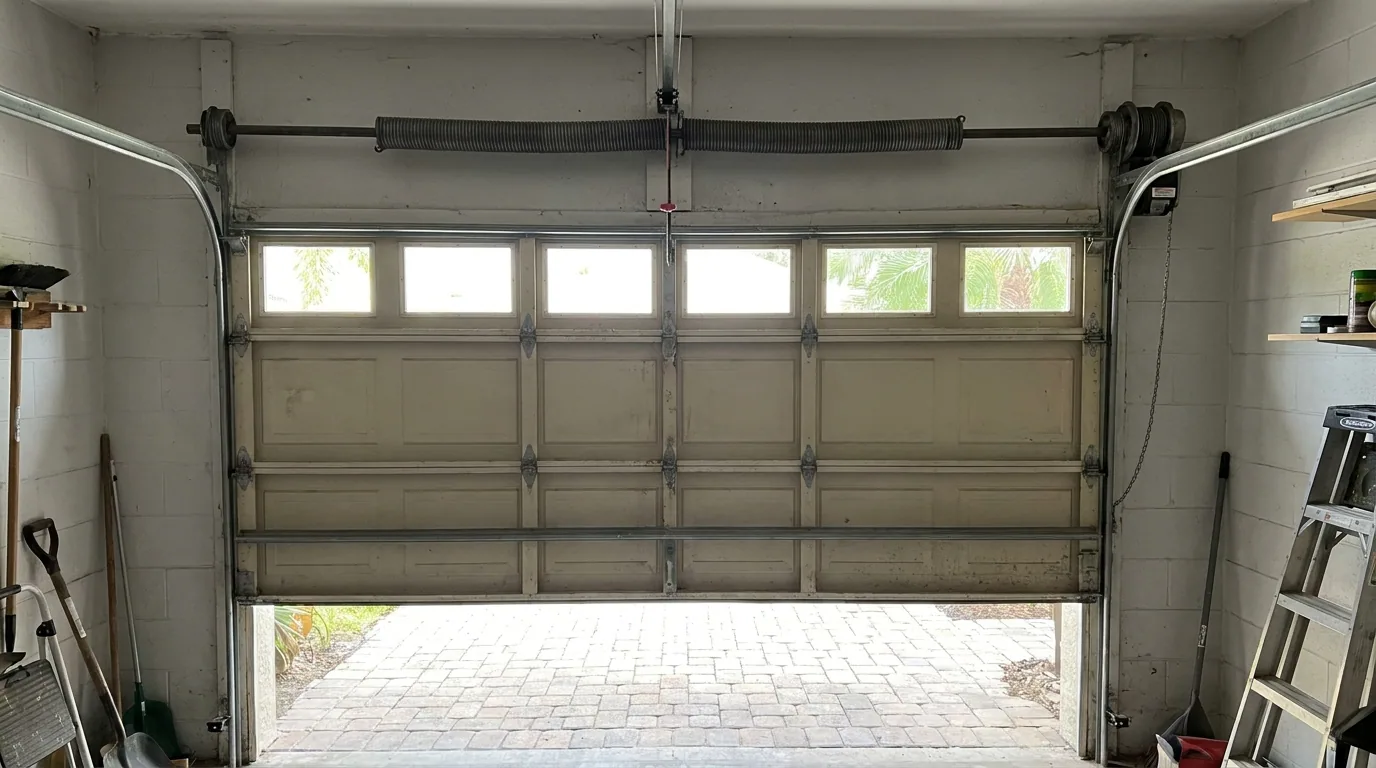
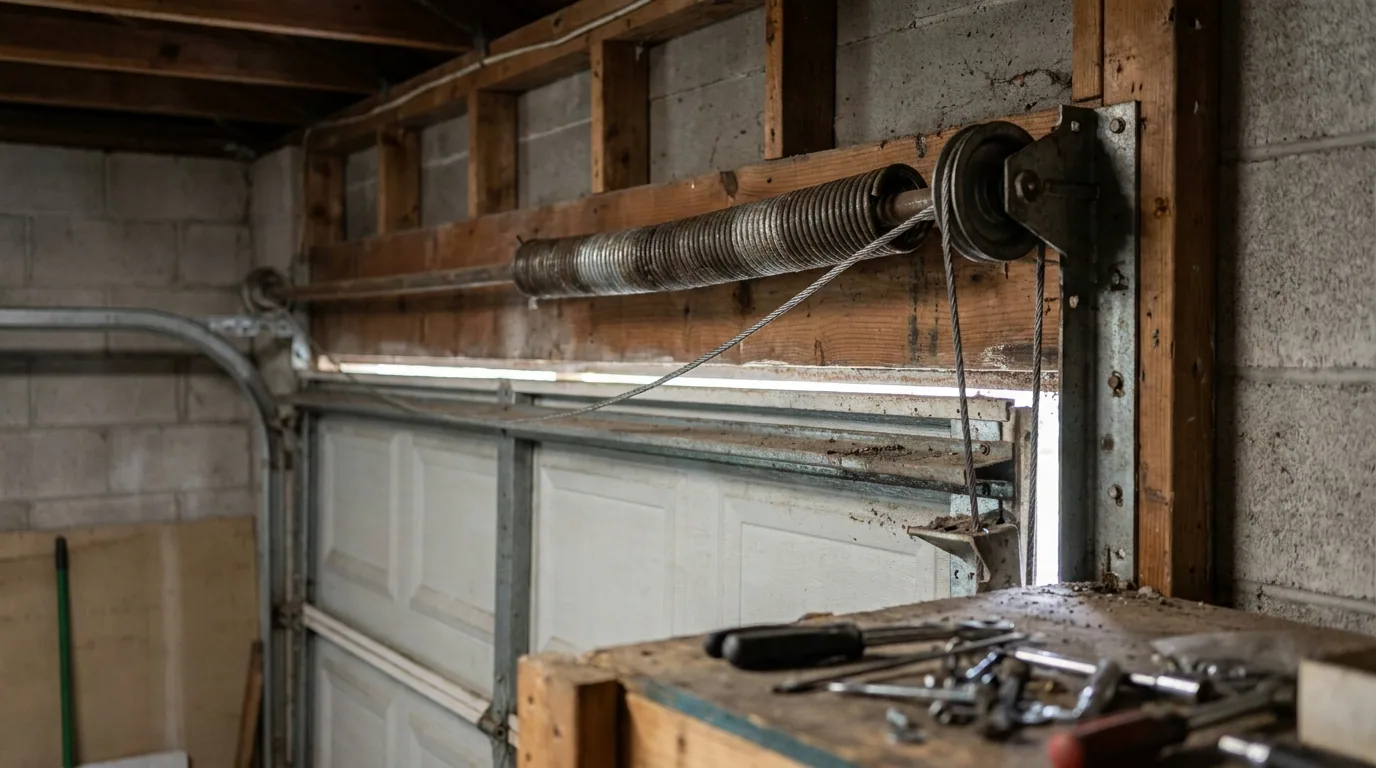
A torsion spring is a coil mounted on a horizontal shaft above the door, usually near the header. It is wound around the shaft rather than stretched along it. When the door closes, the spring winds tighter; when the door opens, it unwinds and helps lift the door. Many doors carry two torsion springs on the same shaft, one on each side.
Torsion springs are compact and sit out of the way, which is one reason they are common on newer installations. They are also under high tension at all times, and adjusting or replacing one requires specialized tools and training. This is the part of the assembly that homeowners should never attempt to work on. Even the winding and unwinding of the shaft is technician work, and so is any attempt to count turns or reset the spring.
Extension springs: mounted along the tracks
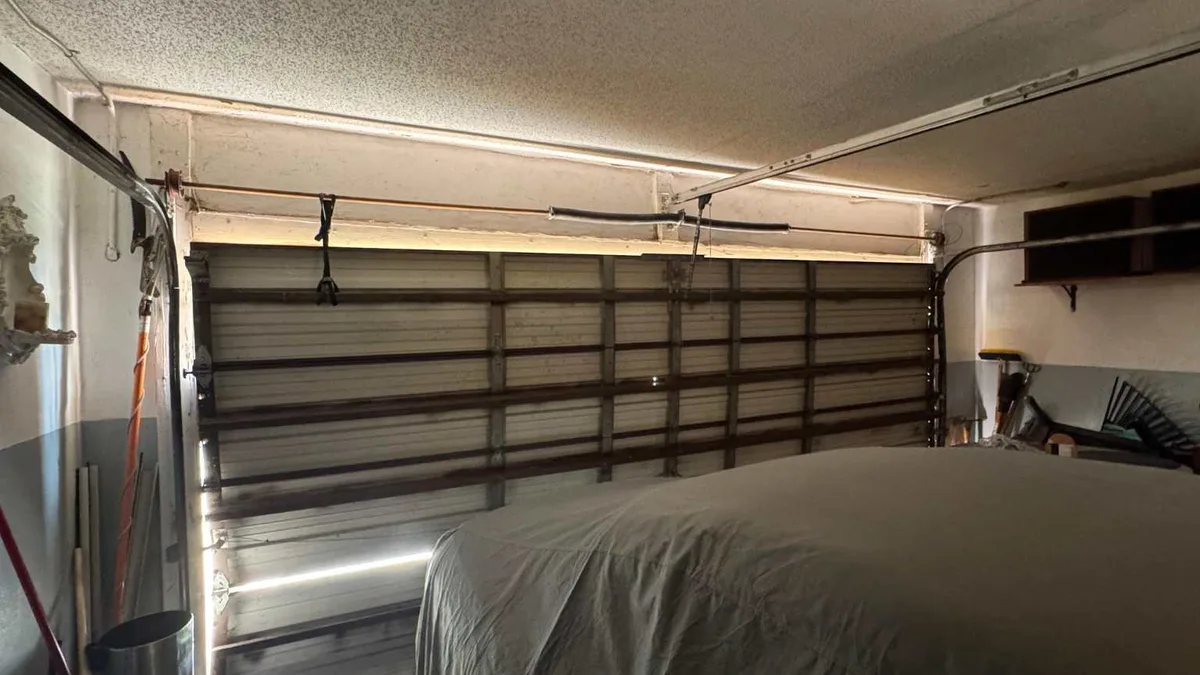
An extension spring is a coil that stretches rather than winds. It is mounted horizontally along each side of the door, usually above the horizontal track, and it stretches as the door closes and contracts as the door opens. Extension springs are common on older doors and on some lighter-weight installations.
Because they stretch along the track rather than winding around a shaft, extension springs are more exposed. They also store a great deal of energy, and a broken extension spring can recoil. For that reason, extension springs are often installed with a safety cable running through the center of the coil, which contains the spring if it breaks. That cable is a safety device, not something to adjust or remove.
How each type fails, and what you will notice
Both spring types can break, but the symptoms differ. A broken torsion spring cannot hold the door's weight, so the door will feel much heavier in normal use, or the opener may struggle or fail to lift it. A snapped extension spring often leaves the door hanging at an angle or sitting crooked, because one side is no longer being counterbalanced.
A crooked door is not automatically a spring problem, though. It can also mean a snapped cable or a bent track. A technician separates those causes by inspecting the springs, cables, and track together. Do not try to diagnose it by lifting the door, testing its balance by hand, or pulling the emergency release and moving the door; all of that is technician work.
What you can do is note what you observe from outside the door with the garage empty: the door sitting crooked, a gap along the top when closed, a new noise at the start of a cycle, or the door feeling heavier when you use it normally. Any of those is a reason to stop using the opener and call for service. The Broken Spring Garage Door Repair LLC serves Sunrise, Fort Lauderdale, Tamarac, Plantation, Coral Springs, and Weston, and can be reached at 954-414-9504. The company is licensed and insured, and emergency service is available.
Maintenance differences worth knowing
Torsion springs generally require less visible attention because they are enclosed on the shaft, but they still wear and should be checked by a technician during routine service. Extension springs, being more exposed, are worth having inspected periodically, and the safety cables should be verified as intact. In both cases, the inspection belongs to a technician. The homeowner's role is to notice changes in how the door sounds and moves and to schedule service when something seems off.
One practical point applies to both systems: the spring type is not something you need to identify yourself before calling. A technician will confirm which system the door uses, check the springs, cables, and track together, and tell you what the door needs. If you are unsure which system you have or when it was last serviced, a single service visit can answer both questions and give you a clear picture of the door's condition.